


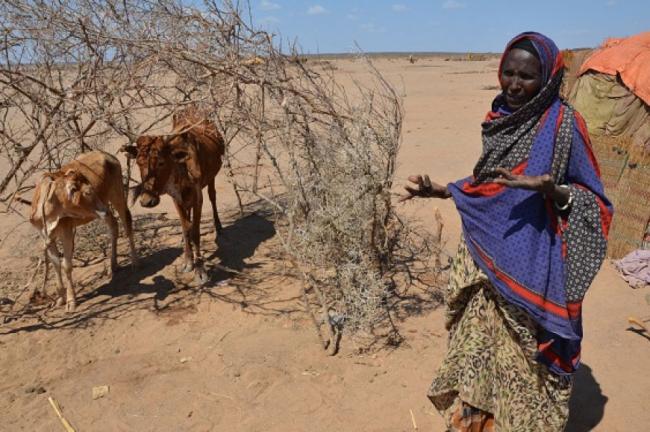
UN agency sounds alarm as drought-stricken herders in Ethiopia face massive livestock losses
The drought has led to a significant number of animals dying or falling ill, particularly in the southern and south-eastern regions of the country, as other areas recover from previous seasons' El Niño-induced drought,” warned the Food and Agriculture Organization of the (FAO).
FAO pointed out that drought-hit pastoralists face reduced milk production, rising malnutrition, and have limited income-earning capacity and severely constrained access to food.
“Some 8.5 million people – one in 12 people – are now suffering from hunger; of these, 3.3 million people live in Somali Region,” said the UN agriculture agency.
The current food and nutrition crisis is significantly aggravated by the severe blow to pastoral livelihoods. For livestock-dependent families, the animals can literally mean the difference between life and death – especially for children, pregnant and nursing mothers, for whom milk is a crucial source of nutrition.
With up to two million animals lost so far, FAO is focusing on providing emergency livestock support to the most vulnerable pastoralist communities through animal vaccination and treatment, supplementary feed and water, rehabilitating water points, and supporting fodder and feed production.
“It is crucial to provide this support between now and October – when rains are due – to begin the recovery process and prevent further losses of animals. If we don't act now, hunger and malnutrition will only get worse among pastoral communities,” said Abdoul Karim Bah, FAO Deputy Representative in Ethiopia.
By providing supplementary feed and water for livestock, while simultaneously supporting fodder production, FAO seeks to protect core breeding animals and enable drought-hit families to rebuild their livelihoods.
In addition to FAO-supported destocking and cash-for-work programmes to provide cash for families, animal health campaigns will be reinforced to protect animals, particularly before the rain sets in – when they are at their weakest and more susceptible to parasites or infectious diseases.
Funding appeal
FAO urgently requires $20 million between August and December to come to the aid of Ethiopia's farmers and herders.
FAO has already assisted almost 500,000 drought-hit people in 2017 through a mix of livestock feed provision, destocking and animal health interventions, thanks to the support of the Ethiopia Humanitarian Fund, Switzerland, Spain, Sweden through FAO's Special Fund for Emergency and Rehabilitation Activities, the United Nations Central Emergency Response Fund, as well as FAO's own Early Warning Early Action fund and Technical Cooperation Programme.
Photo: WFP/Melese Awoke
Source: www.justearthnews.com
Support Our Journalism
We cannot do without you.. your contribution supports unbiased journalism
IBNS is not driven by any ism- not wokeism, not racism, not skewed secularism, not hyper right-wing or left liberal ideals, nor by any hardline religious beliefs or hyper nationalism. We want to serve you good old objective news, as they are. We do not judge or preach. We let people decide for themselves. We only try to present factual and well-sourced news.
Support objective journalism for a small contribution.


