


 COVID19 Education
UN chief outlines ‘bold steps’ for education in the face of COVID-19 disruption
New York: The COVID-19 pandemic has created the largest disruption to education in history and prolonged school closures could further entrench inequalities in access to learning, the UN Secretary-General said on Tuesday, underlining the need for “bold steps” to address the crisis.
Describing education as “the key to personal development and the future of societies”, António Guterres issued recommendations to get children back in the classroom in a policy brief launched alongside a new global campaign called Save our Future.
“As the world faces unsustainable levels of inequality, we need education – the great equalizer – more than ever,” he said in a video message.
“We must take bold steps now, to create inclusive, resilient, quality education systems fit for the future.”
COVID-19 and the classroom
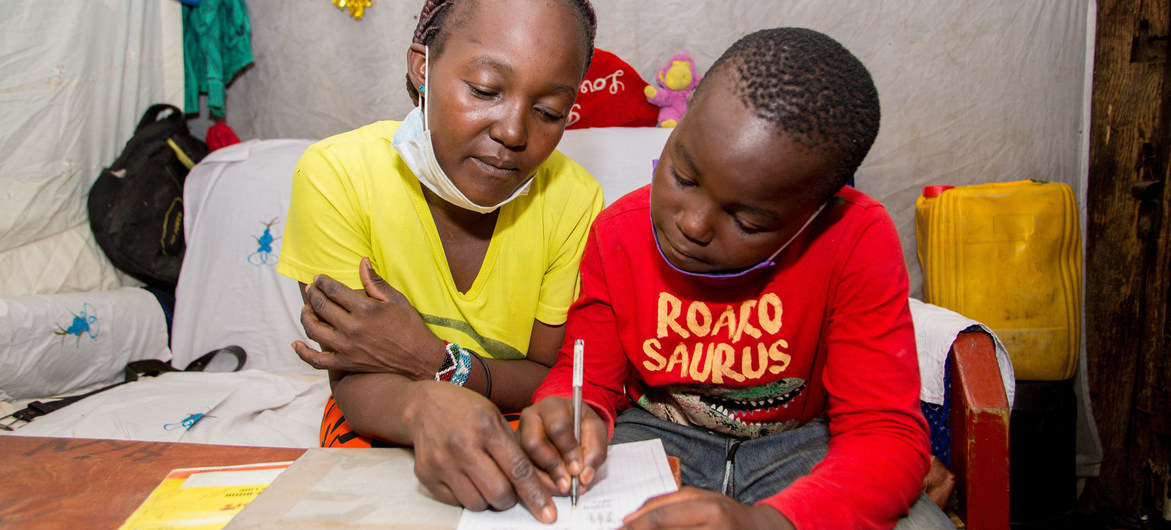
The UN estimates that the pandemic has affected more than one billion students worldwide.
Despite efforts to continue learning during the crisis, including through delivering lessons by radio, television and online, many are still not being reached.
The UN chief said learners with disabilities, members of minority or disadvantaged communities, as well as refugees and displaced persons, are among those at highest risk of being left behind.
Even those students who can access distance learning face challenges, as success depends on their living conditions, and other factors such as fair distribution of domestic duties.
Looming potential catastrophe
A learning crisis existed even before the pandemic, the Secretary-General said, as more than 250 million children were out of school.
Furthermore, only a quarter of secondary school children in developing countries were leaving school with basic skills.
“Now we face a generational catastrophe that could waste untold human potential, undermine decades of progress, and exacerbate entrenched inequalities,” said Mr. Guterres. “The knock-on effects on child nutrition, child marriage and gender equality, among others, are deeply concerning.”
Back to school
The policy brief calls for action in four key areas, starting with the re-opening of schools once local transmission of COVID-19 is under control.
The UN chief also called for greater investment in education, as low- and middle-income countries had already faced an annual funding gap of $1.5 trillion prior to the pandemic.
“Education budgets need to be protected and increased,” he said.
“And it is critical that education is at the heart of international solidarity efforts, from debt management and stimulus packages to global humanitarian appeals and official development assistance.”
Education initiatives must also seek to reach those at greatest risk of being left behind, he continued. They also should be sensitive to the specific challenges faced by girls and boys, and women and men, while also addressing the digital divide.
Quality education for all
For his final recommendation, the UN chief highlighted what he sees as the “generational opportunity” to deliver quality education for all children, in line with the Sustainable Development Goals (SDGs).
“To achieve this, we need investment in digital literacy and infrastructure, an evolution towards learning how to learn, a rejuvenation of life-long learning and strengthened links between formal and non-formal education,” said Mr. Guterres.The 17 goals, which world leaders adopted five years ago, provide a pathway to a more sustainable future that benefits both people and the planet.
“And we need to draw on flexible delivery methods, digital technologies and modernized curricula while ensuring sustained support for teachers and communities.”
Support Our Journalism
We cannot do without you.. your contribution supports unbiased journalism
IBNS is not driven by any ism- not wokeism, not racism, not skewed secularism, not hyper right-wing or left liberal ideals, nor by any hardline religious beliefs or hyper nationalism. We want to serve you good old objective news, as they are. We do not judge or preach. We let people decide for themselves. We only try to present factual and well-sourced news.
Support objective journalism for a small contribution.


