


UN health agency urges early action to stave off threat of HIV drug resistance
“Antimicrobial drug resistance is a growing challenge to global health and sustainable development,” said Tedros Adhanom Ghebreyesus, the Director-General of the World Health Organization (WHO), in a news release.
“We need to proactively address the rising levels of resistance to HIV drugs if we are to achieve the global target of ending AIDS by 2030,” he added.
According to the WHO HIV drug resistance report 2017 in six of the 11 countries surveyed in Africa, Asia and Latin America, more than 10 per cent of people starting antiretroviral therapy had a strain that was resistant to some of the most widely used medicines.
Once the threshold of 10 per cent has been reached, WHO recommends those countries urgently review their HIV treatment programmes.
HIV drug resistance develops when people do not adhere to a prescribed treatment plan. Those with drug resistance will start to fail therapy and may also transmit drug-resistant viruses to others.
Of the 36.7 million people living with HIV worldwide, 19.5 million people were accessing antiretroviral therapy in 2016. The majority of these people are doing well, but the number of those experiencing the consequences of drug resistance is growing.
Increasing HIV drug resistance trends could lead to more infections and deaths. Mathematical modeling shows an additional 135,000 deaths and 105,000 new infections could follow in the next five years if no action is taken, and HIV treatment costs could increase by an additional $650 million during this time.
WHO is therefore issuing new guidelines to help countries address HIV drug resistance.
“When levels of HIV drug resistance become high, we recommend that countries shift to an alternative first-line therapy for those who are starting treatment,” said Gottfried Hirnschall, Director of WHO's HIV Department and Global Hepatitis Programme.
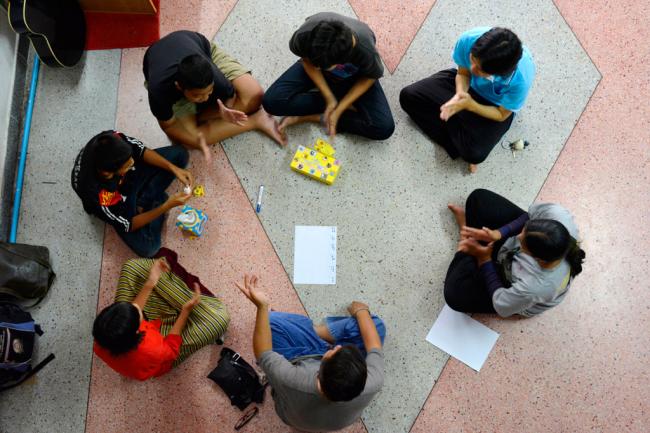
Photo: UNICEF/Thailand/2015/HIV
Source: www.justearthnews.com
Support Our Journalism
We cannot do without you.. your contribution supports unbiased journalism
IBNS is not driven by any ism- not wokeism, not racism, not skewed secularism, not hyper right-wing or left liberal ideals, nor by any hardline religious beliefs or hyper nationalism. We want to serve you good old objective news, as they are. We do not judge or preach. We let people decide for themselves. We only try to present factual and well-sourced news.
Support objective journalism for a small contribution.


