


UN ramps up relief efforts as huge Mid-East snowstorm threatens Syrian refugees
Heavy snowfall, rains, high winds and freezing temperatures are forecast to continue over the next several days and are expected to further disrupt the lives of the most vulnerable Syrians. Flooding has already become a problem in some low lying areas and is expected to get worse once the snow melts, said the Office of the UN High Commissioner for Refugees (UNHCR).
The longer the low temperatures continue, the more difficult life becomes for everyone, UNHCR’s Adrian Edwards warned on Fridayas he briefed journalists in Geneva.
UNHCR teams and partners have been working over the past few days to replace damaged tents, provide repair kits, deliver emergency supplies and offer alternative shelters to those who have been forced to abandon their homes. The response was timely this year as winter operations in the region began ahead of time and included cash vouchers to help the most vulnerable refugees.
However, despite the best efforts of governments, local authorities, and UNHCR, the situation across the region remains precarious for most refugees, particularly given the poor conditions in which many people already live and the scattered nature of the population.
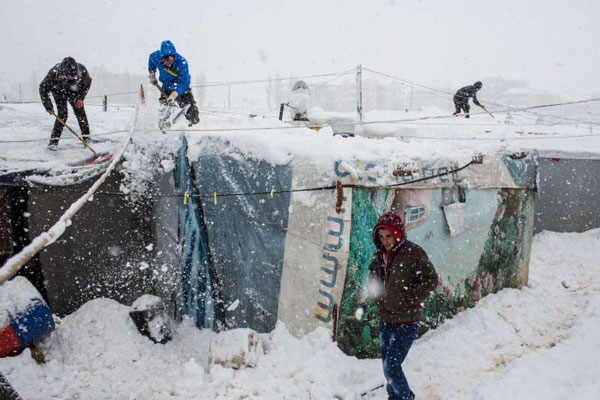
Especially concerning is the situation in Lebanon, where refugees are spread out in some 1,700 different locations. Reports say that more than 100 shelters and tents have been damaged and that flooding and standing water is a serious concern in places hit by heavy rains and high winds. In coastal areas in the south, high waves had flooded some settlements, Edwards explained.
In hard to reach areas, including inside Syria and some parts of Iraq, temperatures have dipped. In Za’atari – Jordan’s largest refugee camp with nearly 85,000 Syrians – dozens of families, as of today. remain in emergency shelters after their tents collapsed under the weight of snow.
More funds are needed to meet these critical challenges and to help some of the most vulnerable people, Edwards added, emphasizing that needs continue to outpace money coming in.
At Za’atari, UNHCR has established several shelters in advance of the storms for those with nowhere else to go. The shelters are equipped with heaters, mattresses and blankets, and food and water are also provided.
But heavy rain and melting snow have caused flooding, damaging belongings and turning streets into quagmires of water and freezing mud. Electricity in several parts of the camp has been cut.
Once conditions improve, UNHCR teams will be sent out to assess the damage to individual shelters and carry out repairs or provide replacement equipment.
Also at today’s Geneva briefing, Tarik Jasarevic, from the World Health Organization (WHO), expressed concern over the spread of infectious diseases in Aleppo, Syria.
He said WHO had managed to bring medication including for chronic diseases and antibiotics for infections – enough for 240,000 people – to Aleppo but is now waiting to distribute to hard-to-reach areas. WHO is also providing vaccines against measles, rubella, mumps and polio to hard-to-reach areas, including Aleppo governorate.
Syrian refugees remove snow from their shelters at an informal tented settlement in the Bekaa Valley, Lebanon, during a blizzard. Photo: UNHCR/A. McConnell
Support Our Journalism
We cannot do without you.. your contribution supports unbiased journalism
IBNS is not driven by any ism- not wokeism, not racism, not skewed secularism, not hyper right-wing or left liberal ideals, nor by any hardline religious beliefs or hyper nationalism. We want to serve you good old objective news, as they are. We do not judge or preach. We let people decide for themselves. We only try to present factual and well-sourced news.
Support objective journalism for a small contribution.


