


UN refugee agency modifies response plan for Mediterranean and Western Balkans
In the regular bi-weekly news briefing in Geneva earlier today, William Spindler, spokesperson for the UN Refugee Agency (UNHCR), said the Refugee and Migrant Response Plan takes into account the new circumstances on the ground following border closures along the Western Balkans route, as well as the entry into force of the European Union-Turkey agreement.
“Unmet needs remain significant, as living conditions in the sites in Greece, both on the islands and the mainland, have deteriorated as a result of congestion and the rapid nature in which sites were established on the mainland,” Spindler noted.
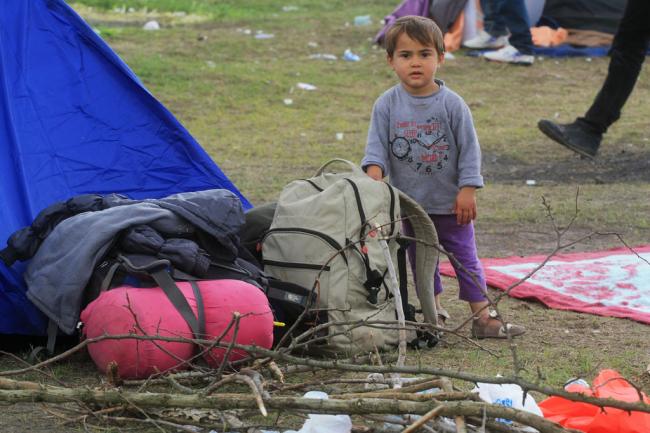
“The affected population includes many people with specific needs, such as unaccompanied or separated children, single women, pregnant or lactating women, the elderly, people with disabilities, as well as the sick and injured,” he added.
The developments have had a significant impact on the numbers of refugees and migrants arriving, with a decrease in the number of people along the Western Balkans route and an increase in the number of people remaining in Greece.
While the measures adopted have significantly reduced the number of arrivals in Greece, more than 57,000 refugees and migrants are currently dispersed along the country in several sites on the mainland and the islands, the spokesperson said.
In this context, UNHCR and humanitarian partners have redefined their engagement from a response primarily targeting people on the move, to focusing on the static population in Greece and on protection activities in countries in the Western Balkans.
Spindler also said that the financial requirements to implement the plan have been adjusted to reflect the change in circumstances. They currently stand at almost $670 million for 2016, of which contributions of $328.8 million have been received.
The spokesperson underscored that the number of children in these movements has been on the rise, reaching 38 per cent of the total arrivals from Turkey to Greece in 2016.
“There is a risk that these people will increasingly rely on smuggling and trafficking networks, exposing themselves to greater protection risks, which will be even more challenging to address considering the clandestine nature of the movement,” Spindler said.
The regional Refugee and Migrant Response Plan was launched in January 2016 following the large-scale population movements registered throughout Europe in 2015, when one million refugees and migrants undertook the perilous journey across the Mediterranean Sea.
The vast majority crossed the Aegean Sea by boat from Turkey to Greece, with a total of 3,771 people dying or reported missing in the Mediterranean Sea in 2015, the spokesperson said.
Despite worsening weather conditions brought on by the onset of winter, the movements did not subside during the first five months of 2016, with some 200,000 arrivals by sea from January to May 2016, including more than 150,000 to Greece.
Photo: UNHCR/Zsolt Balla
Source: www.justearthnews.com
Support Our Journalism
We cannot do without you.. your contribution supports unbiased journalism
IBNS is not driven by any ism- not wokeism, not racism, not skewed secularism, not hyper right-wing or left liberal ideals, nor by any hardline religious beliefs or hyper nationalism. We want to serve you good old objective news, as they are. We do not judge or preach. We let people decide for themselves. We only try to present factual and well-sourced news.
Support objective journalism for a small contribution.


