


UN report finds world’s rural populations excluded from healthcare access
The ILO’s findings – published in the Global evidence on inequities in rural health protection report – show that 56 per cent of people living in rural areas worldwide remain bereft of critical healthcare access, with the most acute instances being in Africa where an overwhelming 83 per cent of rural inhabitants are uncovered. The most affected countries are also those which face the highest levels of poverty, the report observes.
“Decades of under-investment in health interrupted efforts to develop national health systems and ultimately resulted in the neglect of health in rural areas,” Isabel Ortiz, Director of the ILO’s Social Protection Department, confirmed in a press release.
“This study shows that investing in rural health, as part of a national health system, is affordable and yields significant economic and social returns,” she added.
She added, “Progress towards universal health protection is possible in any country, irrespective of its level of income.”
At the same time, the report notes that even where healthcare is guaranteed by law, many people in rural areas still struggle to obtain access as such laws are frequently unenforced where they live.
Moreover, the situation is worsened by the lack of healthcare workers deployed to rural regions. According to the ILO, in fact, while half the world’s population lives in rural areas, only 23 per cent of the global health workforce is deployed in these areas. Africa and Latin America are the two regions where this situation is most acute.
In addition, persistent underfunding has also been found to be linked to the unavailability of services with financial resource gaps nearly twice as high in rural than in urban areas.
“The lack of legal coverage, insufficient numbers of health workers, inadequate funding, and high [out-of-pocket payments] have created life-threatening inequities in many countries,” explained Xenia Scheil-Adlung, Health Policy Coordinator at the ILO.
Scheil-Adlung said, “Strengthening both the demand and supply side of services is crucial when moving towards universal health protection, particularly in rural areas. Legal health coverage is necessary but not sufficient. Only when quality services are actually made available and affordable for all those in need can effective access to health care be ensured.”
In its report, the UN agency concludes that only through a comprehensive and systematic approach that simultaneously addresses missing rights, health workers, funding, financial protection and quality of care, can the health access gaps in the world’s rural areas be finally bridged.
“Addressing such inequities needs to consider the specific characteristics of rural populations, including high poverty rates and informality of work,” Scheil-Adlung continued.
Scheil-Adlung said, “This means moving from charity to rights, the provision of health workers with decent working conditions that enhance productivity, and the minimization of out-of-pocket payments by patients to avoid poverty. It also requires complementary socio-economic and labour market policies to trigger inclusive economic growth.”
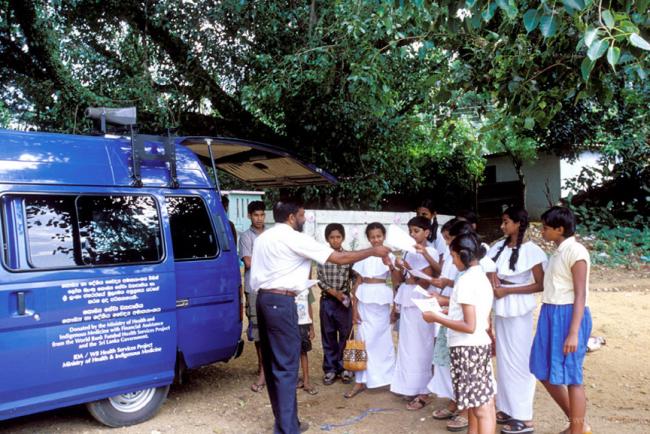
Photo: World Bank/Dominic Sansoni
Support Our Journalism
We cannot do without you.. your contribution supports unbiased journalism
IBNS is not driven by any ism- not wokeism, not racism, not skewed secularism, not hyper right-wing or left liberal ideals, nor by any hardline religious beliefs or hyper nationalism. We want to serve you good old objective news, as they are. We do not judge or preach. We let people decide for themselves. We only try to present factual and well-sourced news.
Support objective journalism for a small contribution.


