


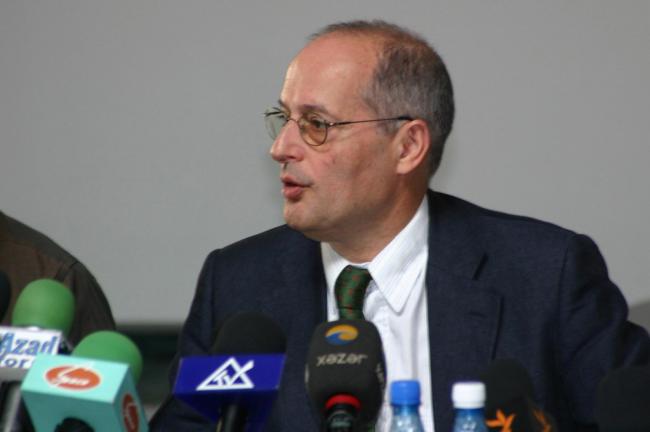
UN rights expert urges reform of oppressive media governance in Belarus
“Critical opinion and fact-finding are curtailed by the criminalization of content that is deemed 'harmful for the State'; by criminal defamation and insult laws that protect public officials and the President in particular from public scrutiny; and by 'extremism' laws that ban reporting on political or societal conflicts" said UN Special Rapporteur Miklos Haraszti in a press release.
While congratulating Belarusian writer Svetlana Alexievich on winning this year's Nobel Prize for literature, but regretted that her work had not been published in her country – illustrating how thoroughly freedom of opinion and information were suppressed by a barrage of punitive laws, administrative regulations and governmental institutions.
The Special Rapporteur said that until last year, Belarusians had benefited from free expression on the Internet. However, 2014 amendments to the law on mass media put practically all Internet-based forms of expression under direct government control, authorizing a long list of authorities to block unwanted content.
"Media pluralism is absent. Belarus is the only country in Europe with no privately owned nationwide broadcasting outlets. Media independence is rendered impossible through a permission-based system of registration and arbitrary rules regarding the revoking of licenses," elaborated Haraszti.
System-wide violations of freedom of expression are further aggravated by the systematic harassment of journalists who challenge the denial of their rights.
Short-term detention of reporters covering unauthorized events on the Internet adds to the level of intimidation and self-censorship.
While commending that the 11 October presidential election took place without violence, the Special Rapporteur deplored that voters were deprived the benefits of diverse media – crucial for an informed, free and fair competition. He pointed out "The road to free elections goes through pluralism and the right to speak and to know.”
Haraszti found that Belarusians’ rights to freedom of expression, as stated in Article 19 of the Universal Declaration of Human Rights, were being seriously curtailed.
"An important part of compliance with its international human rights obligations is the need to change the laws on foreign media support and accreditation, which today obstruct and punish interaction,” underscored the rights expert.
"Belarus needs to engage in a broad reform of its oppressive media governance, in consultation with all media and civil society actors," the Special Rapporteur concluded.
Independent experts or special rapporteurs are appointed by the Geneva-based UN Human Rights Council to examine and report back on a country situation or a specific human rights theme. The positions are honorary and the experts are not UN staff, nor are they paid for their work.
Photo: OSCE/Ilgar Hasanov/www.justearthnews.com
Support Our Journalism
We cannot do without you.. your contribution supports unbiased journalism
IBNS is not driven by any ism- not wokeism, not racism, not skewed secularism, not hyper right-wing or left liberal ideals, nor by any hardline religious beliefs or hyper nationalism. We want to serve you good old objective news, as they are. We do not judge or preach. We let people decide for themselves. We only try to present factual and well-sourced news.
Support objective journalism for a small contribution.


