


UN rights experts applaud steps by China and India to reduce, abolish death penalty
In August, the Indian Law Commission issued a report concluding that the death penalty does not act as an effective deterrent, and recommended its abolition for all crimes except terrorism-related offences, and waging war.
“The conclusions and recommendations of the Indian Law Commission represent an important voice in favour of the abolition of the death penalty in India,” said the Special Rapporteur on extrajudicial, summary or arbitrary executions, Christof Heyns.
He added, “I encourage the Indian authorities to implement these recommendations and to move towards the complete abolition of the death penalty for all offences.”
Juan Méndez, the Special Rapporteur on torture, noted that the Commission “recognized the immense suffering caused by the death row phenomenon as a seemingly inevitable consequence of the imposition of the death penalty; this recognition supports the emergence of a customary norm that considers the death penalty as, per se, running afoul of the prohibition of torture and cruel, inhuman or degrading treatment.”
The Indian authorities should review the findings very carefully and ratify the Convention against Torture, he added.
China amended several provisions of its Criminal Law after the session of the National People’s Congress Standing Committee, replacing the death penalty by life imprisonment for several offences, including the smuggling of weapons, ammunition, nuclear materials and counterfeit currency; arranging for a person or forcing a person to carry out prostitution; the obstruction of duty of a police officer; and creating rumours during wartime to mislead people.
“By adopting these amendments to its criminal code, China has made progress in the right direction; this needs to be encouraged,” the UN experts noted.
“These new developments in India and China are in line with the general trend towards the abolition of the death penalty at a global level, even if there are isolated moves in the opposite direction,” said Heyns.
Special rapporteurs are appointed by the Geneva-based UN Human Rights Council to examine and report back on a country situation or a specific human rights theme. The positions are honorary and the experts are not UN staff, nor are they paid for their work.
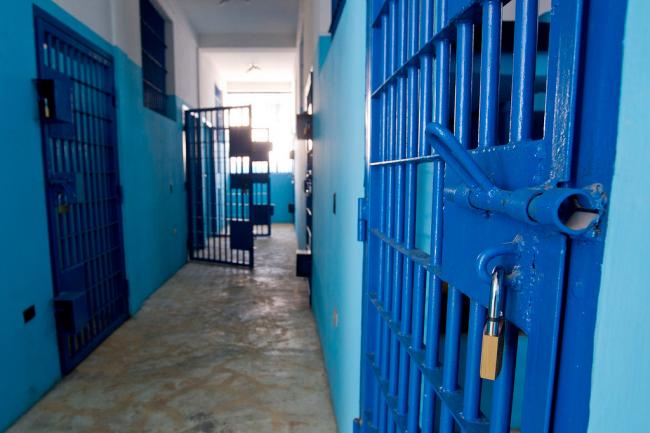
Photo: UN/MINUSTAH/Logan Abassi
Support Our Journalism
We cannot do without you.. your contribution supports unbiased journalism
IBNS is not driven by any ism- not wokeism, not racism, not skewed secularism, not hyper right-wing or left liberal ideals, nor by any hardline religious beliefs or hyper nationalism. We want to serve you good old objective news, as they are. We do not judge or preach. We let people decide for themselves. We only try to present factual and well-sourced news.
Support objective journalism for a small contribution.


