September 21, 2026 04:49 am (IST)

Follow us:


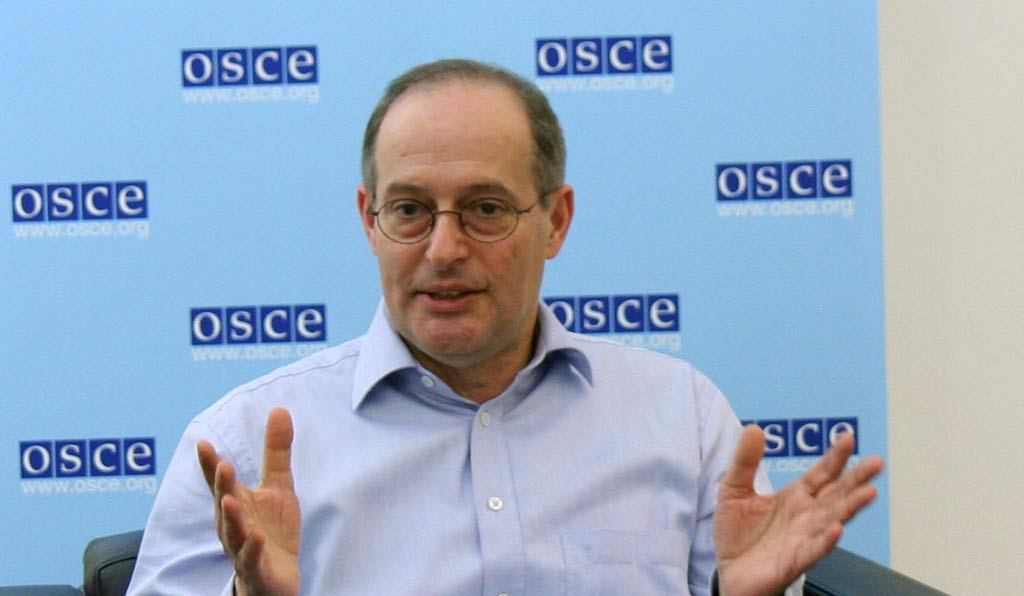
UN urges Belarus to impose death penalty moratorium
New York, Apr 26 (IBNS): An independent United Nations human rights expert on Friday urged authorities in Belarus, the only European nation that still retains the death penalty, to impose an immediate moratorium on the punishment and refrain from carrying out further executions.
The appeal by the Special Rapporteur on the situation of human rights in Belarus, Miklós Haraszti, comes after the reported execution of Pavel Sialiun and a Supreme Court ruling last week upholding the death sentence against Eduard Lykau, both convicted for murder.
Haraszti expressed concern about the way death sentences are carried out in Belarus, and particularly the circumstances of Sialiun’s execution, including that the date of his execution is not known, and that his mother was not notified and only learned from his lawyer that the sentence had been carried out.
“Information on death sentences remains limited for relatives and the general public and there is a lack of transparency about persons held on death row, and an inadequate procedure for appeals,” the expert stated in a news release. “Annual statistics on the use of the death penalty are not available, nor are the names of most of those who have been already executed.”
He added that those facing the death penalty, and their relatives, are not informed of the scheduled date of execution, and that following the execution, the relatives are not informed of where the body is buried.
“No reports of executions for a considerable time, despite the imposition of several new death sentences, had filled the international community with the hope that Belarus had started a practical moratorium, which would then lead to a legal moratorium, and finally to the abolition of capital punishment,” Haraszti said.
An estimated 160 countries have either abolished the death penalty or no longer practice it since the General Assembly’s landmark vote in 2007 calling for a worldwide moratorium on the practice. Most recently, Pakistan, the United Arab Emirates and the state of Washington in the United States decided to either establish a moratorium or to suspend executions.
While welcoming these developments, Secretary-General Ban Ki-moon deplored the fact that many States still execute people with little regard to due process. During a panel held on Thursday in New York, he also voiced deep concern that some States with long-standing de facto moratoriums have suddenly resumed executions, or are considering reintroduction of the death penalty in their legislation.
“The right to life is the most fundamental of all human rights. The taking of life is too irreversible for one human being to inflict it on another,” he told the event, calling for greater efforts to put a final stop to this “cruel and inhumane practice” once and for all.
In the case of Belarus, Haraszti noted that the establishment in December 2012 of a parliamentary working group on the death penalty was a “promising development,” and called on legislators to begin effective work towards reform.
In an October 2013 statement, he had urged the Government to start an immediate moratorium on executions before the relevant legislation and court system could be reformed and capital punishment removed from the country’s Criminal Code. He had also voiced disappointment that Belarusian courts continued to hand down death sentences.
Independent experts or special rapporteurs are appointed by the Geneva-based UN Human Rights Council to examine and report back on a country situation or a specific human rights theme. The positions are honorary and the experts are not UN staff, nor are they paid for their work.
(Special Rapporteur on Belarus Miklós Haraszti. Photo: OSCE/Susanna Lööf)
Support Our Journalism
We cannot do without you.. your contribution supports unbiased journalism
IBNS is not driven by any ism- not wokeism, not racism, not skewed secularism, not hyper right-wing or left liberal ideals, nor by any hardline religious beliefs or hyper nationalism. We want to serve you good old objective news, as they are. We do not judge or preach. We let people decide for themselves. We only try to present factual and well-sourced news.
Support objective journalism for a small contribution.



Latest Headlines
Italy PM Meloni announces big school plan: Burqa, hijab ban and cap on foreign students
Sun, Sep 20 2026
North Korea fires two missiles toward East Sea, South Korea confirms
Sun, Sep 20 2026
Houthis claim Saudi F-15 shot down as Mecca drone row escalates
Wed, Sep 16 2026