UNICEF urges more funding to boost humanitarian aid to children in Sudan
“We cannot make these boys and girls suffer even more by failing to provide timely, quality…humanitarian assistance and protection,” said Geert Cappelaere, UNICEF Representative to Sudan, stressing that “children are the main victims of the intensification of conflict in South Sudan.”
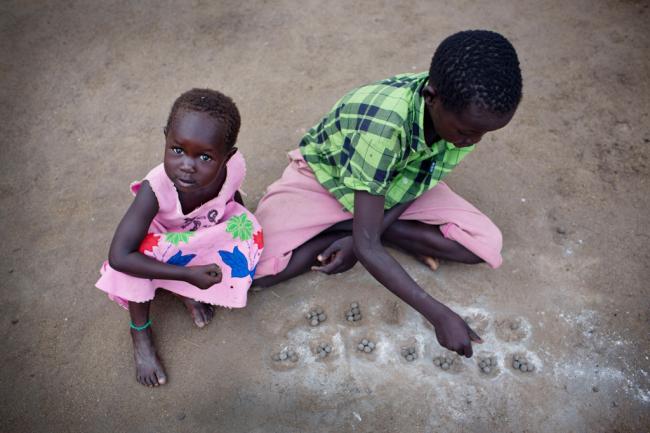
Representing over 60 per cent of the South Sudanese refugees, as well as over 60 per cent of the Sudanese returnees, children “have suffered from exposure to a brutal war which has uprooted them from their homes and separated them from their familiar environment.” Cappelaere warned.
While efforts have been made by UNICEF and its partners to support the Government of Sudan with lifesaving services such as water and sanitation, treatment of malnutrition, and immunization, the gaps remain critical as funds are available only until the end of the month for these multiple and urgent needs.
The high demand for education is another concern that strains the existing facilities for children sharing schools in refugee camps.
Further, the acute needs of children in Sudan go far beyond the impact of the South Sudan crisis.
Over 3.2 million children require humanitarian assistance.
Unfortunately, the funding received covers only 16% of the $117 million required and will run out by the end of June.
Therefore, the UN children’s agency is calling upon the international donors to increase urgently its funding to help provide protection, education and a healthy life for the most vulnerable children in Sudan.
The agency is also calling on the Government of Sudan and non-governmental partners to guarantee an enabling environment for reaching all those children most in need with timely and sufficient services.
South Sudan’s ongoing conflict began in December 2013 and has been marked by brutal violence against civilians and deepening suffering across the country.
Some 119,000 people are sheltered in UN compounds there while the Organization estimates that the number of people in need for 2015 will include an anticipated 1.95 million internally displaced persons (IDPs) and a projected 293,000 refugees.
Photo: UNICEF/Kate Holt
Support Our Journalism
We cannot do without you.. your contribution supports unbiased journalism
IBNS is not driven by any ism- not wokeism, not racism, not skewed secularism, not hyper right-wing or left liberal ideals, nor by any hardline religious beliefs or hyper nationalism. We want to serve you good old objective news, as they are. We do not judge or preach. We let people decide for themselves. We only try to present factual and well-sourced news.
Support objective journalism for a small contribution.