September 21, 2026 04:52 am (IST)

Follow us:


UNSC highlights critical role of military in peace efforts
New York, Apr 29 (IBNS): The United Nations Security Council (UNSC) on Monday called on countries emerging from conflict and all those assisting them to prioritize the development of domestic police and national defence forces that maintain rule of law and respect human rights, in its first-ever stand-alone resolution on security sector reform.
Stressing that it is the sovereign right and the primary responsibility of the countries concerned to reform their security institutions, the Council, through the resolution, encouraged the UN and other international partners to strengthen their approach to training and other assistance, and to integrate it with other efforts to help rebuild national institutions.
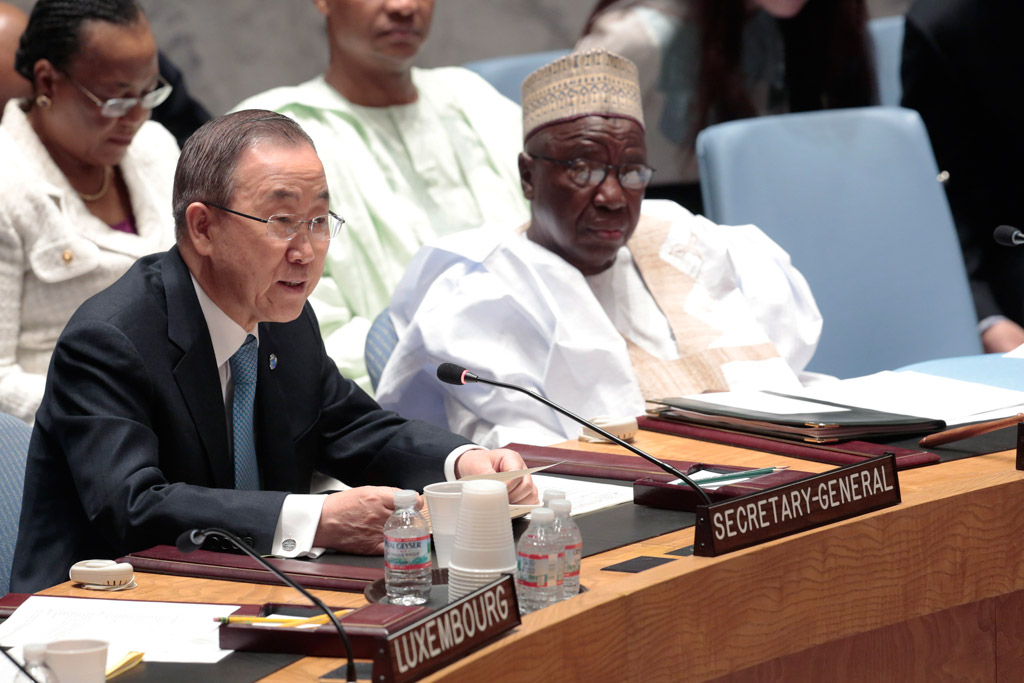
At the start of a day-long debate on the topic, chaired by the Minister of Foreign Affairs of Nigeria, which holds the Council’s April presidency, Secretary-General Ban Ki-moon said that current crises show what happens when security services lack training, governance and basic capacities.
“Earlier this month, I visited the Central African Republic and saw the terrible consequences of disintegrating security institutions,” Ban said, explaining that the purpose of security sector reform is, simply put, “to make people’s lives safer.”
He noted that the UN has already supported national security strategies in Côte d’Ivoire, Mali, Liberia, the Central African Republic and the Democratic Republic of the Congo. But he warned that there is an increasing gap between the growing expectations of what the UN could and should do, and the resources needed to meet them.
Ban reaffirmed some of the principles of security sector reform outlined in his latest report on the issue, including the linkage between security efforts and broader processes of political and institutional reforms in the countries in question.
“Strengthening operational effectiveness must be combined with efforts to build a strong governance framework, robust accountability and oversight mechanisms, and a culture of integrity and respect for human rights. National ownership is imperative,” he said.
[Secretary-General Ban Ki-moon (left) addresses the Security Council open debate on security sector reform. Foreign Minister Aminu Wali of Nigeria, Council President for April, is at right. UN Photo/Evan Schneider]
#Security Council
# domestic police
# national defence forces
# Rule of Law
# security sector reform
Support Our Journalism
We cannot do without you.. your contribution supports unbiased journalism
IBNS is not driven by any ism- not wokeism, not racism, not skewed secularism, not hyper right-wing or left liberal ideals, nor by any hardline religious beliefs or hyper nationalism. We want to serve you good old objective news, as they are. We do not judge or preach. We let people decide for themselves. We only try to present factual and well-sourced news.
Support objective journalism for a small contribution.



Latest Headlines
Italy PM Meloni announces big school plan: Burqa, hijab ban and cap on foreign students
Sun, Sep 20 2026
North Korea fires two missiles toward East Sea, South Korea confirms
Sun, Sep 20 2026
Houthis claim Saudi F-15 shot down as Mecca drone row escalates
Wed, Sep 16 2026