


 Fake-Image Campaign
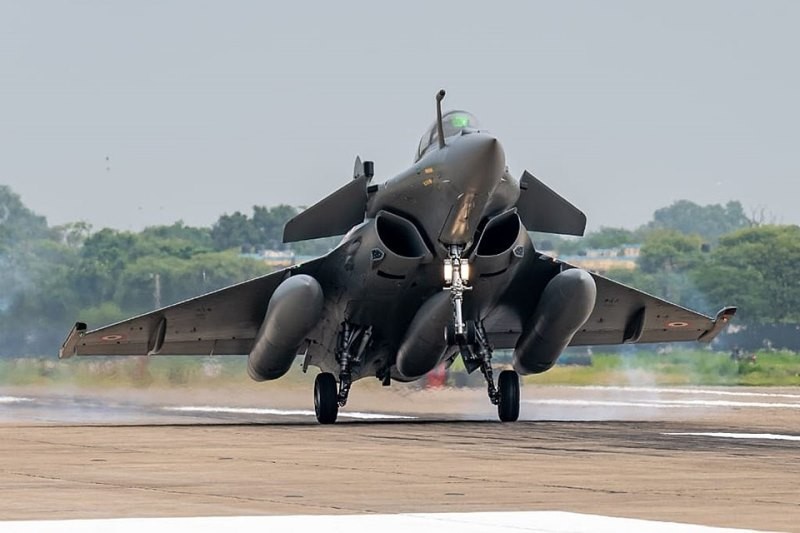
US report says China masterminded 'disinformation campaign' on Rafale after Operation Sindoor
New Delhi/IBNS: China mounted a coordinated disinformation campaign after India’s Operation Sindoor, aiming to undermine global confidence in Rafale fighter jets and promote its own J-35 aircraft, according to the annual report of the US–China Economic and Security Review Commission submitted to the US Congress.
The report states that Beijing deployed fake social media accounts to circulate AI-generated and video game–derived images portraying fabricated “debris” from Indian fighter jets supposedly shot down during the May 7–10 India–Pakistan clash.
The Commission says the objective was to damage French defence exports and advance China’s own military sales.
It notes that Chinese Embassy officials persuaded Indonesia to pause an ongoing Rafale purchase, helping Beijing deepen its influence over regional defence acquisitions.
Operation Sindoor and China's role
The report adds that China’s involvement in the three-day conflict drew widespread attention, as Pakistan relied heavily on Chinese-made weapons systems and allegedly benefited from Chinese intelligence support.
The Indian Army claimed Beijing supplied Islamabad with “live inputs” on Indian military positions throughout the crisis and used the conflict as an opportunity to observe and test its own capabilities.
Pakistan dismissed the allegations, while China neither confirmed nor denied them.
Although Pakistan asserted that India lost six fighter jets, including Rafales, during the confrontation, the US Commission states that only three Indian jets were reportedly shot down.
Growing China–Pakistan military ties
The report highlights an increase in China–Pakistan military cooperation through multiple joint exercises in 2024 and 2025.
These included the Warrior-VIII counterterrorism drills held in late 2024 and the AMAN 2025 naval exercise, which saw participation from China’s navy.
These activities, it says, reflect a deepening defence partnership that India views as a direct strategic challenge.
China’s marketing drive after the conflict
According to the Commission, Pakistan’s use of Chinese platforms during the 2025 conflict gave Beijing an opportunity to test and showcase its weapon systems under real combat conditions.
Chinese assets deployed included the HQ-9 air defence system, PL-15 missiles, and J-10 fighters, marking their first use in active combat.
As Pakistan’s largest arms supplier—responsible for 82 percent of its weapons imports between 2019 and 2023—China quickly leveraged the moment.
Following the confrontation, Beijing offered Islamabad 40 J-35 fifth-generation jets, KJ-500 early warning aircraft and advanced missile defence systems.
This coincided with Pakistan increasing its 2025–26 defence budget by 20 percent to $9 billion, despite reducing overall expenditure.
Chinese embassies worldwide amplified Pakistan’s claims of successful engagements against Indian Rafales to market Chinese systems abroad.
However, the report stresses that only three Indian jets were reportedly downed—and not all were confirmed to be Rafales.
Support Our Journalism
We cannot do without you.. your contribution supports unbiased journalism
IBNS is not driven by any ism- not wokeism, not racism, not skewed secularism, not hyper right-wing or left liberal ideals, nor by any hardline religious beliefs or hyper nationalism. We want to serve you good old objective news, as they are. We do not judge or preach. We let people decide for themselves. We only try to present factual and well-sourced news.
Support objective journalism for a small contribution.


