


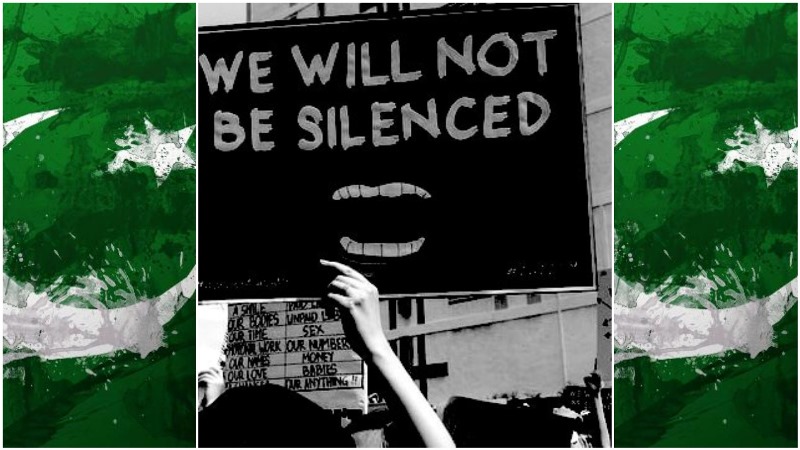
 Pakistan Human Rights
US report showcases severe human rights violations in Pakistan
Islamabad: A US State Department released report on human rights violation has identified unlawful, arbitrary and extrajudicial killings and disappearances as major issues in Pakistan, media reports said.
"Significant human rights issues included: unlawful or arbitrary killings by the government or its agents, including extrajudicial killings; forced disappearance by the government or its agents; torture and cases of cruel, inhuman, or degrading treatment or punishment by the government or its agents; arbitrary detention; harsh and life-threatening prison conditions; political prisoners; politically motivated reprisal against individuals located outside the country; arbitrary or unlawful government interference with privacy; serious restrictions on free expression, the press, and the internet, including violence against journalists, unjustified arrests and disappearances of journalists, censorship, and site blocking; government interference with the rights of peaceful assembly and freedom of association, such as overly restrictive nongovernmental organization laws; severe restrictions of religious freedom; restrictions on freedom of movement; corruption within the bureaucracy; lack of investigation of and accountability for violence against women; unlawful recruitment and use of child soldiers by nonstate militant groups; trafficking in persons; crimes involving violence or threats of violence targeting members of racial and ethnic minorities; crimes involving violence or threats of violence targeting lesbian, gay, bisexual, transgender, or intersex persons by nonstate actors; the existence or use of laws criminalizing consensual same-sex sexual conduct between adults; restrictions on workers’ freedom of association; and the use of the worst forms of child labor," read the report released by the department.
"There was a lack of government accountability, and abuses often went unpunished, fostering a culture of impunity among perpetrators, whether official or unofficial. Authorities seldom punished government officials for human rights abuses," read the statement.
"Terrorist violence and human rights abuses by nonstate actors contributed to human rights problems, although to a lesser extent than in previous years, consistent with an overall decline in terrorist activity," it said.
.jpg)
"Military, police, and law enforcement agencies continued to carry out significant campaigns against militant and terrorist groups. Nevertheless, violence, abuse, and social and religious intolerance by militant organizations and other nonstate actors, both local and foreign, contributed to a culture of lawlessness," read the report.
"As of December, terrorism fatalities stood at 499, compared with 365 total fatalities in 2019, according to the South Asia Terrorism Portal, a database compiled by the public interest advocacy organization Institute for Conflict Management, which collects statistics on terrorism and low intensity warfare in South Asia," it said.
Support Our Journalism
We cannot do without you.. your contribution supports unbiased journalism
IBNS is not driven by any ism- not wokeism, not racism, not skewed secularism, not hyper right-wing or left liberal ideals, nor by any hardline religious beliefs or hyper nationalism. We want to serve you good old objective news, as they are. We do not judge or preach. We let people decide for themselves. We only try to present factual and well-sourced news.
Support objective journalism for a small contribution.


