


 Pakistan
‘We created mujahideens to bleed India. Now they have turned guns on us’: Pak PM's aide’s viral remark exposes Pakistan’s militant blowback
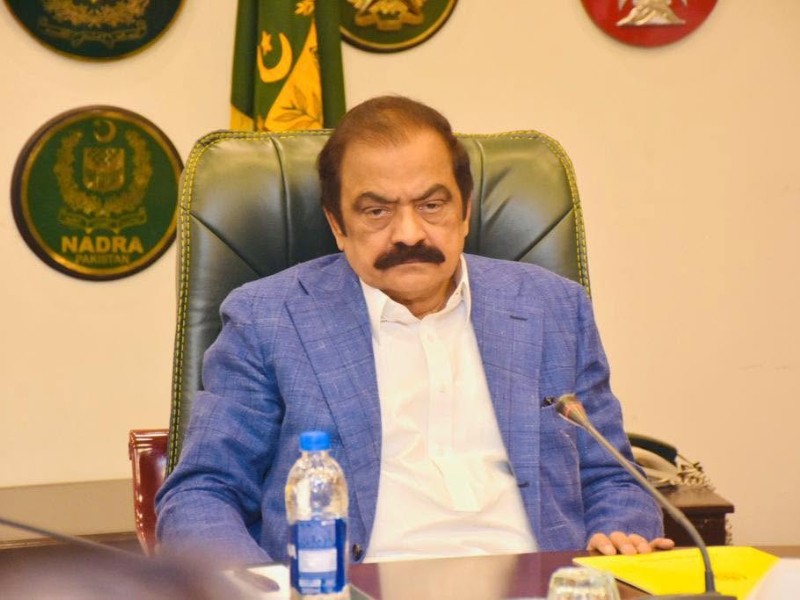
A video featuring Rana Sanaullah, adviser to Pakistan Prime Minister Shehbaz Sharif on political affairs, has gone viral after he appeared to acknowledge that "mujahideens" once trained to "bleed" India have now become a security threat for Pakistan.
Sanaullah made the remarks while discussing unrest in Pakistan-occupied Jammu and Kashmir (PoJK), where political tensions and street protests have intensified around the region’s Legislative Assembly elections.
The comments have attracted particular attention because they appear to offer an unusually direct account of the consequences of Pakistan’s past policy of supporting militant groups.
The video is circulating at a particularly sensitive time, with violence reported during the first phase of voting and tensions continuing ahead of subsequent polling.
Sanaullah’s ‘mujahideen’ remark goes viral
In the video, Sanaullah refers to fighters whom Pakistan had previously created and encouraged to fight against India.
He suggests that these groups have subsequently become a problem for Pakistan itself.
According to his remarks, the fighters were initially sent to fight, but have since remained armed and active within Pakistan.
🚨 Pakistan Minister Rana Sanaullah makes a stunning claim on the PoJK unrest:
— Brics Times (@Brics_Timesx) July 29, 2026
“These are the same people we once trained as Mujahideen. We sent them to fight, and today they are hanging around our necks.”
The groups Pakistan says it once trained are now at the center of unrest… pic.twitter.com/J090oaV5oS
He also accused them of lacking a genuine political cause and of using civilians as shields.
Sanaullah argued that the authorities had little choice but to take law-enforcement action against such groups.
The remarks have generated widespread discussion because they come from a senior Pakistani political figure and touch upon one of the most contentious aspects of Pakistan’s security policy: its historical relationship with militant organisations operating against India.
Why the remarks have surfaced amid PoJK unrest
The timing has added significance to the video.
Pakistan-occupied Jammu and Kashmir has been experiencing sustained unrest, with the Joint Awami Action Committee (JAAC) leading protests over economic and political grievances.
The movement has raised concerns over electricity prices, inflation, governance and the structure of political representation in the territory.
The protests have continued for weeks and have escalated into clashes with security forces.
The first phase of the PoJK Legislative Assembly election was held in the Mirpur division on July 27.
Reports of violence emerged from several locations during polling, with rival accounts over the number of people killed and injured.
The JAAC claimed that 14 of its activists were killed and more than two dozen injured, while law-enforcement authorities disputed the death toll and accused protesters of opening fire on security personnel.
The violence has added another layer of uncertainty to an already tense electoral process.
JAAC protests have been building for weeks
The latest clashes did not emerge suddenly.
The JAAC-led protest movement has been active for more than seven weeks and has grown from economic grievances into a broader challenge to governance in PoJK.
The organisation has demanded the release of detained protesters, withdrawal of cases against activists and action on its wider demands.
Talks between the JAAC and Pakistani authorities reportedly failed to produce an agreement, after which protesters renewed their mobilisation and announced plans for a march towards Muzaffarabad.
The situation has also prompted calls from political and rights groups for Pakistan to exercise restraint.
The United Kashmir People's National Party (UKPNP), for example, urged Pakistani authorities to avoid using force against protesters and said more than 40 people had died since June 5 amid the continuing unrest.
That figure was the organisation’s claim and was not independently established in the report.
Election process hit by protests and violence
The unrest has already affected the election schedule.
Polling in two districts, Sudhnoti and Rawalakot, was postponed until August 10 because of the continuing protest sit-in led by the Public Action Committee, according to reports.
The postponement came after talks between the protesters and authorities broke down.
The first phase, meanwhile, covered 13 constituencies in the Mirpur division.
Pakistan deployed a three-tier security arrangement involving the police, the Rangers, and the Army.
According to reporting citing Dawn, about 2,100 Army personnel were deployed, while around 18,560 police and other law-enforcement personnel were involved in the wider security arrangement.
Despite the heavy security presence, violence was reported during polling.
Pakistan’s long-standing militant proxy controversy
Sanaullah’s comments have revived scrutiny of Pakistan’s long-standing use of non-state militant groups in its confrontation with India.
For decades, India has accused Pakistan of supporting militant organisations involved in cross-border terrorism and infiltration in Jammu and Kashmir.
Islamabad has repeatedly rejected accusations that it sponsors terrorism against India.
The broader history of militant groups operating in the region, however, has been extensively discussed in security and geopolitical assessments, particularly in the context of the Afghan jihad against the Soviet Union and the subsequent evolution of militant networks in South Asia.
Sanaullah’s remarks are significant because they appear to describe a form of blowback: groups or fighters once viewed as instruments against an external adversary subsequently becoming a security problem inside Pakistan.
That dynamic has previously been acknowledged by Pakistani officials and analysts in discussions about militancy and terrorism within the country.
Pakistan has also blamed external actors
At the same time, Pakistani officials have frequently attributed militant violence inside the country to foreign support.
Sanaullah has previously spoken about militant activity originating from Afghanistan and alleged external involvement in Pakistan’s security problems.
Islamabad has repeatedly accused India and other actors of supporting militant networks, allegations India has rejected.
The competing narratives have become a recurring feature of the India-Pakistan security debate.
Against that background, the viral video has drawn attention because Sanaullah's comments appear to acknowledge an internal dimension to the militancy problem rather than attributing all violence to external actors.
PoJK elections now under greater scrutiny
The remaining stages of the electoral process are taking place against this unsettled backdrop.
The unrest has raised questions about the security environment in areas where polling is scheduled and whether the JAAC-led movement will continue its mobilisation during the electoral process.
The first phase produced a victory for Pakistan Muslim League-Nawaz (PML-N), which won nine of the 13 contested seats, while the Pakistan Peoples Party (PPP) secured four, according to Sanaullah.
He subsequently called on political parties to respect the electoral mandate.
However, the election results have done little to remove the wider political tensions surrounding the region.
India watches the developments closely
The unrest in PoJK has also drawn attention in India, where the political and constitutional status of Jammu and Kashmir remains a major issue in relations with Pakistan.
New Delhi maintains that the entire Jammu and Kashmir region, including areas under Pakistan's control, is an integral part of India.
Pakistan disputes India's position and claims Jammu and Kashmir as a disputed territory.
The latest unrest has therefore acquired significance beyond the immediate electoral contest, particularly as Pakistan continues to face questions over governance, political representation and public discontent in PoJK.
Viral clip adds another dimension
Sanaullah’s comments have now become part of the wider debate over Pakistan’s militant history and the consequences of policies pursued over decades.
The remarks are being circulated just as Pakistan-occupied Jammu and Kashmir faces one of its most serious periods of unrest in recent years.
With protests continuing, election-related violence already reported, and parts of the polling process disrupted, the video has given the debate over militancy and its consequences a fresh political dimension.
Support Our Journalism
We cannot do without you.. your contribution supports unbiased journalism
IBNS is not driven by any ism- not wokeism, not racism, not skewed secularism, not hyper right-wing or left liberal ideals, nor by any hardline religious beliefs or hyper nationalism. We want to serve you good old objective news, as they are. We do not judge or preach. We let people decide for themselves. We only try to present factual and well-sourced news.
Support objective journalism for a small contribution.


