


 Bangladesh
Why Tarique Rahman’s homecoming is rattling Jamaat—and reshaping India’s stakes in Bangladesh
Dhaka/IBNS: The return of Bangladesh Nationalist Party (BNP) acting chairman Tarique Rahman after 17 years in exile has triggered political tremors across Bangladesh—and not least because of what it could mean for India.
Within hours of Rahman landing in Dhaka, a Jamaat-e-Islami–aligned lawyer issued a chilling threat, explicitly invoking India, underscoring how sharply the regional dimension now frames domestic Bangladeshi politics.
Barrister Shahriar Kabir, known for his proximity to Jamaat-e-Islami Bangladesh, accused Rahman of “accepting India’s conditions” and framed his return as a betrayal of the political legacy of his parents.
The remarks, widely seen as a death threat, came immediately after Rahman’s first address on Bangladeshi soil, where he laid out a vision focused on national unity, law and order, and sovereignty.
Jamaat’s unease as crowds rally behind BNP
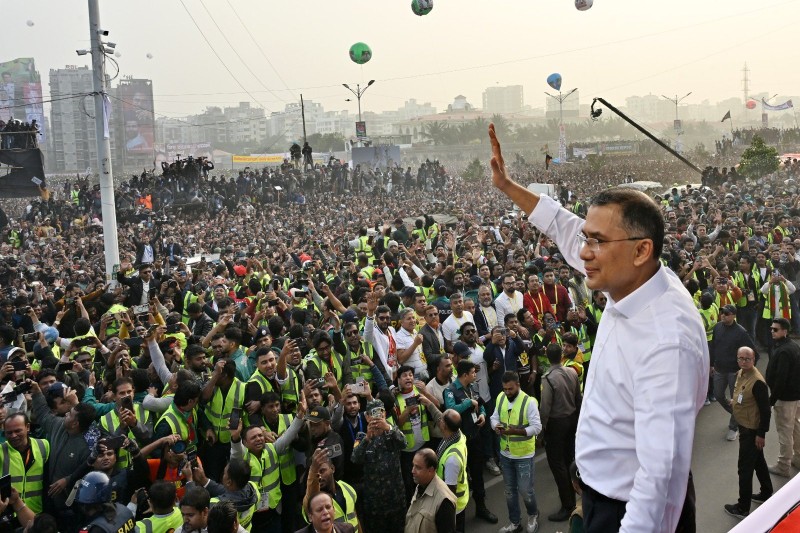
Kabir’s comments exposed growing anxiety within Jamaat-e-Islami as massive crowds welcomed Rahman home.
His return has injected momentum into the BNP at a time when Islamist groups are attempting to consolidate influence through alternative alliances.
Following the August 2024 uprising that led to the ouster of Sheikh Hasina and ended her 15-year rule, Jamaat threw its weight behind student-led protests.
That movement later gave rise to the National Citizens’ Party (NCP), now widely viewed as a Jamaat-backed political proxy. With national elections scheduled for February 12, Jamaat has been seeking seat-sharing arrangements with the NCP to position itself as a decisive force.
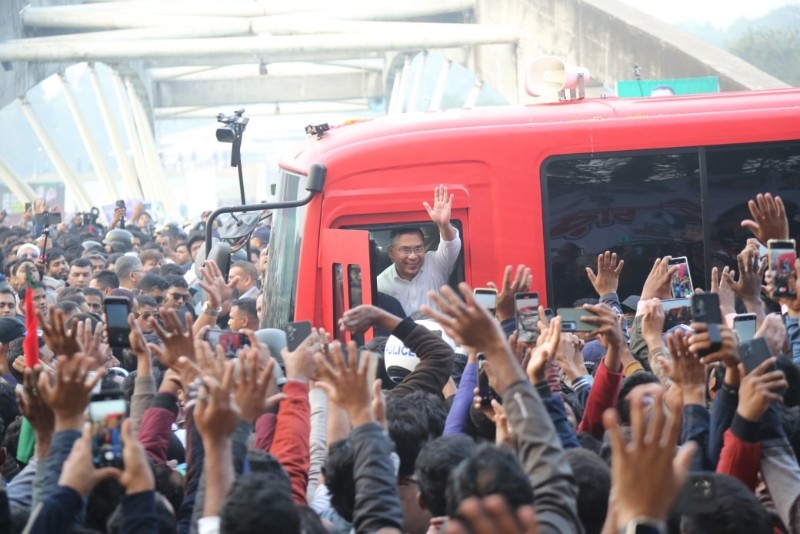 BNP's acting chairman and former PM Khaleda Zia's son Tarique Rahman's homecoming after 17 years has triggered political tremors across Bangladesh. Photo: Facebook/bnpbd.org
Tarique Rahman’s re-entry into active politics, however, has disrupted these calculations.
By openly pushing for early elections, he has undercut Jamaat’s preference for delaying the polls—an approach critics link to ongoing unrest and instability.
Fractures inside the NCP
The Jamaat-NCP alignment is itself showing signs of strain. While some within the NCP support collaboration with Jamaat, others have resisted the idea.
The resignation of senior NCP leader Mir Arshadul Haque amid seat-sharing discussions highlighted internal dissent and raised questions about the party’s long-term coherence.
With the Awami League banned by the interim government, Bangladesh’s political battlefield is narrowing.
Increasingly, the contest is shaping up as a direct face-off between the BNP and Jamaat-aligned forces.
This emerging polarity helps explain why Jamaat’s rhetoric has turned sharply against Rahman, whom it now views as its principal obstacle.
Osman Hadi’s killing and the politics of unrest
Tensions have been further inflamed by the killing of Sharif Osman Hadi, a figure closely associated with the anti-Hasina protests.
Statements by Hadi’s family have hinted at deeper conspiracies aimed at creating instability ahead of the elections, feeding allegations that unrest is being deliberately stoked to justify poll delays.
Attacks on minorities, journalists, cultural institutions and media organisations have added to the volatile atmosphere.
Analysts in Bangladesh increasingly point to a pattern in which chaos serves political interests opposed to a timely electoral process.
What Tarique Rahman signals for India
For New Delhi, Tarique Rahman represents a complex but distinct political proposition.
His rhetoric emphasises putting Bangladesh first, without anchoring Dhaka’s foreign policy to either Delhi or Rawalpindi.
This positioning contrasts sharply with Jamaat-e-Islami’s openly anti-India stance and its perceived alignment with Pakistan-backed regional agendas.
Rahman has repeatedly stressed inclusivity and religious coexistence, framing Bangladesh as a nation where Muslims, Hindus, Buddhists and Christians can live securely.
In his first speech after returning, he spoke of building a “safe Bangladesh” rooted in shared national identity rather than religious extremism.
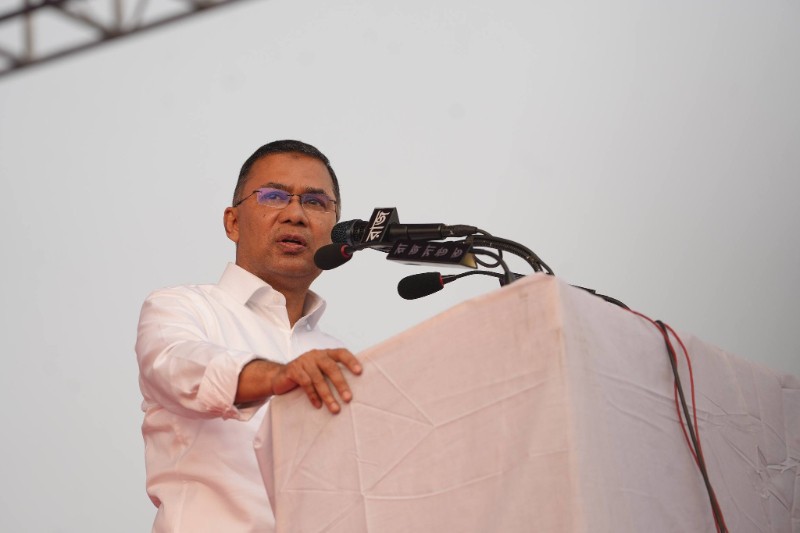 BNP's acting chairman and former PM Khaleda Zia's son Tarique Rahman's homecoming after 17 years has triggered political tremors across Bangladesh. Photo: Facebook/bnpbd.org
At a massive rally in Dhaka’s Nayapaltan area, Rahman distilled his foreign policy outlook into a slogan that quickly went viral: “Not Dilli, not Pindi—Bangladesh before everything.”
The statement signalled strategic autonomy rather than alignment, a nuance that differentiates him from Islamist actors hostile to India.
Why Jamaat is targeting Rahman
Rahman’s emphasis on elections, law and order, and democratic norms strikes at the heart of Jamaat’s street-power strategy.
Continued arson, vandalism and mob mobilisation have historically benefited radical groups by creating pressure for political concessions or delays.
By calling for calm and warning against provocation, Rahman directly challenges this playbook.
His appeal to young Bangladeshis to take responsibility for rebuilding the nation on democratic and economic foundations has resonated widely, further unsettling Islamist groups that thrive on polarisation.
Jamaat’s attempt to link Rahman to India fits a familiar pattern—using anti-India narratives to delegitimise political opponents and mobilise hardline supporters.
History, Farakka and the regional subtext
Another flashpoint is Rahman’s repeated invocation of Bangladesh’s historical milestones, including 1971, 1975 and 1990—chapters Jamaat prefers to downplay as it advances a more rigid Islamist narrative.
His return also coincides with renewed attention on the Farakka Water Treaty, signed in 1996 and due for renewal in 2026.
The treaty, which governs dry-season Ganges water sharing, will require careful diplomacy from whichever government takes office next. Rahman’s statements suggest an intent to engage India pragmatically, rather than through confrontation or ideological hostility.
Shifting alliances and a changed political map
Jamaat’s discomfort has been compounded by the BNP’s announcement of an alliance with the Jamiat Ulama-e-Islam (JUI), a conservative but less radical Islamist party.
While both draw on religious constituencies, their ideologies diverge sharply.
The JUI focuses on traditional clerical leadership, whereas Jamaat pursues a more rigid, Pakistan-aligned Islamist state model.
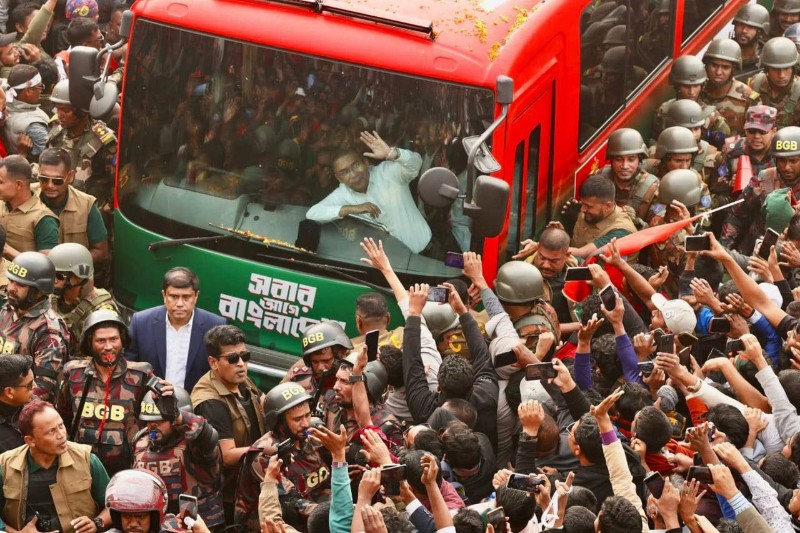 BNP's acting chairman and former PM Khaleda Zia's son Tarique Rahman's homecoming after 17 years has triggered political tremors across Bangladesh. Photo: Facebook/bnpbd.org
Former Indian High Commissioner to Bangladesh Veena Sikri has noted that Rahman’s long exile and tightly controlled return have boosted his political standing.
His arrival, she argues, is likely to trigger a surge in BNP support—precisely the outcome Jamaat fears as it seeks to unify Islamist forces under its influence.
A return that redefines the contest
Tarique Rahman’s return has done more than bring back a major political figure; it has reordered Bangladesh’s political equations and sharpened the India factor in domestic debates.
By positioning himself as anti-Hasina but not anti-India, pro-democracy but not Islamist, Rahman has occupied a space that leaves Jamaat with fewer options—and sharper rhetoric.
As Bangladesh moves toward a pivotal election, his presence ensures that the contest will not only be about power at home, but also about how the country defines its regional posture in South Asia.
Support Our Journalism
We cannot do without you.. your contribution supports unbiased journalism
IBNS is not driven by any ism- not wokeism, not racism, not skewed secularism, not hyper right-wing or left liberal ideals, nor by any hardline religious beliefs or hyper nationalism. We want to serve you good old objective news, as they are. We do not judge or preach. We let people decide for themselves. We only try to present factual and well-sourced news.
Support objective journalism for a small contribution.


