August 14, 2026 03:12 am (IST)

Follow us:


 GST
GST
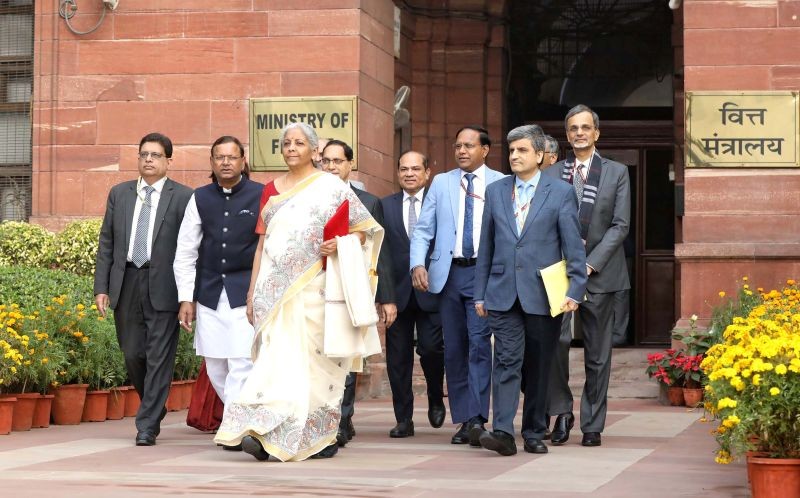
Nirmala Sitharaman to chair GST Council meeting: What's likely to get cheaper?
New Delhi/IBNS: Union Finance Minister Nirmala Sitharaman will chair the 58th GST Council meeting on Wednesday or Thursday to give a framework to Prime Minister Narendra Modi's call for GST reforms, media reports said.
The meeting will be held in participation of the union and state Finance Ministers for a singular agenda of the reforms.
An officers' meeting was held on Tuesday to give an outline to the reforms before the GST Council meeting.
The GST slabs are expected to be slashed from the existing four (5 percent, 12 percent, 18 percent and 28 percent) to two.
As per reports, only 5 percent and 18 percent are likely to be retained. While 5 percent will be kept for essential goods, 18 percent for non-essentials.
Prime Minister Narendra Modi during his Independence Day speech on August 15 declared his government set to reform the GST structure ahead of the festival Diwali.
The GST reform is considered a way to boost the consumption and woo the traders in wake of the 50 percent tariffs imposed by US President Donald Trump on imports from India.
What’s Likely to Get Cheaper
1. Consumer staples and daily-use goods (GST: 12% → 5%)
- Many food and packaged items such as milk powder, noodles, oils, fats, sugar, jam, honey, chocolates, confectionery, processed foods, cakes, cookies, butter, condensed milk, ghee, cheese, biscuits, chips, ketchup, mayonnaise, packaged juices, pasta, noodles, and namkeens are expected to move to the 5% slab
- Everyday personal care items like toothpaste, tooth powder, soaps, shampoo, and hair oil are also likely to see a reduction to 5%
- General consumer necessities such as pencils, umbrellas, bicycles, hair pins, exercise books, maps, globes may also transition to 5%
- High-ticket household appliances and electronics—air conditioners (ACs), TVs, refrigerators, washing machines, dishwashers—are projected to shift from 28% to 18%
- Small cars (e.g., compact petrol hybrids) are set to drop from 28% to 18%, a move anticipated just before Diwali
- Similarly, motorbikes and scooters, especially commuter models under certain engine capacities (e.g., <350 cc), will be taxed at 18% instead of 28%
- The insurance sector—specifically health and life insurance premiums—is likely to benefit from reduced GST of 5% or lower
- Insurance contracts and potentially financial instruments may also drop to the lower rate bracket
- Cement could drop from 28% to 18%, aiding construction affordability
- Processed foods, garments (especially above ₹1,000), and footwear are set to benefit from reduced taxation—likely 12% to 5% for affordable categories
- Textiles, fertilizers, farm machinery, and other sectors are expected to benefit indirectly via reduced input costs and improved tax mechanisms
- Daily-use goods, including stationery and educational items, are set to become more affordable (5% slab)
Support Our Journalism
We cannot do without you.. your contribution supports unbiased journalism
IBNS is not driven by any ism- not wokeism, not racism, not skewed secularism, not hyper right-wing or left liberal ideals, nor by any hardline religious beliefs or hyper nationalism. We want to serve you good old objective news, as they are. We do not judge or preach. We let people decide for themselves. We only try to present factual and well-sourced news.
Support objective journalism for a small contribution.

Latest Headlines
Tata Motors shares jump 6% after Q1 profit soars 83% to ₹2,560 crore
Thu, Aug 13 2026
RVNL posts strong Q1 numbers, but shares fall sharply
Thu, Aug 13 2026
Profit soars 39%, but Grasim stock crashes 3% after Q1 results
Thu, Aug 13 2026
Sensex plunges 170 points, Nifty nears 24,350 as market takes a hit
Thu, Aug 13 2026
Who is Aasif Malbari? Godrej Consumer Products appoints new Managing Director & CEO after Sudhir Sitapati's exit
Wed, Aug 12 2026
India builds ‘Special’ LHB train for Bangladesh. All details here
Wed, Aug 12 2026