 UPI
UPI
UPI payments above Rs 2,000: Will you have to pay a charge? Here's what the new rule says
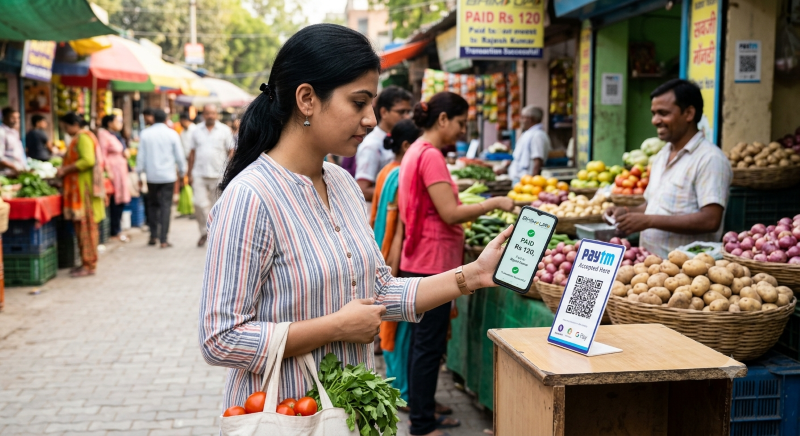
New Delhi/IBNS: The government's latest notification on UPI transactions has triggered confusion among users over what happens when they make a payment of more than Rs 2,000.
The key point is that a UPI transaction above Rs 2,000 will not be blocked or rejected merely because it crosses the threshold.
A user can continue to make UPI payments of Rs 2,500, Rs 5,000, Rs 10,000 or more, subject to the usual transaction limits set by banks and UPI apps.
The latest notification specifically guarantees that banks and payment-system providers cannot levy direct or indirect charges on UPI transactions up to Rs 2,000.
What happens to a Rs 5,000 UPI payment?
At present, nothing changes for the user simply because the payment is above Rs 2,000.
There is no newly imposed government fee that automatically gets added when a person makes a Rs 5,000 UPI payment.
The government has opened the possibility of introducing a Merchant Discount Rate (MDR) for certain higher-value merchant transactions, but the rate and mechanism have not yet been finalised.
Will the customer have to pay the charge?
The proposed change primarily concerns merchant transactions, rather than ordinary person-to-person UPI transfers.
The government has maintained that UPI remains free for consumers, while any future MDR would be linked to a limited category of merchant transactions.
This means that if one sends Rs 5,000 to a friend or family member through UPI, the new notification does not mean that an additional fee will suddenly be deducted from your account.
Why is Rs 2,000 important?
The notification creates a clear statutory protection for transactions up to Rs 2,000. For transactions above that amount, the previous blanket prohibition on charges has been removed, leaving room for a future fee framework, particularly for merchant payments.
Support Our Journalism
We cannot do without you.. your contribution supports unbiased journalism
IBNS is not driven by any ism- not wokeism, not racism, not skewed secularism, not hyper right-wing or left liberal ideals, nor by any hardline religious beliefs or hyper nationalism. We want to serve you good old objective news, as they are. We do not judge or preach. We let people decide for themselves. We only try to present factual and well-sourced news.
Support objective journalism for a small contribution.