


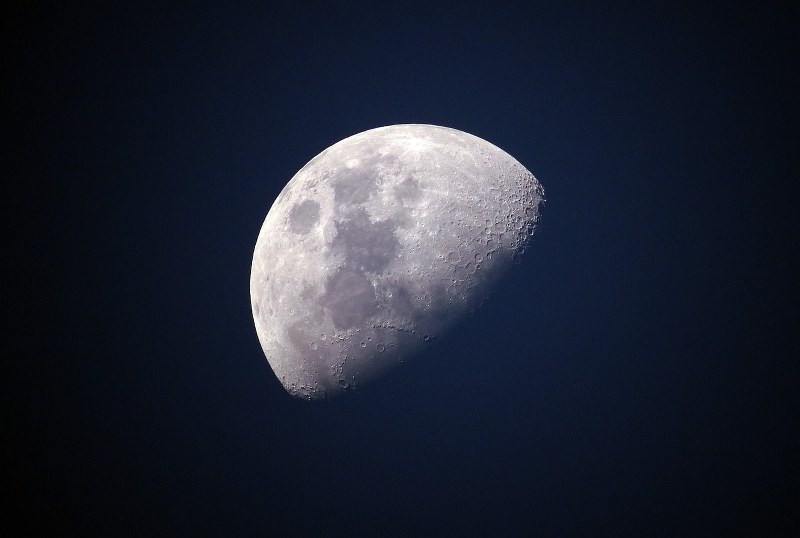
Moon's age approx 40 million years more than calculated by previous research
A recent analysis of moon crystals, originally brought to Earth by Apollo astronauts in the 1970s, has indicated that the moon is approximately 40 million years older than previously thought.
While these samples have undergone multiple analyses, a new study conducted by researchers at the Field Museum and the University of Glasgow has provided new insights.
It indicates that the oldest crystal is 4.46 billion years old, revising the previous estimate of 4.52 billion years.
The study has been published in the journal Geochemical Perspectives Letters.
"It's amazing being able to have proof that the rock you're holding is the oldest bit of the moon we've found so far. It's an anchor point for so many questions about the Earth. When you know how old something is, you can better understand what has happened to it in its history," The Guardian quoted lead author Dr Jennika Greer of the University of Glasgow as saying.
The breakthrough was brought about by a cutting-edge technique called atom probe tomography. This method involves using a laser to vaporize atoms from finely honed crystals, creating an extremely fine "nano tip".
Through this atom-by-atom examination, researchers were able to determine the number of atoms in the moon's crystals that have experienced radioactive decay.
This more accurate age determination will provide scientists with deeper insights into the moon's historical development and evolution, shedding light on both lunar and Earthly histories.
Support Our Journalism
We cannot do without you.. your contribution supports unbiased journalism
IBNS is not driven by any ism- not wokeism, not racism, not skewed secularism, not hyper right-wing or left liberal ideals, nor by any hardline religious beliefs or hyper nationalism. We want to serve you good old objective news, as they are. We do not judge or preach. We let people decide for themselves. We only try to present factual and well-sourced news.
Support objective journalism for a small contribution.


