 Nobel Prize
American poet Louise Gluck wins 2020 Nobel Prize in Literature
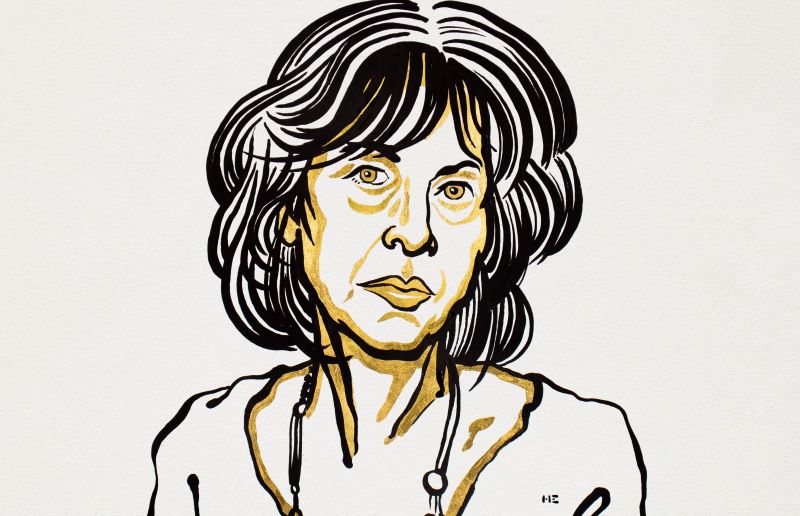
Stockholm/IBNS: American poet Louise Gluck was awarded the 2020 Nobel Prize in Literature on Thursday.
She has been awarded the Nobel for "her unmistakable poetic voice that with austere beauty makes individual existence universal".
Gluck was born 1943 in New York and lives in Cambridge, Massachusetts.
Apart from her writing she is a professor of English at Yale University, New Haven, Connecticut.
She made her debut in 1968 with Firstborn, and was soon acclaimed as one of the most prominent poets in American contemporary literature. She has received several prestigious awards, among them the Pulitzer Prize (1993) and the National Book Award (2014).
Louise Glück has published twelve collections of poetry and some volumes of essays on poetry. All are characterized by a striving for clarity. Childhood and family life, the close relationship with parents and siblings, is a thematic that has remained central with her.
In her poems, the self listens for what is left of its dreams and delusions, and nobody can be harder than she in confronting the illusions of the self. But even if Glück would never deny the significance of the autobiographical background, she is not to be regarded as a confessional poet. Glück seeks the universal, and in this she takes inspiration from myths and classical motifs, present in most of her works.
The voices of Dido, Persephone and Eurydice – the abandoned, the punished, the betrayed – are masks for a self in transformation, as personal as it is universally valid.
Support Our Journalism
We cannot do without you.. your contribution supports unbiased journalism
IBNS is not driven by any ism- not wokeism, not racism, not skewed secularism, not hyper right-wing or left liberal ideals, nor by any hardline religious beliefs or hyper nationalism. We want to serve you good old objective news, as they are. We do not judge or preach. We let people decide for themselves. We only try to present factual and well-sourced news.
Support objective journalism for a small contribution.