Crafted in India, Framed in the West
India has one of the richest traditions of handicrafts in the world, yet we often look to the West for validation before appreciating their true worth, writes Anju Munshi.
It takes others to make you realise your worth—so goes the old saying.
We become so accustomed to what is readily available around us that we begin to take it for granted.
A handwoven sari, a hand-beaten brass vessel, intricate embroidery or a handcrafted leather pouch are common sights in Indian households. What, we ask, is so special about them?
Until they suddenly leap out of obscurity after being ‘rediscovered’ by a global luxury brand.
Take the case of Prada, made even more famous by the blockbuster film The Devil Wears Prada and its sequel. The humble Kolhapuri chappal from Maharashtra made an appearance during Prada’s Spring-Summer menswear runway show in Milan in 2025, carrying a luxury price tag.
Thanks to social media, eagle-eyed Indian fashion enthusiasts quickly spotted the resemblance, triggering a heated debate over cultural appropriation and intellectual property. Eventually, the fashion house acknowledged the inspiration behind the iconic T-strap sandals. Today, fortunately, Kolhapur’s artisans are working with international designers and receiving better remuneration.
 Prada Puts Kolhapur in the Spotlight. Photo: YouTube Screenshot/ChatGPT
This is only one example of how India’s traditional crafts and craftsmen often fail to receive due recognition, even from their own countrymen. Master artisans in Mumbai, Lucknow or Kolhapur continue to earn modest wages that barely cover their cost of living. Yet when global luxury brands reinterpret Kolhapuri sandals, potli bags or traditional embroidery, we suddenly rediscover pride in our heritage.
European fashion houses routinely source textiles featuring mukaish work, chikankari embroidery and hand-block printing. “There’s demand, but we don’t get our proper dues,” rues Shaker Khan, who works at an embroidery establishment on Kolkata’s Elliot Road.
“If global brands adopt and market them at astronomical prices, we instantly reframe them as masterpieces. It’s a kind of conditioning,” says Maruti Talwar, a homemaker from Jammu. “I started appreciating many crafts that were once considered commonplace only after seeing them showcased in New York. Bead strings, feather earrings, zardozi work, leather pouches and metal crafts—all handcrafted, all available at a fraction of the price in India, yet often undervalued.”
Talwar describes it as a lingering colonial mindset—the tendency to assume that foreign goods are inherently superior. Even today, many Indians wait for a Western stamp of approval before recognising the value of something produced at home.
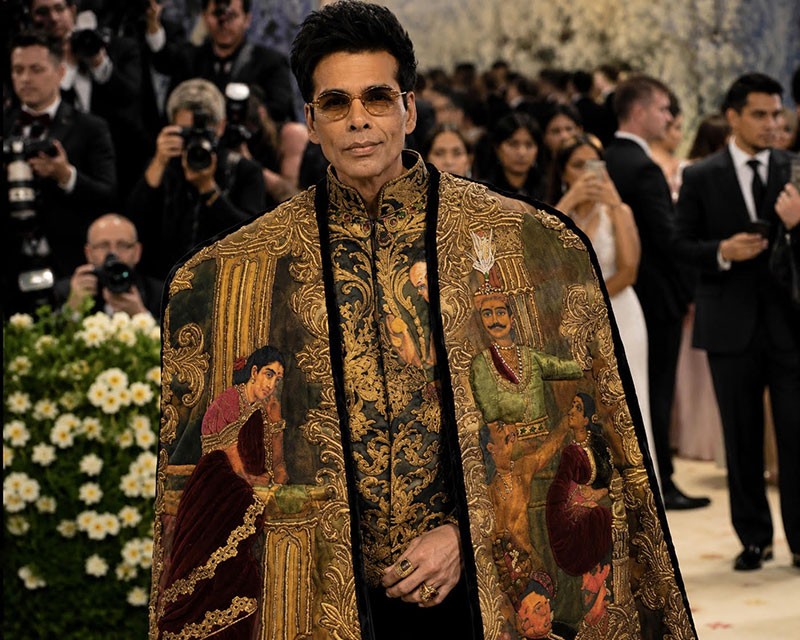
The recent Met Gala offered another example. The annual fashion spectacle at New York’s Metropolitan Museum showcased breathtaking displays of zardozi, Kanjeevaram silk and Bengal’s Shola craft through the work of Indian designers.
For years, much of India’s urban elite viewed Raja Ravi Varma somewhat dismissively as a calendar artist. Only a small circle of connoisseurs truly appreciated his genius. Yet when filmmaker Karan Johar appeared at the Met Gala in an outfit inspired by Varma’s paintings, many Indians suddenly took renewed interest in the artist. Recently, Varma’s 1890s masterpiece Yashoda and Krishna set a record for Indian art, selling for an astonishing Rs 167.2 crore at auction.
Similarly, Nathdwara’s exquisite Pichwai temple art found a global audience when Isha Ambani appeared at the Met Gala in a gold sari featuring hand-painted Pichwai motifs.
“We tend to treat our own heritage crafts as inexpensive and ordinary, only waking up to their value when a Western fashion house validates them on a global stage,” says Delhi-based teacher Sharmila Sharma.
"It’s like making use of our traditional expertise; they make money and we get nothing," feels Janto Som, a weaver from Nadia district, West Bengal.
"It’s true," says Anindita Ray, a consultant for the Kolkata-based boutique ‘Sasha’ on Mirza Ghalib Street.
"The brand Sasha was founded to eliminate middlemen and secure fair wages for local artisans, but today we see that the traditional Indian handlooms and local crafts that our artisans toil for, in heat and grime, are being replicated by mechanised looms in China," Ray says.
Meghna Nayak, founder of Kolkata-based sustainable fashion label Lata Sita, observes: “What is found in our own backyard is often neither recognised nor celebrated.”
“In India, upcycling old clothes is often considered beneath us. In the West, vintage fashion becomes a story of sustainability, memory and style.”
The phenomenon extends beyond fashion and handicrafts. Indian street food originating in the lanes of Kolkata, the beaches of Goa or the markets of Rajasthan often reappears abroad under sophisticated names, artistic presentation and significantly higher prices.
“Favourites like golgappas, papri chaat, aloo tikki, dhokla and rolls are constantly reinvented for premium dining audiences,” says Raju Mehra, a steward at a well-known London pub. “The ingredients remain largely the same; only the packaging changes.”
Perhaps it is time we looked afresh at the extraordinary treasure trove of crafts, traditions and skills that surround us, instead of waiting for validation from elsewhere. India has never lacked artistic brilliance. What we often lack is the confidence to recognise its value before the rest of the world does.
Support Our Journalism
We cannot do without you.. your contribution supports unbiased journalism
IBNS is not driven by any ism- not wokeism, not racism, not skewed secularism, not hyper right-wing or left liberal ideals, nor by any hardline religious beliefs or hyper nationalism. We want to serve you good old objective news, as they are. We do not judge or preach. We let people decide for themselves. We only try to present factual and well-sourced news.
Support objective journalism for a small contribution.