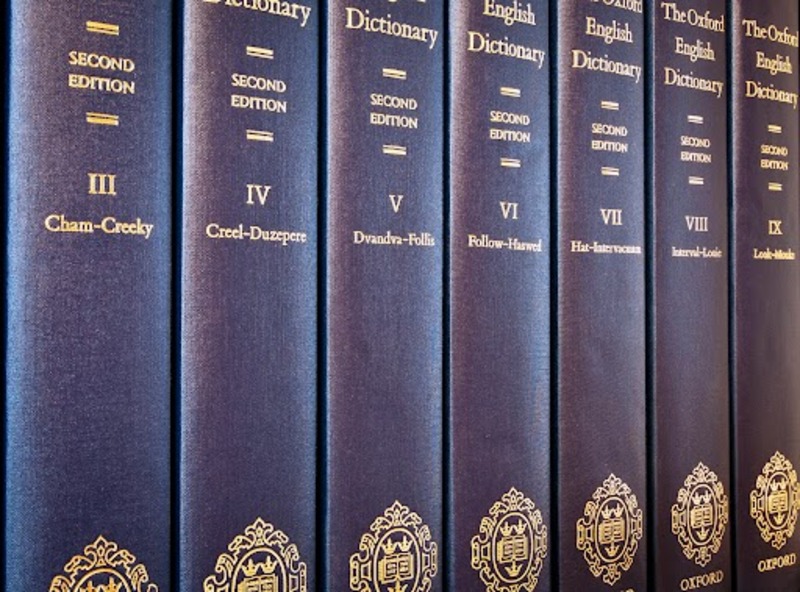
 Oxford English Dictionary
Indian English pronunciation including 'desh, diya' added to the Oxford Dictionary
Kolkata/IBNS: Pronunciation transcriptions and audio for over 800 entries particularly associated with Indian English, including desh (a person’s or a people’s native country or place of origin) and diya (a small cup-shaped oil lamp, typically made of baked clay, often used on religious occasions such as the Diwali festival) among others are now available in the Oxford English Dictionary (OED).
Since 2016, the OED has been expanding its pronunciation coverage for numerous global varieties of English.
Some other words in incuded are bachcha (a child; also a young animal), almirah (a free-standing cupboard, wardrobe, or other storage unit), and bindaas (bold; independent; admired; fashionable).
For those words which show region-specific usage or meanings (New Zealand, Scottish, or Caribbean English, for example) the dictionary has added a region-specific pronunciation, alongside the British and American pronunciations given as standard across the entire dictionary.
Indian English brings the total number of global varieties covered in the OED’s pronunciations to sixteen. Offering audio alongside pronunciation transcriptions allows OED users to hear the pronunciations as well as read them.
This most recent addition to the World English pronunciation audio archive fills a large gap for the 130 million Indian English speakers in India.
The audio for each region-specific word has been recorded by a speaker from the relevant region, following a pronunciation model based on recent phonetic research, pronunciation models, and the expertise of native speakers.
Dr Catherine Sangster, Pronunciations Editor for the OED, said: “Ever since we started work to expand and include audio in our coverage of pronunciations for varieties of English besides British and U.S. English, Indian English has been one of our biggest priorities and also one of our biggest challenges. I am delighted that we have developed a transcription model to capture its complexity and can now offer pronunciations for this extremely important variety of English in the OED.”
Dr Matthew Moreland, Senior Consultant Phonetics Editor at Oxford Languages, and Lecturer in Phonetics at the University of East Anglia, says “The journey to this point has involved reflection on exactly what it means to present pronunciations in an English dictionary, delving into questions of naturalization and the ways in which speakers of different languages and cultures interact."
"The resulting transcription model is a celebration of the glorious sounds and combinations of sounds fused together in such a rich and fascinating manner, and which together make Indian English unique.”
Danica Salazar, World English Editor for the Oxford English Dictionary says “The addition of Indian English pronunciations to the OED is an important step forward in documenting the lexicon of a variety spoken by such a large section of the world’s English-speaking population. It makes the OED an even more useful tool for those wishing to do research on world varieties of English.”
Support Our Journalism
We cannot do without you.. your contribution supports unbiased journalism
IBNS is not driven by any ism- not wokeism, not racism, not skewed secularism, not hyper right-wing or left liberal ideals, nor by any hardline religious beliefs or hyper nationalism. We want to serve you good old objective news, as they are. We do not judge or preach. We let people decide for themselves. We only try to present factual and well-sourced news.
Support objective journalism for a small contribution.