As Iran-US war disrupts global gas supply, India issues guidelines to manage shortages
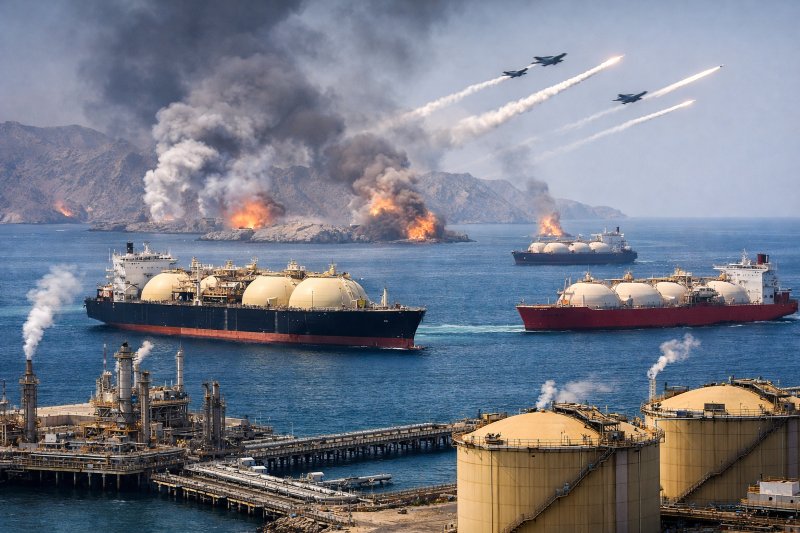
The ongoing war between Iran and the United States in the Middle East has disrupted the global supply of natural gas, with the Strait of Hormuz remaining a conflict zone for over two weeks.
More than 750 cargo ships are reportedly stranded at major ports in the region, affecting gas exports to key Asian markets.
India, which imports nearly half of its natural gas from international markets, is particularly affected. Of its imports, about 20 per cent comes from Qatar.
After Iran’s missile attacks on Qatar’s gas fields, QatarEnergy—the world’s largest natural gas exporter—halted production, further tightening supply.
In response, India’s Ministry of Petroleum has issued new guidelines to regulate gas distribution and ensure supply to essential sectors. The government has classified consumption into four priority levels:
Essential Supply: Domestic piped natural gas, CNG for transport, LPG production, pipeline compressor fuel, and other essential pipeline operations will continue at 100 per cent of the average consumption over the last six months.
Fertilizer Plants: Gas supply will be maintained at 70 per cent of average consumption.
Industrial Consumers: Tea industries, manufacturing units, and other industrial consumers connected through the National Gas Grid will receive 80 per cent of their average gas usage.
Commercial and Industrial Distribution Units: All gas distribution networks must ensure 80 per cent supply to industrial and commercial consumers.
Energy economist Kirit Parekh told NDTV that while the crisis may raise the cost of electricity generation, India has the capacity to maintain power output.
“Businesses that rely heavily on gas, especially in industries like hydrogen production, will need to use it judiciously. Alternatives such as electricity-based production are possible but expensive,” he said.
India’s government stressed that the measures are temporary and aimed at managing the shortfall caused by the international supply disruptions.
Support Our Journalism
We cannot do without you.. your contribution supports unbiased journalism
IBNS is not driven by any ism- not wokeism, not racism, not skewed secularism, not hyper right-wing or left liberal ideals, nor by any hardline religious beliefs or hyper nationalism. We want to serve you good old objective news, as they are. We do not judge or preach. We let people decide for themselves. We only try to present factual and well-sourced news.
Support objective journalism for a small contribution.