Child born out of marriage between Muslim man and Hindu woman legitimate, but wedlock irregular: Supreme Court
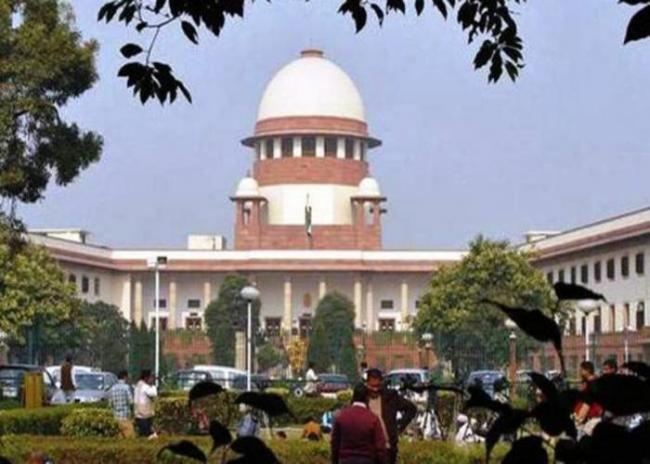
New Delhi, Jan 23 (IBNS): The Supreme Court has ruled that a child who is born out of a marriage between a Muslim man and a Hindu woman is legitimate though such a wedlock is irregular, media reports said.
The child is therefore entitled to inherit his father's property, said the top court.
A bench of Justices NV Ramana and Mohan M Shantanagoudar ruled the child is legitimate though the Mohammedan Law holds such a marriage as an "irregular" one.
The court's observation has been quoted by The Indian Express, "Thus, based on the above consistent view, we conclude that the marriage of a Muslim man with an idolater or fireworshipper is neither a valid (sahih) nor a void (batil) marriage, but is merely an irregular (fasid) marriage. Any child born out of such wedlock (fasid marriage) is entitled to claim a share in his father’s property."
"It would not be out of place to emphasise at this juncture that since Hindus are idol worshippers, which includes worship of physical images/statues through offering of flowers, adornment, etc., it is clear that the marriage of a Hindu female with a Muslim male is not a regular or valid (sahih) marriage, but merely an irregular (fasid) marriage," the bench has been quoted by The Indian Express.
Citing the legal effect of such an irregular marriage, the apex court said the 'Hindu' wife, however, cannot inherit her husband's property.
The Supreme Court gave the ruling while hearing a petition filed by one Shamsudeen, who is a son of a Muslim father and a Hindu mother, over a property dispute with his cousin.
The top court upheld the verdict of the trial court and Kerala High Court which ruled Shamsudeen is a legitimate son of his parents.
Support Our Journalism
We cannot do without you.. your contribution supports unbiased journalism
IBNS is not driven by any ism- not wokeism, not racism, not skewed secularism, not hyper right-wing or left liberal ideals, nor by any hardline religious beliefs or hyper nationalism. We want to serve you good old objective news, as they are. We do not judge or preach. We let people decide for themselves. We only try to present factual and well-sourced news.
Support objective journalism for a small contribution.