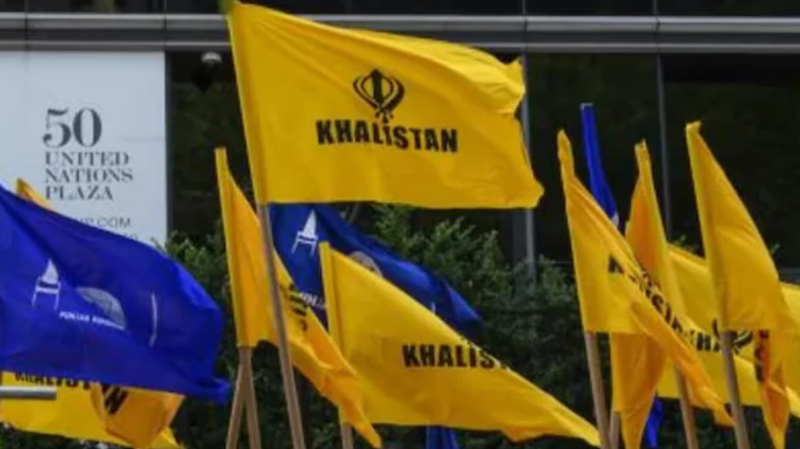
 Khalistan
Ignoring Khalistan extremism harms real Sikhs
On June 23, 1985, Air India Flight 182 was tragically torn apart by a bomb detonated by Khalistan extremists, killing 329 passengers and crew members.
This catastrophic event, the deadliest aircraft bombing until September 11, 2001, remains a somber marker of how extremist ideologies can wreak havoc across borders.
Yet, while the September 11 attacks reshaped American attitudes towards radical Islam, the Air India tragedy has not been accorded similar reflection or response, especially in Canada.
In the wake of September 11, 2001, the American public and policymakers were forced to confront the uncomfortable reality that not all Muslim organizations were benign. Many discovered that beneath the veneer of religious and community organizations, some were indeed fronts for extremist agendas. Prominent among these were the Council on American-Islamic Relations (CAIR) and the Islamic Society of North America (ISNA), both criticized for their ties to the Muslim Brotherhood and questionable affiliations.
In contrast, Khalistan extremism, exemplified by the Air India bombing, has not received the same level of scrutiny. This discrepancy is partly due to the fact that the vast majority of the 329 victims were not Americans, but Canadians, making the event less visible in the American consciousness. However, this lack of attention is a disservice to the victims and to the broader fight against extremist ideologies.
Canada’s approach to Khalistan extremism has been particularly problematic. Despite the serious threat posed by pro-Khalistan militants, Prime Minister Justin Trudeau and his administration have been criticized for their superficial understanding of Sikh issues and their political calculations regarding the Sikh vote. The result has been a political blindness to the dangers posed by extremist elements within the Sikh community.
The United Kingdom, however, has been more proactive in addressing similar issues. Five years ago, the Bloom Review was commissioned to assess the engagement of the British government with religious groups. The review identified three categories of believers: the sincere and peaceful “true believers,” the generally decent “non-believers,” and the problematic “make-believers” who exploit religion for personal gain. This framework has been instrumental in recognizing that while the majority of British Sikhs are true believers, a fringe group of extremists has been hijacking Sikh institutions to further their radical agendas.
In Britain, this recognition has led to concrete measures to address extremist influence. The Bloom Review recommended a zero-tolerance approach to gurdwaras—Sikh temples—hijacked by extremists. It emphasized that the aggressive actions of pro-Khalistan militants, including threats and violence, should not be tolerated as they undermine the broader Sikh community.
In North America, however, the response has lagged. Sikh extremists in Canada and the U.S. have been able to exert undue influence and create a false narrative of power that often intimidates and marginalizes peaceful Sikhs. This has been exacerbated by political leaders who, driven by short-term electoral considerations, fail to challenge extremist elements and instead mistakenly engage with them.
The American and Canadian governments must learn from the British experience. It is crucial to differentiate between peaceful Sikh communities and the extremist fringe that seeks to exploit them. The dangers posed by Khalistan extremists are not dissimilar to those posed by radical Islamic groups: they use religion as a cover for their radical aims and engage in intimidation to suppress dissent within their own communities.
To confront this threat effectively, policymakers must prioritize a nuanced understanding of Sikhism and not be swayed by the loudest or most aggressive voices. They must support and protect the majority of Sikhs who are devoted to their faith’s principles of peace and community service. Tolerating or appeasing extremist factions under the guise of religious freedom only serves to undermine it.
The Air India 182 tragedy should not be a forgotten chapter but a powerful reminder of the need for vigilance against all forms of extremism. Just as the lessons from September 11 reshaped American approaches to counterterrorism, the legacy of Air India 182 should prompt a more rigorous and informed approach to dealing with Sikh extremism. It is time for Canada and the United States to adopt policies that recognize and address the real threats posed by extremist factions, ensuring that the principles of religious freedom are upheld in practice, not just in rhetoric.
(Image and text courtesy: Khalsavox.com)
Support Our Journalism
We cannot do without you.. your contribution supports unbiased journalism
IBNS is not driven by any ism- not wokeism, not racism, not skewed secularism, not hyper right-wing or left liberal ideals, nor by any hardline religious beliefs or hyper nationalism. We want to serve you good old objective news, as they are. We do not judge or preach. We let people decide for themselves. We only try to present factual and well-sourced news.
Support objective journalism for a small contribution.