 Terrorism
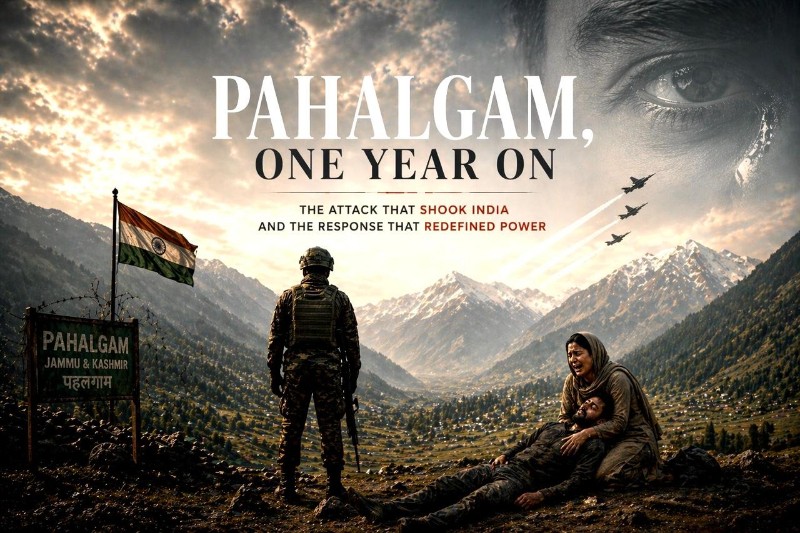
Pahalgam, one year on: The attack that shook India and the response that redefined power
On April 22 last year, what began as a routine tourist day in the lush green expanse of Pahalgam quickly spiralled into one of the deadliest terror attacks Jammu and Kashmir had witnessed in decades.
The first reports were brief and almost understated: gunshots heard, five injured. But as hours passed, the scale of horror unfolded with chilling clarity.
By nightfall, 26 lives had been lost. Most of them were Hindu men, including a Nepalese national. Families that had come seeking peace in the valley found themselves trapped in a carefully orchestrated massacre.
The image that came to define the tragedy was that of a newly married woman, Himanshi Narwal, sitting beside her husband’s lifeless body.
 Photo: Screen-grab from X
Naval officer Lieutenant Vinay Narwal had been shot at point-blank range during their honeymoon. Her stunned words—recounting how a gunman identified her husband’s religion before pulling the trigger—captured the brutality of the moment.
The meadow, often described as ‘mini-Switzerland’, had turned into a killing ground.
How the massacre was planned
Investigations later revealed that the attack was neither random nor impulsive. It was a meticulously planned operation carried out by three heavily armed terrorists who infiltrated from across the border.
The attackers emerged from dense pine forests surrounding Baisaran, exploiting gaps in local security deployment.
The terrain worked to their advantage. With only two access points and no immediate security presence, the site became an easy trap.
Eyewitness accounts and forensic evidence painted a grim picture. The terrorists separated men from women and children.
They asked victims to recite Islamic verses. Those who failed were executed at close range. Some victims were even stripped partially, confirming deliberate religious profiling.
The attackers fled back into the forests within minutes, leaving behind devastation and unanswered questions.
The Resistance Front (TRF), widely recognised as a proxy of Lashkar-e-Taiba, claimed responsibility twice within 24 hours.
Indian agencies later established strong operational and logistical links between the attackers and Pakistan-based handlers.
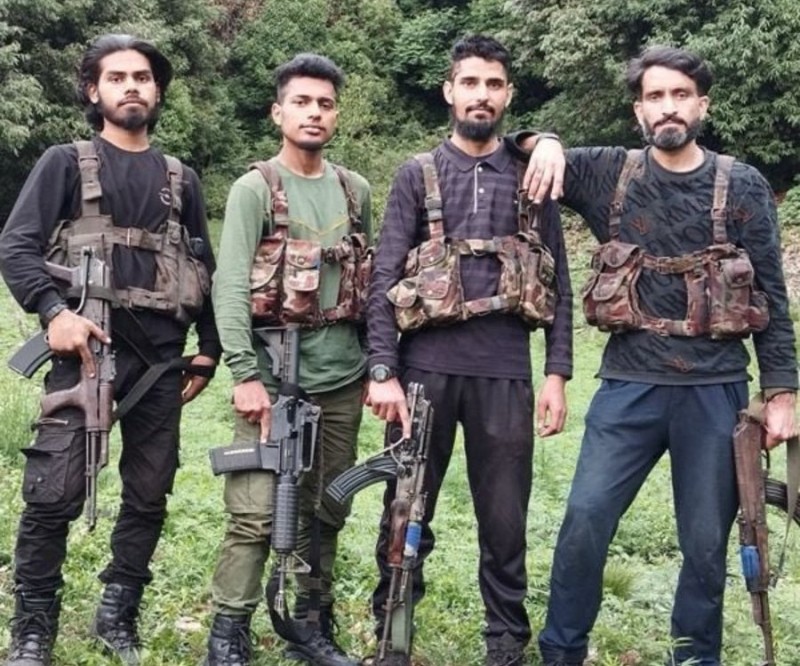 Pahalgam attackers. Photo: X
Pakistan’s shadow over Pahalgam
India’s investigation quickly moved beyond the immediate perpetrators to expose the deeper network behind the attack.
Intelligence agencies traced communication intercepts, weapons signatures and training patterns directly to Pakistan-based terror infrastructure.
The involvement of Lashkar-e-Taiba, a United Nations-designated terrorist organisation, reinforced long-standing concerns about Pakistan’s role in nurturing cross-border terrorism.
Recovered materials, including encrypted devices and identity traces, pointed to infiltration routes commonly used by Pakistan-backed groups.
The pattern was familiar: radicalisation, training across the border, and targeted attacks designed to inflame communal tensions in India.
The deliberate targeting of Hindu tourists added a new layer of provocation. Officials described it as an attempt to trigger nationwide unrest and derail the fragile normalcy returning to Kashmir.
New Delhi publicly accused Islamabad of sponsoring the attack, calling it a continuation of a decades-old proxy war.
India's answer: Operation Sindoor
India’s response was swift, calculated and unprecedented in scale. On the intervening night of May 6 and 7, the Indian Armed Forces launched Operation Sindoor.
The operation targeted nine major terror camps across Pakistan and Pakistan-occupied Kashmir (PoK).
Precision strikes were carried out using advanced weaponry, including long-range cruise missiles and air-launched systems.
Officials confirmed that more than 100 terrorists, including trainers and handlers affiliated with Lashkar-e-Taiba, Jaish-e-Mohammed and Hizbul Mujahideen, were eliminated.
The strikes were notable for their accuracy. Indian forces specifically targeted terror infrastructure while avoiding civilian areas, reinforcing India’s claim of a responsible military response.
The operation marked a significant escalation. It demonstrated India’s willingness to strike deep into hostile territory, dismantling terror networks at their source.
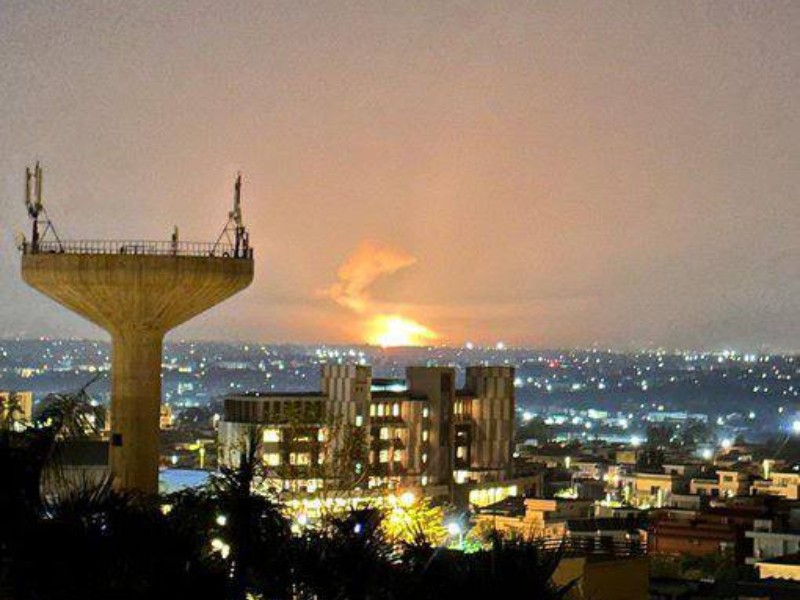 India hit Pakistan's Noor Khan Airbase during Operation Sindoor. Photo: X
India showed 'who is the real boss'
The days following Operation Sindoor saw a brief but intense military confrontation between India and Pakistan.
During this period, the Indian Air Force established clear operational dominance.
Reports indicated that India successfully bypassed and jammed Pakistan’s Chinese-supplied air defence systems, including the HQ-9B.
The use of BrahMos supersonic cruise missiles proved decisive.
Travelling at speeds close to Mach 3, these missiles evaded interception and struck high-value targets with precision.
Pakistan’s attempts to intercept the missiles reportedly failed, exposing critical gaps in its defence systems.
Indian strikes also extended to multiple airbases, inflicting significant damage to infrastructure and assets.
For many observers, this phase of the conflict demonstrated a stark technological and strategic gap between the two militaries.
The message from New Delhi was unmistakable.
Operation Mahadev: The hunt for attackers
While Operation Sindoor targeted the broader terror network, the hunt for the Pahalgam attackers continued on the ground.
Operation Mahadev became one of the most extensive counter-terror missions in recent years. Indian forces tracked the terrorists across dense forests and mountainous terrain for over three months.
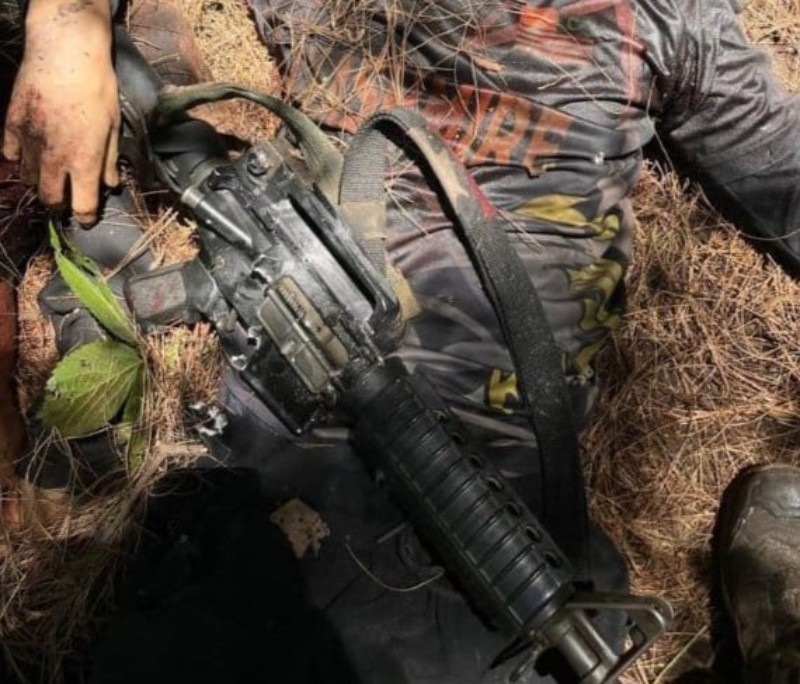 The Indian Army launched Operation Mahadev to hunt Pahalgam terrorists. Photo: X
Using drones, surveillance aircraft and real-time intelligence coordination, security forces gradually narrowed down the search area from over 300 square kilometres to just 25.
On July 28, after a painstaking pursuit covering more than 250 kilometres, elite PARA Special Forces neutralised all three terrorists in a final encounter.
The operation sent a clear signal: India would not only retaliate but also ensure that perpetrators faced justice.
Diplomatic offensive
India’s response was not limited to military action.
In the weeks following the attack, New Delhi launched a coordinated global diplomatic campaign to expose Pakistan’s role in sponsoring terrorism.
High-level delegations were sent to key capitals across the world.
Indian representatives presented evidence linking the attackers to Pakistan-based groups.
They highlighted patterns of state support, including funding, training and safe havens.
The campaign received widespread attention. Several countries publicly acknowledged India’s concerns and condemned the attack.
India’s measured yet firm response was seen as a model of responsible state behaviour.
At the same time, India took decisive bilateral steps. It suspended the Indus Waters Treaty, expelled Pakistani diplomats and tightened border controls.
A new doctrine against terror
The Pahalgam attack marked a turning point in India’s counter-terrorism approach.
New Delhi adopted a zero-tolerance stance, combining military precision with diplomatic pressure.
The message was clear: terrorism would not be treated as an isolated incident but as an act with consequences at multiple levels.
India also rejected what it described as Pakistan’s “nuclear blackmail”.
Officials asserted that the threat of escalation would not deter India from defending its citizens.
The introduction of a comprehensive counter-terror policy further strengthened this approach, integrating intelligence, military and civilian responses into a unified framework.
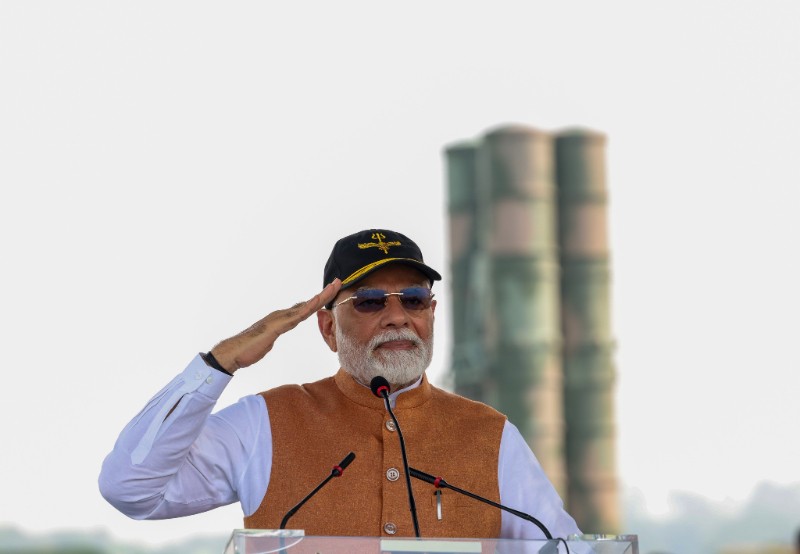 PM Narendra Modi thanked the Indian Armed Forces following 'successful' Operation Sindoor. Photo: PMO
Global recognition of India’s response
India’s actions following the Pahalgam attack drew significant international attention.
Global leaders praised the country’s calibrated response, noting its focus on targeting terror infrastructure while avoiding civilian harm.
Analysts highlighted India’s ability to combine force with diplomacy, projecting strength without triggering uncontrolled escalation.
The coordinated outreach effort enhanced India’s credibility on the global stage. It reinforced the country’s position as a responsible power confronting terrorism with both resolve and restraint.
A nation that refuses to forget
As India marks one year since the Pahalgam terror attack, the memory of that day remains deeply etched in the national consciousness.
The Indian Army’s message ahead of the anniversary captured the sentiment: when boundaries of humanity are crossed, the response is decisive.
From the blood-stained meadow of Baisaran to precision strikes across borders, the journey of the past year reflects a nation that absorbed grief and responded with determination.
The photograph of a grieving widow, the stories of those who survived by chance, and the relentless pursuit of justice continue to define the legacy of April 22. And in that memory lies a message that India has made unmistakably clear.
Support Our Journalism
We cannot do without you.. your contribution supports unbiased journalism
IBNS is not driven by any ism- not wokeism, not racism, not skewed secularism, not hyper right-wing or left liberal ideals, nor by any hardline religious beliefs or hyper nationalism. We want to serve you good old objective news, as they are. We do not judge or preach. We let people decide for themselves. We only try to present factual and well-sourced news.
Support objective journalism for a small contribution.