July 23, 2026 12:44 am (IST)

Follow us:



PM Modi gifts replicas of stone casket of Buddhist relics to Jinping
Xi'an, China, May 14 (IBNS): Prime Minister Narendra Modi on Thursday presented Chinese President Xi Jinping replicas of a stone casket of Buddhist relics and a stone statue of Buddha that were excavated from a 3rd-4th century AD stupa at Dev-ni-Mori-a site 80 kms east of Vadnagar in Gujarat-in 1957.
In addition, the Prime Minister presented archaeological drawings of excavations at Vadnagar which was one of the places visited by the great Chinese traveller Xuanzang – also known as Hieun Tsang – around 641 AD.
The site is referred to as Anandpur in Xuanzang’s writings and recent excavations point to the existence of a thriving Buddhist centre at Vadnagar way back in 2nd century AD.
The Prime Minister, who is on a three-day trip to China, visited the Giant Wild Goose Pagoda on earlier in the day where Xuanzang worked for years to translate the sutras that he brought to China from India.
Recent excavations at Vadnagar have revealed a burnt brick structure that has been identified as a Buddhist monastery on the basis of its peculiar plan and the antiquities recovered from it, which include a red sandstone broken head of Buddha, stylistically datable to 2nd century AD, a votive tablet with foot impression, and a crescent-shaped stone tray depicting the scene of a monkey offering honey to Buddha.
In his writings, Xuanzang had recorded that there were more than 1000 monks of the Sammitiya School or Little Vehicle in ten monasteries at Vadnagar, suggesting that Vadnagar was an important centre of Buddhist learning in western India during that period. In ancient times, Vadnagar was situated at a strategic location where two major ancient trade routes crossed each other.
One of them was from central India to Sindh and to further northwest whiles the other from the port towns on the Gujarat coast to Rajasthan and north India. Therefore, it could have been a city of ample opportunities until these routes remained vibrant.
Support Our Journalism
We cannot do without you.. your contribution supports unbiased journalism
IBNS is not driven by any ism- not wokeism, not racism, not skewed secularism, not hyper right-wing or left liberal ideals, nor by any hardline religious beliefs or hyper nationalism. We want to serve you good old objective news, as they are. We do not judge or preach. We let people decide for themselves. We only try to present factual and well-sourced news.
Support objective journalism for a small contribution.
Latest Headlines
'How is this a publicity petition?' Delhi High Court questions Centre in CJP protest case
Wed, Jul 22 2026
'Don't take legal action against students, I'll end my fast': Sonam Wangchuk's message to Centre
Wed, Jul 22 2026
Terror strikes again in Jammu and Kashmir: Policeman shot dead amid Amarnath Yatra security duty
Wed, Jul 22 2026
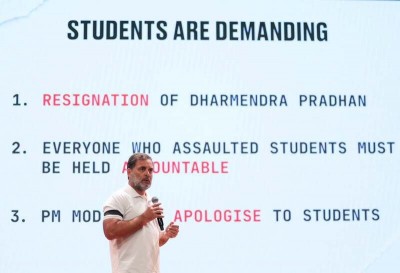
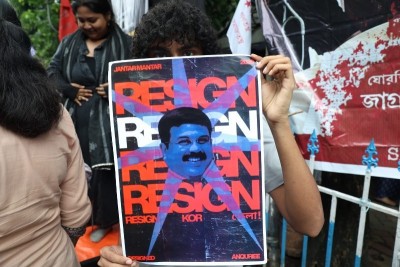
'We won't leave Jantar Mantar until Dharmendra Pradhan resigns': CJP draws red line
Wed, Jul 22 2026