 Diplomacy
PM Modi speaks to Sushila Karki, reaffirms India's support for restoration of peace and stability in Nepal
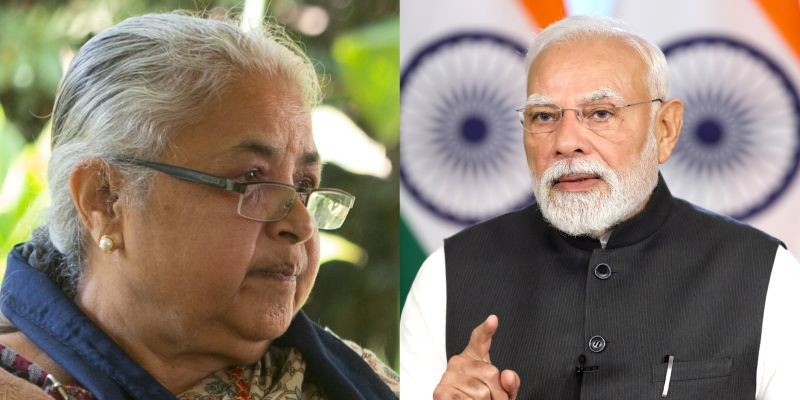
New Delhi/IBNS: Prime Minister Narendra Modi on Thursday held a conversation with his interim Nepali counterpart Sushila Karki and reaffirmed 'India's steadfast support for her efforts to restore peace and stability' in Kathmandu after prolonged deadly unrest in the neighbouring country.
Modi also expressed condolences on the deaths that occurred during the anti-corruption protests that led to the collapse of the KP Sharma Oli government.
He posted on X, "Had a warm conversation with Mrs. Sushila Karki, Prime Minister of the Interim Government of Nepal. Conveyed heartfelt condolences on the recent tragic loss of lives and reaffirmed India’s steadfast support for her efforts to restore peace and stability. Also, I extended warm greetings to her and the people of Nepal on their National Day tomorrow."
Had a warm conversation with Mrs. Sushila Karki, Prime Minister of the Interim Government of Nepal. Conveyed heartfelt condolences on the recent tragic loss of lives and reaffirmed India’s steadfast support for her efforts to restore peace and stability. Also, I extended warm…
— Narendra Modi (@narendramodi) September 18, 2025
Karki, 73, a former chief justice, has been tasked with restoring calm and laying the groundwork for elections in six months, following days of unrest that have shaken the Himalayan nation.
She was sworn in last week as the interim Prime Minister of Nepal, becoming the country’s first woman to hold the post after days of violent protest and turbulence.
The protests, led largely by Gen Z demonstrators, erupted last week after a controversial ban on social media.
They quickly escalated into wider anger over corruption and economic hardship, with parliament and several government buildings set on fire.
“We have to work according to the thinking of the Gen Z generation,” Karki said in her first public remarks since taking office on Friday.
Nepal faces deep-rooted economic challenges: according to the World Bank, one in five Nepalis aged 15 to 24 is unemployed, while GDP per capita remains at just $1,447.
Nepal’s Gen-Z revolt: How a social media ban shook the nation
It began with silence. One September morning, young Nepalis woke to find their phones suddenly quieter: Facebook, YouTube, WhatsApp, X, and two dozen other apps had gone dark.
The government’s explanation was dry—these platforms had “failed to register” under new rules. But to a generation that lives, learns, and organizes online, it felt like something else entirely: censorship.
Within hours, the streets of Kathmandu were alive. University students, job-seekers, artists, and influencers poured into public squares, chanting against corruption, nepotism, and a political class they accused of living in luxury while ordinary citizens struggled.
What started as an angry pushback against a ban quickly swelled into something larger.
“Enough is enough!” became the rallying cry. Videos, ironically recorded before the blackout and later shared when access was restored, showed crowds marching through the capital, waving placards that read “Gen-Z for Change”.
The violence shocked the country. The very platforms the government tried to suppress turned into channels of outrage, as VPNs and backdoors allowed images of injured protesters to spread globally. International condemnation poured in.
Cornered, the previous government backtracked. Within three days, the social media ban was lifted, a rare victory wrested by youth power. Yet, the protests had already outgrown their original spark.
Calls grew louder for deeper change: an end to corruption, accountability from leaders, and new elections.
Political elites, long accustomed to horse-trading and fragile coalitions, suddenly seemed powerless before an angry, mobilized generation.
The protest compelled former Prime Minister KP Sharma Oli to resign.
Support Our Journalism
We cannot do without you.. your contribution supports unbiased journalism
IBNS is not driven by any ism- not wokeism, not racism, not skewed secularism, not hyper right-wing or left liberal ideals, nor by any hardline religious beliefs or hyper nationalism. We want to serve you good old objective news, as they are. We do not judge or preach. We let people decide for themselves. We only try to present factual and well-sourced news.
Support objective journalism for a small contribution.