 India-Bangladesh
The value of Indo-Bangla ties in contemporary times
Dhaka/New Delhi: In the last decade, Bangladesh and India’s ties have grown stronger than ever before.
As both countries have progressed on the path of development, their recognition of each other as equal partners in the present and the future will lead to a shift in power balance in the East.
Maitri Diwas acknowledges their past, and recognizes Bangladesh and India’s future growth prospects.
The pandemic was a defining moment.
It gave Bangladesh and India's friendship a new dimension. As most developed countries emphasized domestic vaccination first, solidarity and a union built on free movement encouraged vaccine cooperation in South Asia.
Soon after India began inoculating its population, it also dispatched millions of its indigenously manufactured COVID-19 vaccine to Bangladesh.
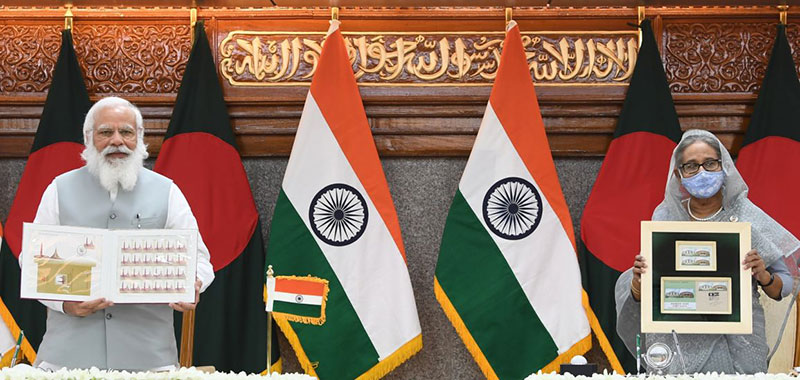
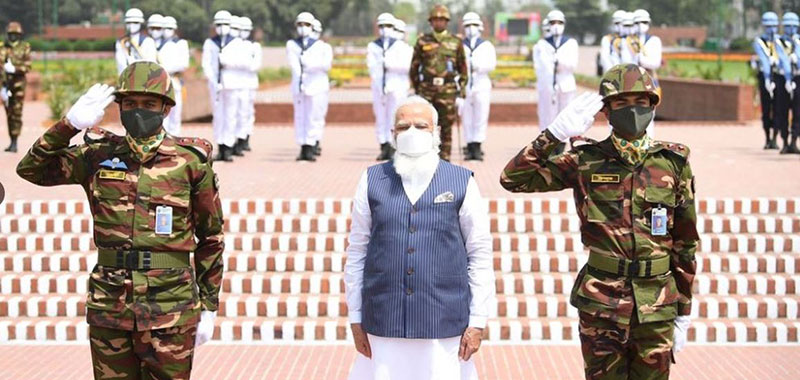
It is also symbolic that PM Modi's first international visit since the COVID-19 pandemic was to Dhaka.
This is not merely a coincidence. India celebrates the golden jubilee of Bangladesh's independence, which also marks 50 years of close cooperation and diplomatic ties between both countries.
Moreover, the Maitri Setu or the Friendship bridge's inauguration this year heralded more robust regional connectivity in South Asia. It is a prelude to opening up of trade and free movement in the region.
The bridge across the Feni river flowing through southeastern Bangladesh to Tripura in India will stand for their affinity and integration.
The vast opportunities for business and people to people contact opens up new avenues for both countries.
The Friendship Bridge is a step to establish closer ties paving the way for a steady economic recovery in South Asia centred in Bangladesh. It is a reminder of the relationship Sheikh Mujib wanted Bangladesh and India to have, and there couldn't be a better year for this than Mujeeb Borsho.
Prime Minister Sheikh Hasina and Prime Minister Narendra Modi signed the historic Land Boundary Agreement in June 2015. In the same month, Motor Vehicles Agreement (MVA) was also signed. While the Land Boundary Agreement made the two countries' borders safer, the Motor Vehicles Agreement transforms it into an economic corridor.
The Motor Vehicles Agreement also creates exponential opportunities for India and Bangladesh's economic cooperation: two countries with geographical proximity, diplomatic consensus, and prominent historical and cultural ties.
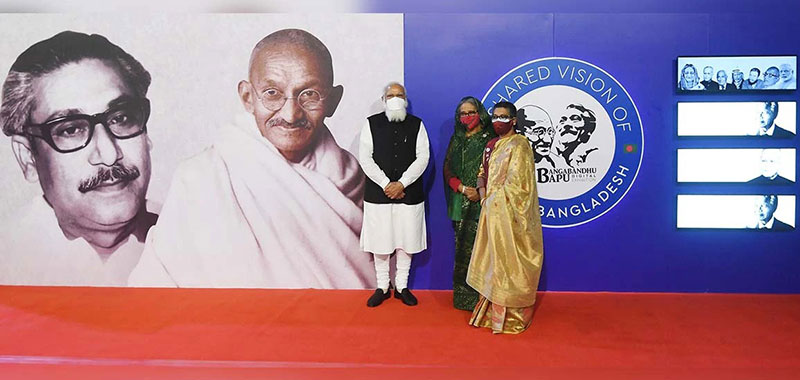
Besides this, 2021 was a milestone year for Bangladesh, and for India too as the former graduated from the UN's designated Least Developed Countries list by 2026. Consequently, the country's economy will hopefully grow at an even faster pace. Bangladesh has met the criteria for better social development indicators and sustained economic growth even during the pandemic. Its progress is a matter of celebration for India as new economic and trade opportunities open in South Asia.
The opportunities for Bangladesh and India to expand trade are immense. Bangladesh's huge untapped potential is yet to take advantage of the Indian market.
Economically and commercially, the two countries are becoming increasingly interlinked and interdependent. Both countries are reviving their ties that broke because of the partition. Road, rail and coastal shipping links are being brought to life again that existed before 1947.
This gives a huge potential for cross-border trade contributing towards Dhaka and Delhi’s goals.
Support Our Journalism
We cannot do without you.. your contribution supports unbiased journalism
IBNS is not driven by any ism- not wokeism, not racism, not skewed secularism, not hyper right-wing or left liberal ideals, nor by any hardline religious beliefs or hyper nationalism. We want to serve you good old objective news, as they are. We do not judge or preach. We let people decide for themselves. We only try to present factual and well-sourced news.
Support objective journalism for a small contribution.