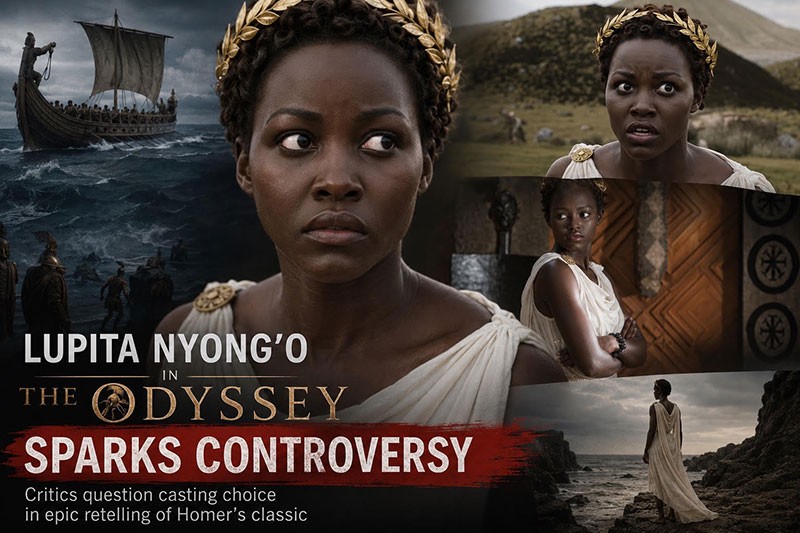
You Watched The Odyssey and Wondered: Why Is Lupita Playing Helen of Troy? You Are Not Alone
Christopher Nolan's blockbuster has reignited one of Hollywood's most uncomfortable conversations — where does inclusive casting end and historical distortion begin? Sujoy Dhar writes
If you watched Christopher Nolan's The Odyssey and found yourself doing a double take when Lupita Nyong'o appeared as Helen of Troy — the woman whose face, as Homer famously had it, launched a thousand ships — you were not alone. Audiences around the world had the same moment of pause. Some shrugged and moved on. Many did not.
The casting of the Kenyan-Mexican Oscar winner as the legendary Greek beauty has become one of the most heated cultural arguments of 2026 — part genuine intellectual debate about mythology, representation and artistic licence, and part something considerably less elevated.
Let us try to separate the two.
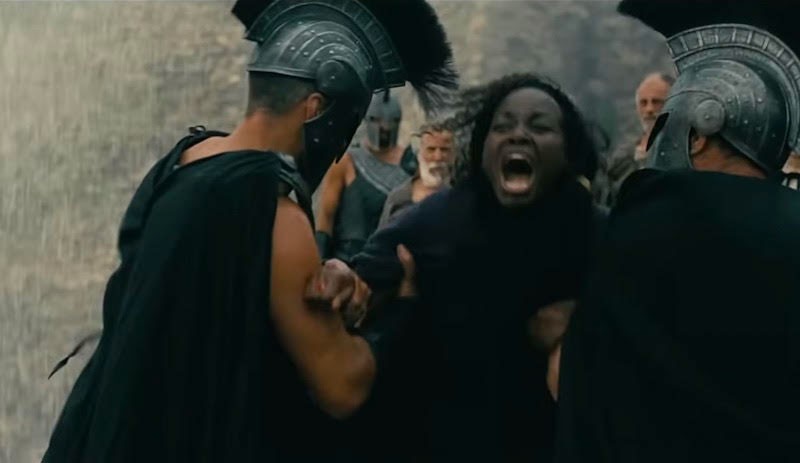 Lupita's casting as the legendary queen has sparked intense debate. Photo: YouTube Trailer
What history and mythology actually say
Helen of Troy, it is worth remembering first, is not a historical figure. She is a mythological one — the daughter, according to Greek legend, of Zeus, who disguised himself as a swan to conceive her with a mortal woman, and she was born from an egg. Nyong'o herself has leaned on that detail when addressing critics, pointing out that Helen was never a documented historical figure to begin with.
Ancient texts do describe Helen in particular ways. Homer's epithets for her include references to fair skin and golden hair — physical descriptors that have, over centuries, calcified into a very specific Western visual template: the blonde, white, classically Mediterranean beauty. It is from this template that the casting of Nyong'o departs so visibly, and it is this departure that has driven the backlash.
In Greece itself, enthusiasm over Nolan's blockbuster — which was partially filmed at some of the country's most recognisable historical sites, including the Palace of Nestor in Pylos — quickly gave way to controversy, with far-right commentators arguing that Nyong'o's casting did not align with traditional depictions of Helen.
The debate then went global. Elon Musk, responding to a user's claim that the rumoured casting was "an insult to the author" because Homer described Helen as "fair-skinned" and "blonde," wrote simply: "Chris Nolan has lost his integrity." Conservative commentator Matt Walsh went further, writing that "not one person on the planet actually thinks that Lupita Nyong'o is the most beautiful woman in the world" and calling Nolan a "coward."
Those comments, whatever their authors intended, crossed quickly from cultural critique into something uglier. Walsh's statement — that an Oscar-winning actress of Nyong'o's calibre cannot be considered beautiful — is not a historical argument. It is a racial one, dressed in the language of mythology.
 Nolan says that a strong interpretation is needed to make the best film. Photo: Screengrab /Instagram
The real question Hollywood keeps avoiding
Strip away the ugliest voices and a legitimate question remains, one that goes well beyond The Odyssey and well beyond Lupita Nyong'o.
We have, in recent years, watched a systematic reimagining of established historical and mythological figures through the lens of present-day inclusion politics. Bridgerton reimagines Regency England as a racially integrated society it emphatically was not. Netflix's Cleopatra cast a Black actress as the Ptolemaic queen — herself almost certainly of Macedonian Greek descent — and triggered an international furore. Disney has systematically diversified fairy tale princesses, Arthurian knights, and now Greek heroes.
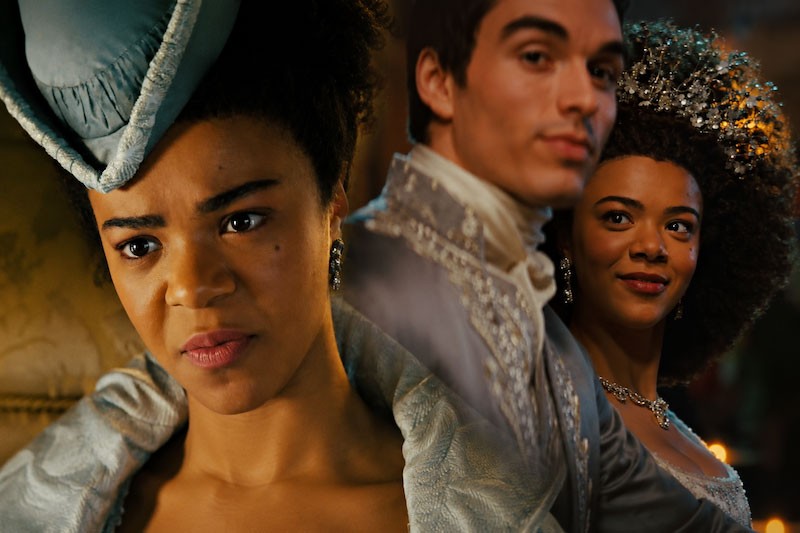 The younger Queen Charlotte is played by India Amarteifio in Bridgerton. Photo: YouTube
The intention behind all of this is not difficult to understand. Generations of audiences who were systematically excluded from the heroic narratives of Western culture deserve to see themselves reflected in those stories. That is a real and legitimate aspiration.
But the execution raises a question that the industry has never satisfactorily answered: is colour-blind casting a neutral artistic choice, or is it a political one? And if it is a political one — which it clearly is — does it serve the story, or does it serve a different agenda entirely?
Nyong'o herself has been direct about the intention. "This is a mythological story," she said, implying the character was open to reinterpretation. "Our cast is representative of the world," she told Elle magazine. "I'm not spending my time thinking of a defense. The criticism will exist whether I engage with it or not."
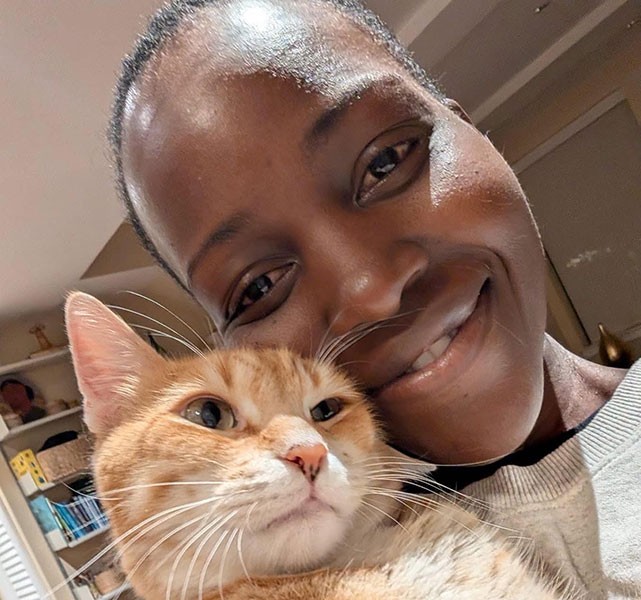 I'm not spending my time thinking of a defense. Photo: Lupita Nyong'o/Facebook
That is a dignified response. It is also, notably, not an artistic argument — it is a political one. "Representative of the world" is a diversity brief, not a creative brief. And when a director as meticulous as Christopher Nolan — whose production reportedly built a fully seaworthy ship to recreate Odysseus' voyage, and whose composer Ludwig Göransson avoided traditional musical instruments in the interest of historical authenticity — applies extraordinary rigour to every element of the film except the racial identity of its central characters, the inconsistency is at least worth noting.
Nolan has not explained his casting choices publicly in any great detail.
Nyong'o is not even the first Black actress to play Helen of Troy — Eartha Kitt portrayed the character onstage in a 1950 adaptation — which suggests this is less a radical rupture than an extension of a long creative tradition of reinterpretation. Mythology, after all, has always been retold.
Where the line is
The honest answer is that there is no clean line, and anyone who claims there is — on either side of this argument — is probably motivated by something other than clarity.
Casting a Black actress as Helen of Troy in a mythological epic is a different proposition to casting a Black actress as, say, Anne Boleyn or Marie Curie — real historical figures whose documented identities carry a different kind of claim on accuracy.
Mythology is, by definition, interpretive territory. Homer himself was almost certainly not a single person. The Trojan War may not have happened at all. Helen's appearance is a literary device, not a historical record.
What is worth scrutinising, however, is whether Hollywood's current approach to diversity casting is actually serving audiences of colour — or whether it is a form of institutional box-ticking that generates controversy, dominates the cultural conversation, and ultimately distracts from the more structural question of whether those same studios are commissioning original stories with Black, Asian and brown protagonists at their centre, rather than retrofitting them into existing white European myths.
Lupita Nyong'o is a magnificent actress. She deserved a role written for her, not borrowed from Homer.
Whether she got it, in The Odyssey, is for each audience member to decide.
Support Our Journalism
We cannot do without you.. your contribution supports unbiased journalism
IBNS is not driven by any ism- not wokeism, not racism, not skewed secularism, not hyper right-wing or left liberal ideals, nor by any hardline religious beliefs or hyper nationalism. We want to serve you good old objective news, as they are. We do not judge or preach. We let people decide for themselves. We only try to present factual and well-sourced news.
Support objective journalism for a small contribution.