


Alarming number of women mistreated during childbirth, new UN health agency figures show
New York: More than a third of women surveyed across four lower-income countries, reported being mistreated during childbirth, a new study led by the World Health Organization (WHO) has revealed.
The study, published on Wednesday in The Lancet - an influential peer-reviewed science journal - was carried out in Ghana, Guinea, Myanmar and Nigeria, and found that 42 percent of the 2,016 women observed had experienced physical or verbal abuse, stigma or discrimination during labour and childbirth.
According to WHO, quality support, particularly from midwives for women in labour, can make the difference between life and death. Midwifery has been shown to reduce maternal and newborn mortality and stillbirth rates, by over 80 per cent, and reduces pre-term labour and birth by 24 per cent. Yet, more than 800 women still die every day during the process.
Younger, less-educated women were found to be most vulnerable to mistreatment, in the form of stigmatization, discrimination, undergoing medical procedures without consent; the use of force in procedures; or abandonment or neglect by health workers.
Some 14 percent of women experienced physical abuse in the form of being slapped, hit or punched, while others experienced non-consensual caesarean sections, and episiotiomies (surgical cuts to the vagina during childbirth) and vaginal examinations.
Interviews were also conducted with 2,672 women after giving birth, which indicated similar levels of mistreatment.
Researchers observed 35 cases of caesarean births conducted without the mother’s consent, along with 190 of 253 episiotomies reported, and 2,611 vaginal examinations, comprising 59 per cent of the total.
Some 752 (38 per cent) of the women in the study experienced some form of verbal abuse, whether being shouted at, scolded or mocked. Eleven women were targets of discrimination or stigma, on the basis of their race or ethnicity.
Strategies for prevention
The health agency recommends a framework of strategies to ensure women are treated with compassion and dignity - from holding health systems accountable, to ensuring enough resources are available for quality health care, and clear policies on women’s rights:
Designing labour wards bearing in mind the needs of women.
Improving the informed consent process around medical interventions.
Upscaling mentorship and support to health workers to foster quality care.
Allowing all women the right to a companion during labour and childbirth.
Building public demand for quality maternity services, which does not tolerate mistreatment or abuse.
WHO has urged professional associations to partake in promoting and supporting quality care among maternity providers, from obstetricians to midwives.
Last year the agency put forward recommendations on intrapartum care, highlighting the importance of a woman-centered approach in optimizing expecting mothers’ childbirth experiences.
An integral part WHO’s support in fast-tracking progress toward achieving universal health coverage (UHC) is the quality design of maternal and newborn health, in line with SDG (Sustainable Development Goal) 3, the target to ensure healthy lives and well-being for all.
Photo caption and credit:
UNICEF/Jan Zammit
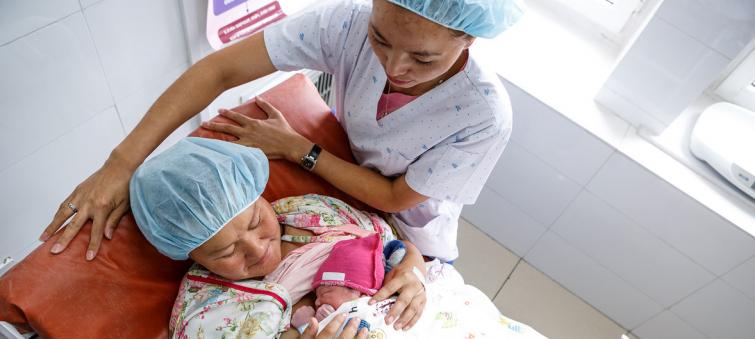
A mother and her new born baby at the National Health Center for Mother and Child, Ulaanbaatar, Mongolia. (4 September 2015)
Support Our Journalism
We cannot do without you.. your contribution supports unbiased journalism
IBNS is not driven by any ism- not wokeism, not racism, not skewed secularism, not hyper right-wing or left liberal ideals, nor by any hardline religious beliefs or hyper nationalism. We want to serve you good old objective news, as they are. We do not judge or preach. We let people decide for themselves. We only try to present factual and well-sourced news.
Support objective journalism for a small contribution.


