


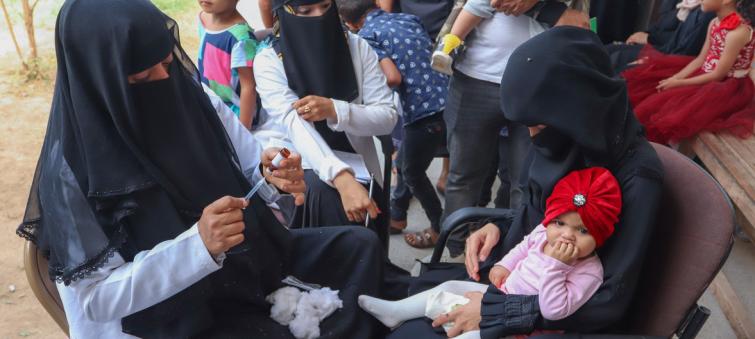
Misinformation and growing distrust on vaccines, ‘dangerous as a disease’ says UNICEF chief
New York, June 29 (IBNS): Vaccines save millions of lives, and yet misinformation, limited availability and inadequate access to services have left large numbers of children in jeopardy, prompting the United Nations Children’s Fund to convene a high-level UN event on Friday to “tackle the issue”.
“Misinformation about vaccines is as dangerous as a disease”, said UNICEF Executive Director Henrietta Fore. “It spreads fast and poses an imminent threat to public health”.
Over the last three decades, the world has seen significant improvements in the health and well-being of children, with vaccinations having contributed to a dramatic decrease in under-five deaths, according to UNICEF.
And now, on the brink of eradicating deadly diseases that affect millions of children, serious challenges are emerging.
Despite clear evidence of the power of vaccines to save lives and control disease, millions of young children around the world are still missing out, putting them and their communities at risk of deadly outbreaks.
Access to quality primary health care, including immunization, is greatly undermined by weak health systems, poverty and conflict, the UN agency explained.
Moreover, emerging challenges combine complacency and scepticism on the safety and effectiveness of vaccines, which is fueled by deliberate misinformation proliferating online further threatening gains made so far.
UNICEF says that “anti-vaccine groups have effectively exploited social media, creating confusion and stoking fears among parents, potentially undermining progress in reaching all children with vaccines”.
At the first event of its kind at UN Headquarters in New York, experts analyzed how to improve stagnating or declining vaccination rates, and champion children’s right to immunization.
“Vaccinations save up to three million lives every year – that's more than five lives saved every minute”, said the UNICEF chief. However, she noted that more needs to be done because “20 million children are still missing out”.
Moving forward
Despite considerable progress in increasing global vaccine coverage, some countries struggle to provide quality immunization services and affordable inoculations.
UNICEF stresses that countries’ investment in domestic resources and political commitment to immunization is “an entry point to strengthen primary health care”, which is also central to ensuring universal health coverage.
The UN agency also advocates for a dialogue platform on ways to reverse declining vaccination rates, build broad-based public trust and demand for immunization – reiterating the target of Sustainable Development Goal (SDG) 3.8 for greater access to “safe, effective, quality and affordable essential medicines and vaccines for all”.
UNICEF/UN0284455/Fadhel
Support Our Journalism
We cannot do without you.. your contribution supports unbiased journalism
IBNS is not driven by any ism- not wokeism, not racism, not skewed secularism, not hyper right-wing or left liberal ideals, nor by any hardline religious beliefs or hyper nationalism. We want to serve you good old objective news, as they are. We do not judge or preach. We let people decide for themselves. We only try to present factual and well-sourced news.
Support objective journalism for a small contribution.


