


Nepal: WHO expands support to areas cut off by quake
According to WHO, the field office will be established in strategic coordination with the Nepalese government and other humanitarian partners, who are also establishing operational bases in the city.
From there, WHO and the national authorities will be able to coordinate land and air support to rush medicines, health care professionals and other life-saving resources to some of the most remote regions impacted by the earthquake.
Gorkha is a three to four hour drive northwest of the capital and has been selected as the first major health hub outside Kathmandu. It is one of the districts most affected by the earthquake, but also provides a good base from which to access other severely impacted areas.
The new field office will start operating Monday and will form part of a major push by Nepalese authorities and the humanitarian sector to reach into remote, mountainous communities in urgent need of support.
WHO says that the new base is the first of several and will also help shore up the emergency and routine health-care services that have arrived already in the area.
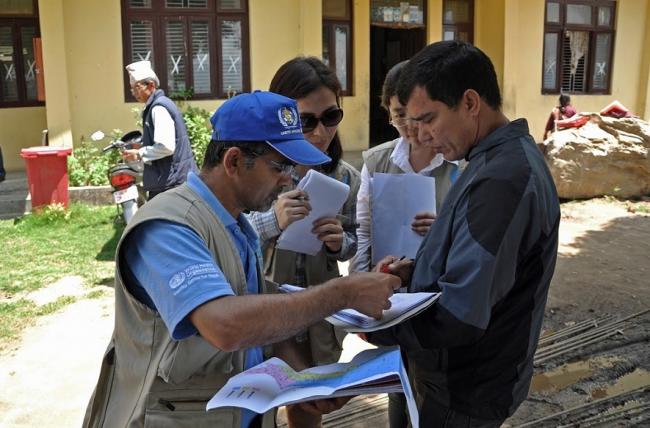
“Health care services are being delivered in built-up areas in Gorkha and those that still can be reached by road,” says Hyo-Jeong Kim, WHO Emergency Operations Manager, during a 2 May field visit to the hilltop village of Katteldanda in Gorkha. The village was devastated by the earthquake.
She explained that the agency has also identified seven communities beyond the Himalayas in an area not easily accessible, and where there are about 6,000 people who have not been reached with services since the quake struck.
Below those villages, there are about 7,000 additional people who have not been reached, she added.
It is critical, Kim said, that health workers and medical supplies reach these areas immediately.
“It is essential that people are treated for injuries or infections that they may have, and then protected against diarrhoeal diseases, respiratory infections and other infections to name a few. Pregnant women must also be given rapid access to care for safe deliveries and to ensure that any complication of pregnancy or birth is rapidly addressed. ”
Photo: WHO/A. Khan
Support Our Journalism
We cannot do without you.. your contribution supports unbiased journalism
IBNS is not driven by any ism- not wokeism, not racism, not skewed secularism, not hyper right-wing or left liberal ideals, nor by any hardline religious beliefs or hyper nationalism. We want to serve you good old objective news, as they are. We do not judge or preach. We let people decide for themselves. We only try to present factual and well-sourced news.
Support objective journalism for a small contribution.


