


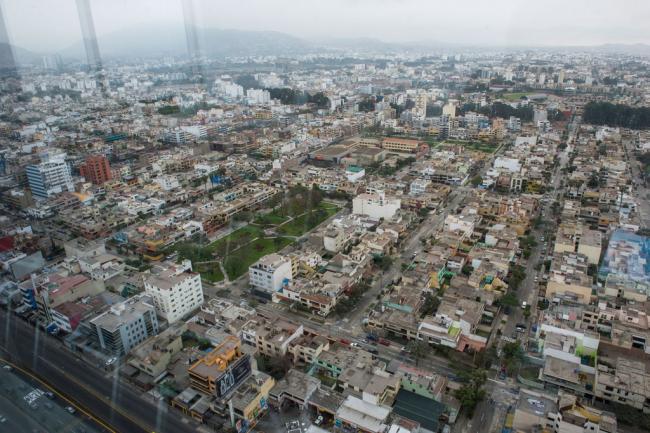
Sustainable cities key to implement SDGs, says head of UN regional development arm
Speaking at the opening of the Cities Conference, Alicia Bárcena, the Executive Secretary of the UN Economic Commission for Latin America and the Caribbean (ECLAC) underscored that despite significant progress in reducing poverty, high degrees of socioeconomic residential segregation continues to persist in metropolises and large and small cities and towns.
“Socioeconomic segregation deepens inequity and contributes to social fragmentation and the high levels of violence that characterize many cities in [the region],” she said.
According to estimates, by 2030 – the timeframe to realize the Sustainable Development Goals (SDGs) – there could be more than 92 million additional people living in cities in Latin America and the Caribbean. The region is already the most urbanized developing region in the world.
Therefore, added Bárcena, it is necessary to guarantee the right to the city as a basic requirement for achieving sustainable development.
Concluding this Friday, the Cities Conference focuses on the regional implementation of the New Urban Agenda – the outcome of the Habitat III conference – to build inclusive, safe, resilient and sustainable cities.
Also at the inaugural session of the Conference, the head of ECLAC presented the Regional Action Plan for implementing the Habitat III outcome, proposing actions the countries of the region can take to ensure sustainable development of their cities and human settlements.
The Regional Action Plan is centred on six action areas, which include national urban policies; urban legal frameworks; urban and territorial planning and design; financing urbanization; local implementation; and monitoring, reporting and revision mechanis
The Cities Conference has been organized by ECLAC, the UN Human Settlements Programme (UN-Habitat) and the General Assembly of Ministers and High-level Authorities of the Housing and Urban Development Sector in Latin America and the Caribbean (known by its Spanish acronym, MINURVI) in Santiago, Chile.
Photo: World Bank/Franz Mahr
Source: www.justearthnews.com
Support Our Journalism
We cannot do without you.. your contribution supports unbiased journalism
IBNS is not driven by any ism- not wokeism, not racism, not skewed secularism, not hyper right-wing or left liberal ideals, nor by any hardline religious beliefs or hyper nationalism. We want to serve you good old objective news, as they are. We do not judge or preach. We let people decide for themselves. We only try to present factual and well-sourced news.
Support objective journalism for a small contribution.


