


 Bangladesh
Tarique Rahman's BNP surges ahead as Bangladesh counts votes in high-stakes 2026 election
Dhaka/IBNS: Unofficial trends indicate that Tarique Rahman-led Bangladesh Nationalist Party (BNP) is in a commanding position as votes continue to be counted in Bangladesh’s landmark 2026 parliamentary election.
While the Bangladesh Election Commission is yet to formally announce the results, early trends suggest the BNP is leading in more than 175 constituencies, according to local media reports.
Jamaat-e-Islami, heading an 11-party alliance including National Citizen Party (NCP), is reportedly ahead in around 30 seats.
With 151 seats required for a simple majority in the 300-member Jatiya Sangsad, the BNP’s early momentum places it within striking distance of forming the next government if trends hold.
According to reports, BNP Chairman Tarique Rahman has won Dhaka-17 and Bogra-6 seats.
Counting underway after peaceful voting
Polling concluded largely peacefully on Thursday (February 12), with more than 127 million eligible voters participating across 299 constituencies.
Voting in one constituency was cancelled following the death of a candidate.
According to Election Commission Senior Secretary Akhtar Ahmed, voter turnout stood at 47.91 percent by 2 pm, before polls officially closed at 4:30 pm local time.
Earlier in the day, turnout was recorded at 32.88 percent by noon.
The counting process includes both parliamentary ballots and pink referendum ballots, which are being tallied simultaneously.
Officials have indicated that the comprehensive counting exercise may take longer than in previous elections.
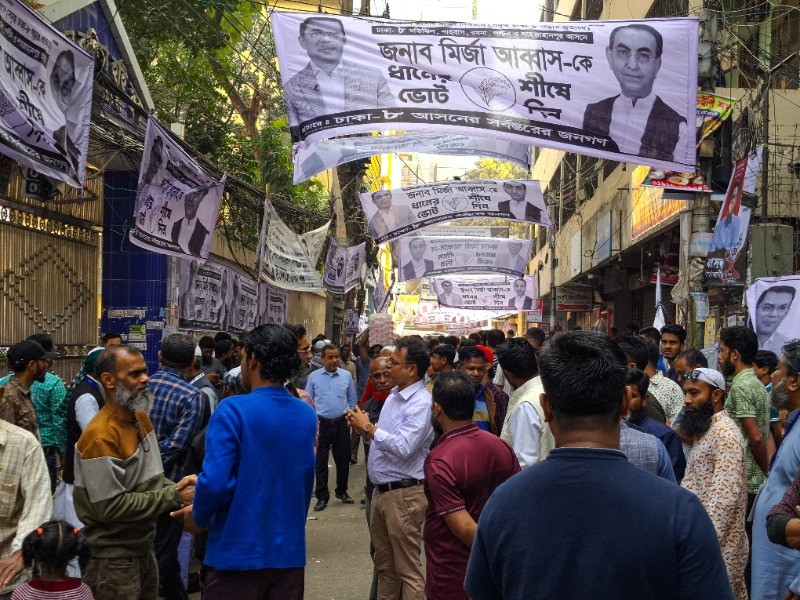 Bangladesh holds its first general election after Sheikh Hasina's ouster. Photo: Wikimedia Commons/S.M.M.Musabbir Uddin
Referendum on political reforms adds historic dimension
Alongside parliamentary voting, Bangladeshis also cast ballots in a national referendum on the proposed July Charter.
The reform package seeks to introduce term limits for the prime minister, strengthen checks on executive authority, and prevent excessive concentration of parliamentary power.
The outcome of the referendum is expected to shape the country’s institutional future, potentially marking a shift toward deeper governance reforms in the Muslim-majority nation.
Sheikh Hasina calls the election a ‘farce’
Ousted prime minister Sheikh Hasina, currently in exile in India, dismissed the election as illegitimate after her Awami League was barred from contesting.
In a statement shared on social media, Hasina alleged widespread irregularities, including seizure of polling centres, gunfire, vote-buying, and ballot tampering.
The former PM claimed voter turnout was negligible and argued that democratic values and constitutional principles had been undermined.
Hasina warned that excluding a major political force from the electoral process could deepen divisions and lead to long-term instability.
Her Awami League had dominated Bangladesh politics for 15 years before being disqualified from the current contest.
Tarique Rahman’s return and BNP’s resurgence
Tarique Rahman, son of former prime minister Khaleda Zia, returned to Bangladesh in December after 17 years in self-imposed exile.
Since his return, he has positioned the BNP as the principal challenger in what many observers describe as the country’s first genuinely competitive election since 2009.
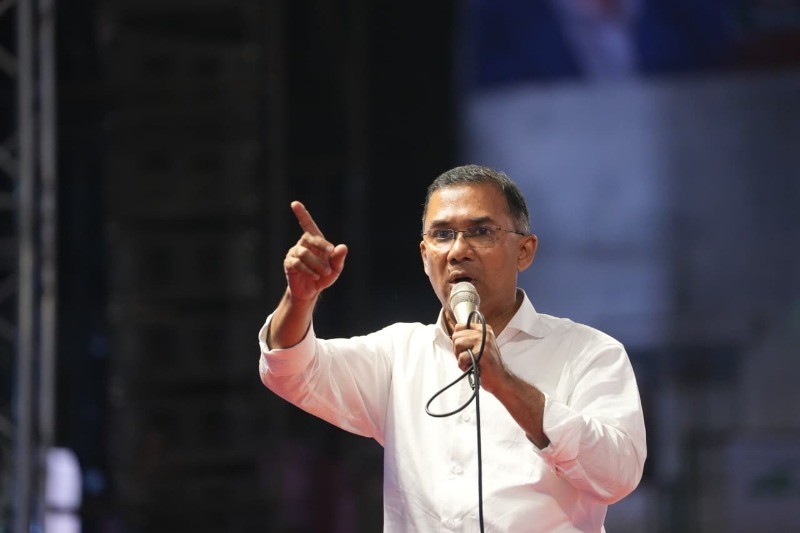 BNP chairman Tarique Rahman. Photo: Facebook/@bnpbd.org
Rahman has pledged to restore democratic institutions, revive the rule of law, and boost the economy if elected.
The BNP’s primary challenger is the Jamaat-e-Islami-led coalition, which includes the newly formed National Citizen Party.
The NCP, led by Gen Z activists linked to the 2024 uprising, joined forces with Jamaat after failing to convert street protests into broader voter backing.
Youth vote and first-time voters in focus
Nearly five million first-time voters participated in the election, and Generation Z accounts for roughly a quarter of the electorate.
Political analysts believe their voting patterns could significantly influence the outcome.
The 2026 election is widely viewed as a test of whether youth-led protest movements that reshaped Bangladesh’s political landscape in 2024 can translate into lasting institutional change.
Interim government and international oversight
The election was overseen by an interim administration headed by Nobel Peace Prize laureate Muhammad Yunus, which pledged to ensure free, fair, and peaceful polls.
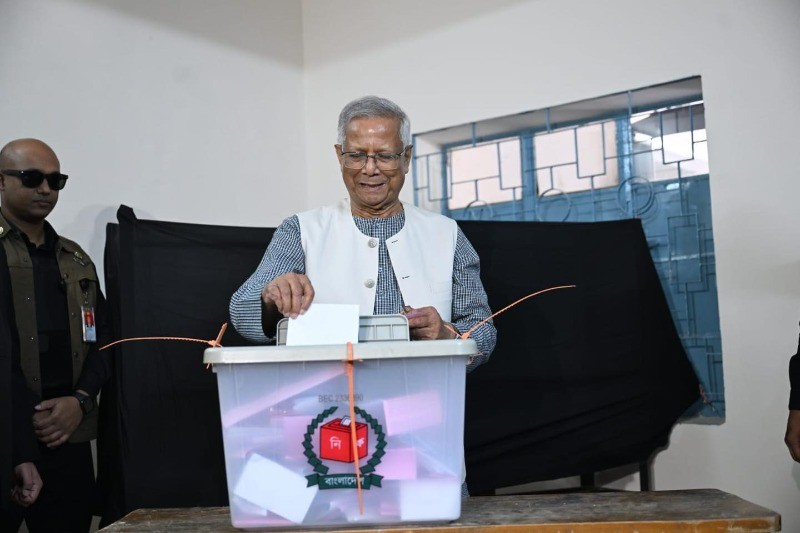 Bangladesh's interim chief Muhammad Yunus casts his vote. Photo: Facebook/@ChiefAdviserGOB
Approximately 500 foreign observers, including representatives from the European Union and the Commonwealth, are monitoring the electoral process.
With more than 1,981 candidates contesting across the nation and 109 women among them, the results will determine not only the composition of Parliament but also the direction of Bangladesh’s political evolution.
Support Our Journalism
We cannot do without you.. your contribution supports unbiased journalism
IBNS is not driven by any ism- not wokeism, not racism, not skewed secularism, not hyper right-wing or left liberal ideals, nor by any hardline religious beliefs or hyper nationalism. We want to serve you good old objective news, as they are. We do not judge or preach. We let people decide for themselves. We only try to present factual and well-sourced news.
Support objective journalism for a small contribution.


