


 Rohingya
Transfer of Rohingya refugees to Bay of Bengal island ‘must be voluntary’: UN refugee agency
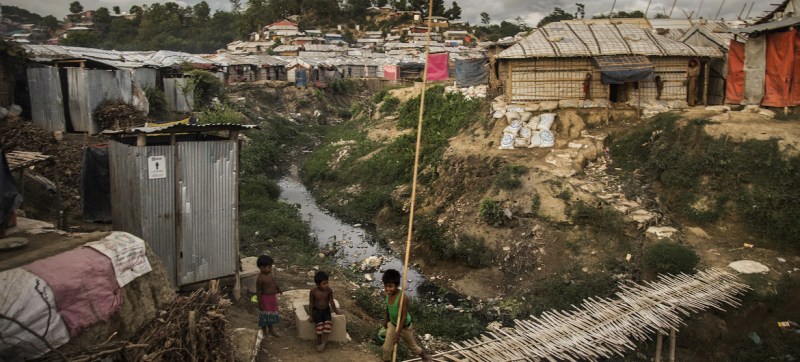
New York: The head of the UN refugee agency (UNHCR), has voiced concerns over the reported relocation of some Rohingya refugees by Bangladeshi authorities, to an island off the country’s coast, in the Bay of Bengal.
“Any transfer must follow a voluntary, informed decision”, Filippo Grandi, UN High Commissioner for Refugees, said on Twitter on Sunday.
According to media reports, about 1,600 Rohingya refugees have moved from camps in Cox’s Bazar to the Bhasan Char island in the Bay of Bengal, a low-lying island said to be vulnerable to cyclones and flooding.
“UNHCR and UN partners seek access to them in order to hear their voices, understand their wishes and see conditions on the island”, added Mr. Grandi.
Nearly 900,000 Rohingya refugees live in the Cox’s Bazar settlements.
Technical protection assessments
Last week, the UN office in Bangladesh said that it has not been involved in preparations for the movement of refugees to Bhasan Char, or in selecting or deciding which families would be moving.
In a statement, the office stressed that “any relocations to Bhasan Char should be preceded by comprehensive technical protection assessments.”
The independent UN assessments would review the safety, feasibility and sustainability of Bhasan Char as a place for refugees to live, as well as the framework for protection and the assistance and services they would be able to access on the island.
“Since the Government announced the Bhasan Char project, the UN has offered to engage in constructive consultations aimed at better understanding the plan and considering with the Government the most critical policy, process and operational issues. [We] remain willing to continue this dialogue”, the statement added.
A complex refugee crisis
The complex Rohingya refugee crisis erupted in August 2017, following attacks on remote police outposts in western Myanmar by armed groups alleged to belong to the community. These were followed by systematic counter attacks against the minority, mainly Muslim, Rohingya, which human rights groups, including senior UN officials, have said amounted to ethnic cleansing.
In the weeks that followed, over 700,000 Rohingya – the majority of them children, women and the elderly – fled their homes for safety in Bangladesh, with little more than the clothes on their backs.
Prior to the mass exodus, well over 200,000 Rohingya refugees were sheltering in Bangladesh as a result of earlier displacements from Myanmar.
Support Our Journalism
We cannot do without you.. your contribution supports unbiased journalism
IBNS is not driven by any ism- not wokeism, not racism, not skewed secularism, not hyper right-wing or left liberal ideals, nor by any hardline religious beliefs or hyper nationalism. We want to serve you good old objective news, as they are. We do not judge or preach. We let people decide for themselves. We only try to present factual and well-sourced news.
Support objective journalism for a small contribution.


