


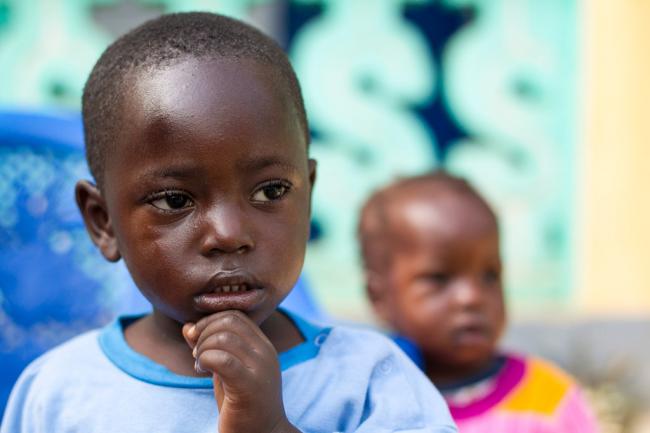
UN report highlights terrifying impact of Ebola on nine million children
UNICEF said the report, which was released in the Senegalese capital of Dakar, Geneva, and New York, “looks at the dramatic impact Ebola has had on children as it hit some of the most vulnerable communities in some of the world's most vulnerable countries.”
Of the more than 24,000 people infected, some 5,000 are children, while more than 16,000 children have lost one or both parents or their primary caregiver, according to UNICEF.
“For many of the nine million children living in affected areas, Ebola has been terrifying,” the agency said.
It added, “These children have seen death and suffering beyond their comprehension.”
The report also points to the central role communities are playing in the response and shows encouraging trends in safe behaviours.
“In Liberia, for example, a survey indicates that 72 per cent of people believe anyone with Ebola symptoms will get better care at a treatment centre, which is significant because many used to keep Ebola victims at home, spreading infection in the community,” according to the agency.
The report's release comes days after the UN World Health Organization (WHO) said Liberia reported no new confirmed cases for the second consecutive week from the disease that has affected more than 24,000 people with more than 10,000 deaths.
“The outbreak will not be over until there are zero cases, and every single contact has been traced and monitored. We cannot afford to let our guard down,” Barbara Bentein, UNICEF's Global Emergency Coordinator for Ebola, said in a press release.
“At the same time, basic services need to be re-established safely and responsibly, using the assets of the response,” she added.
UNICEF, which helped minimize the risk of Ebola infections when schools reopened following months of closures that left 5 million children out of school, noted that investing in improving health care systems in Ebola-affected countries will help tackle other diseases such as measles, pneumonia and diarrhoea, which take a heavy toll on children.
Photo: UN Photo/Martine Perret
Support Our Journalism
We cannot do without you.. your contribution supports unbiased journalism
IBNS is not driven by any ism- not wokeism, not racism, not skewed secularism, not hyper right-wing or left liberal ideals, nor by any hardline religious beliefs or hyper nationalism. We want to serve you good old objective news, as they are. We do not judge or preach. We let people decide for themselves. We only try to present factual and well-sourced news.
Support objective journalism for a small contribution.


