Language is not just tool for communication but a passport to understanding humanity: UNESCO South Asia director
New Delhi/IBNS: Indira Gandhi National Centre for the Arts (IGNCA) commemorated International Mother Language Day with a two-day celebration on Friday.
Centred on the theme ‘Make Languages Count for Sustainable Development’, the event brought together eminent scholars, linguists, and cultural experts to deliberate on the role of languages in fostering sustainable growth.
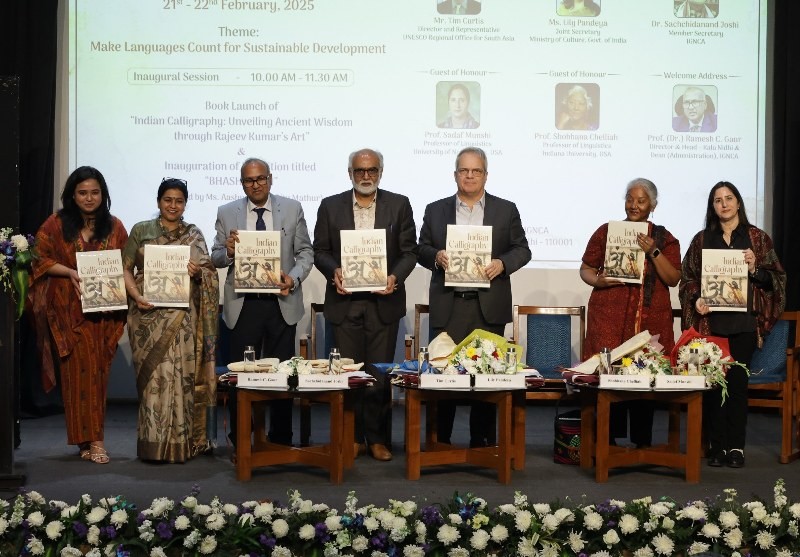
The inaugural session on Friday featured the launch of ‘Indian Calligraphy: Unveiling Ancient Wisdom through Rajeev Kumar’s Art’, alongside the inauguration of the exhibition BHASHARRITI, curated by Aashna and Ritu Mathur.
Tim Curtis, Director and Representative, UNESCO Regional Office for South Asia, was the Chief Guest at the event.
Tim Curtis, while delivering his address, emphasised that celebrating International Mother Language Day is deeply personal and universally significant, as it honours the languages that shape our thoughts and words.
"More than mere tools of communication, languages define identities and connect individuals to their histories and communities," he said.
Highlighting South Asia’s rich linguistic landscape, he noted that research indicates over 7,000 languages are endangered, with indigenous languages being the most vulnerable.
Curtis referred to the United Nations’ declaration of 2022–2032 as the Decade of Indigenous Languages, aimed at the documentation, revitalisation, and celebration of linguistic treasures.
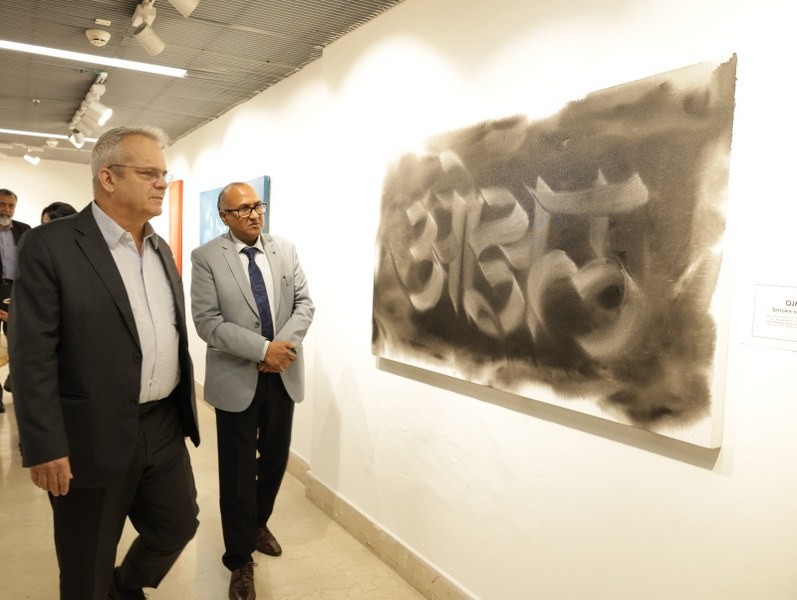 Mr. Tim Curtis and Prof. Ramesh Chandra Gaur walking through the Exhibition (Photo Courtesy : PR team)
He acknowledged IGNCA’s ongoing contributions in this regard and expressed gratitude for organising Mother Language Day.
Stressing the importance of multilingual education, he cited India’s National Education Policy as a model for embracing linguistic diversity, enhancing both learning outcomes and national unity. UNESCO, he affirmed, is scaling up efforts for indigenous language preservation, advocating community-led initiatives that bridge linguistic communities and foster equity.
Curtis concluded by stating that language is not just a tool for communication but, in a way, a passport to understanding humanity itself.
"When we speak in our mother tongue, we do not merely exchange words but share ways of perceiving and interpreting the world. By honouring each other’s mother tongue, we facilitate understanding that transcends borders and cultures," said he.
The first day featured three panel discussions. The first session, titled ‘Make Languages Count for Sustainable Development’, was moderated by Prof. Ramesh Chandra Gaur.
The second session focused on a discussion of the book Indian Calligraphy: Unveiling Ancient Wisdom through Rajeev Kumar’s Art. and the third explored the theme ‘National Education Policy and Indian Languages’.
Support Our Journalism
We cannot do without you.. your contribution supports unbiased journalism
IBNS is not driven by any ism- not wokeism, not racism, not skewed secularism, not hyper right-wing or left liberal ideals, nor by any hardline religious beliefs or hyper nationalism. We want to serve you good old objective news, as they are. We do not judge or preach. We let people decide for themselves. We only try to present factual and well-sourced news.
Support objective journalism for a small contribution.