 Pakistan
Pakistan’s endless cycle of protests
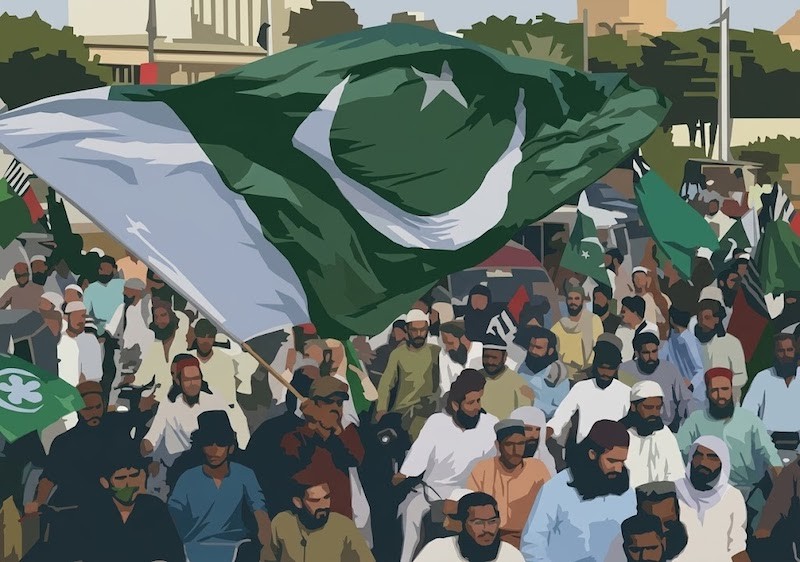
A protest by citizens is not an abnormal thing for any country. It is a part of the people-government interaction. But the case of Pakistan is unique. No country on this globe may have witnessed as many mass protests and that too on such varied issues as Pakistan has in the past one decade.
From political and religious movements to women’s rights, ethnic grievances, economic hardships, electoral and regional demands, Pakistani people have repeatedly taken to the streets. They have shaken the nation, disrupted normal life and made international news.
Notably, even militants and terrorist groups can hold protest marches, lay siege to the capital city, and force the democratically elected government to concede to their demands.
Protest is a universal political phenomenon and a basic right. But why do Pakistani people from all walks of life so often find themselves on the streets? Pakistan’s streets have become more than a place of protest. They have rather become a wrestling arena of power, where governments are challenged or called out for sheer misgovernance. This pattern raises a larger question about governance and overall national stability.
Pakistan is bracing for a major political confrontation as the opposition Pakistan Tehreek-i-Insaf (PTI), along with Jamaat-i-Islami and Kissan Ittehad, has planned a march towards Islamabad.
They are protesting against the imprisonment of former prime minister Imran Khan and seeking the restoration of democratic and political rights against the backdrop of the controversial constitutional amendments that weakened the judiciary and made army chief Asim Munir extremely powerful and offered him immunity from prosecution.
The protest march is set to disrupt traffic in Rawalpindi and Islamabad and thus affect schools, hospitals, and markets as usual, causing daily losses of PKR 120 billion per day. But what is more severe is that the protest would add to the political instability and weaken the confidence of people in the governance. So it would not be just another protest causing temporary inconvenience in Islamabad, but a part of the broader struggle over Pakistan’s political system, democratic institutions and the limits of power and authority exercised by the Pakistani state.
Earlier, the security forces of Pakistan became a talking point in the international media for the barbaric action it took against Kashmiris for seeking basic and political rights. What began as a protest over high prices of wheat and electricity turned into mass demonstrations after the demands of Kashmiris were ignored. Pakistan’s security forces responded to the demonstrations with an iron fist, which widened the trust deficit between residents of Pakistan-administered Kashmir and authorities in Islamabad. It raised questions about how the existing political system failed to respond to people’s issues effectively.
Many died and thousands were injured in clashes with police in October 2025 after the militant outfit Tehreek-i-Labbaik Pakistan (TLP) planned a march from Lahore to Islamabad to express solidarity with Palestinians and protest the Gaza situation. The Islamabad government appeared feeble as it could not contain the religious movement and wider unrest across the country. The TLP protesters broke through blockades and claimed that the government did not engage them in negotiations. This created an impression that the state cannot control a movement and it can easily be manipulated or bent through coercion.
The year 2024 was tumultuous for Pakistan’s political system as huge public mobilisation over release of Imran Khan, electoral manipulation, and undermining judicial independence, had rendered a big dent on the fragile political system of Pakistan.
The country had appeared on the verge of constitutional collapse. In short, the elections remained contested, the new government challenged, judiciary system questioned, thus causing a much deeper crisis of confidence in the political and constitutional order. About 80 percent of Pakistani people found that the country was going in the wrong direction, as revealed by a survey by Ipsos.
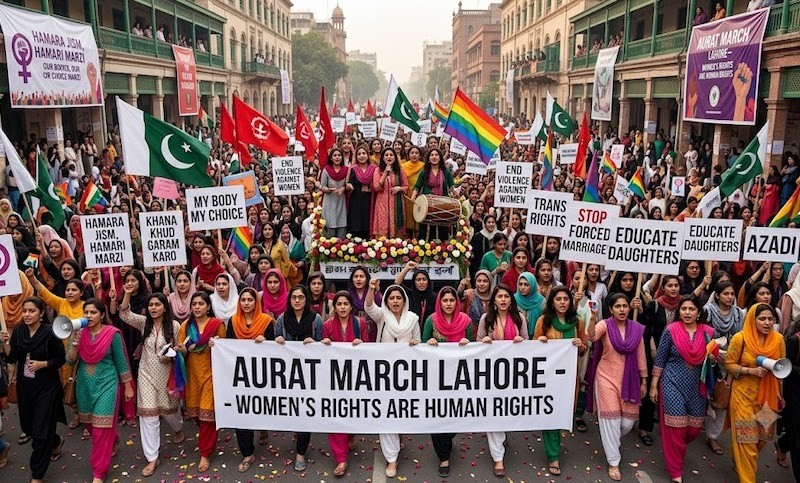
Aurat March that was held across Pakistan questioned the government for poor political representation of women and marginalised groups, enforced disappearances, better wages and public services.
Pakistan has witnessed several such protests in the past one decade over religious, political, ethnic issues.
When people from different sections of society repeatedly come to the streets, it points to the failure of the system to address their grievances. Protests may be a democratic right, but their frequent recurrence indicates that all is not well.
Support Our Journalism
We cannot do without you.. your contribution supports unbiased journalism
IBNS is not driven by any ism- not wokeism, not racism, not skewed secularism, not hyper right-wing or left liberal ideals, nor by any hardline religious beliefs or hyper nationalism. We want to serve you good old objective news, as they are. We do not judge or preach. We let people decide for themselves. We only try to present factual and well-sourced news.
Support objective journalism for a small contribution.