


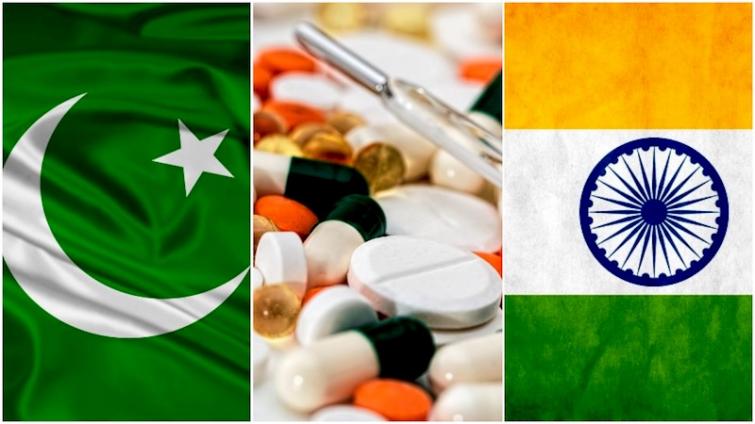
Banning Indian raw material can prove suicidal: Pakistan Pharmaceutical industry warns Imran govt
Islamabad/IBNS: Despite all their designs against India, Pakistan government is facing a dilemma. It is because of a plea from its own people against the banning of Indian raw material for manufacturing drugs in the country, specially at this time when the nation is grappling with COVID-19 outbreak.
Pakistan depends heavily on Indian raw materials to manufacture drugs and if the government bans its import then that will lead to grievous situation in the country.
From 50 per cent loss in drug production to increase in its price, such a move can prove to be deadly for Pakistan, warned representatives of the Pakistan Pharmaceutical Manufacturers’ Association.
PPMA senior vice chairman Syed Farooq Bukhari was quoted as saying by Dawn News during a press conference that the federal cabinet should not take any decision against the import of medicine raw material from India or from any other country when there had been an unabated increase in Covid-19 patients in the country.
“At a time when the federal and provincial governments in the country have been in the process of setting up more and more quarantine centres, isolation facilities, and special hospital wards to accommodate Covid-19 cases, there is a dire need to ensure constant supply of essential medicines to treat coronavirus patients," Syed Farooq Bukhari said.
“For this, it is mandatory that the pharmaceutical industry of Pakistan should continue with its operations to its full capacity as for this we need a constant supply of raw material from our international clients,” he explained.
“Any decision to disrupt the international supply chains associated with the Pakistani pharmaceutical industry would negatively affect the ability of country’s medical practitioners to treat the cases of Covid-19,” he warned the government.
The situation highlighted how India is directly helping Pakistan even at this age of crisis and constant sponsoring of terrorism in Kashmir.
In reply to a question, former central chairmen of the PPMA Dr Kaiser Waheed was quoted as saying by Dawn News that 95 per cent of drugs were manufactured with the help of imported raw material in which Indian share was almost 50 pc while the rest was met by China and some European countries.
Very few medicines were imported in finished form from India which included vaccines, Waheed said.
Support Our Journalism
We cannot do without you.. your contribution supports unbiased journalism
IBNS is not driven by any ism- not wokeism, not racism, not skewed secularism, not hyper right-wing or left liberal ideals, nor by any hardline religious beliefs or hyper nationalism. We want to serve you good old objective news, as they are. We do not judge or preach. We let people decide for themselves. We only try to present factual and well-sourced news.
Support objective journalism for a small contribution.


