India at Cannes 2026: Glitter on the Croisette, But Where Is the Cinema?
Every year, around May, India rediscovers Cannes. I was there for a week this year.
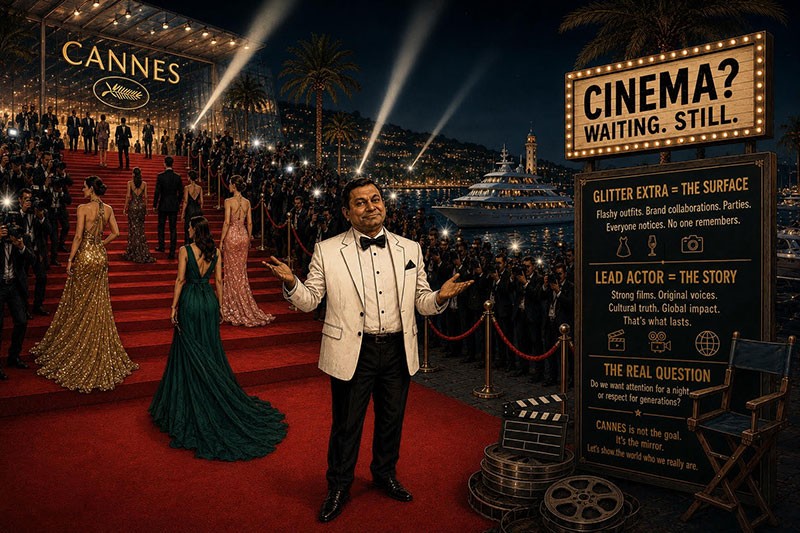
The French Riviera fills Indian social media feeds with sweeping gowns, jewel-encrusted appearances, stylists' credits and luxury brand affiliations. Television channels run breathless updates on who wore what. Instagram turns into a parade of couture breakdowns. Entertainment portals track every appearance on the Croisette as if it were an Olympic medal tally. For a large section of the Indian public, Cannes has become less a film festival and more a fashion carnival with cinematic backdrops.
The 2026 edition was no different.
Actors, influencers, entrepreneurs, digital creators, and beauty ambassadors - all made their way to the Riviera, representing luxury labels, cosmetics giants, jewellery houses and lifestyle brands. Red-carpet photographs flooded timelines within minutes. Some appearances drew praise for elegance, others triggered the familiar internet debates over styling choices and best-dressed lists.
To be fair, there is nothing inherently wrong with glamour at Cannes. The festival has always had a symbiotic relationship with celebrity culture. From Sophia Loren and Brigitte Bardot to Shah Rukh Khan and Aishwarya Rai Bachchan, stars have helped create the aura that surrounds it. Fashion, cinema and publicity have long existed in conversation.
Indian stars have historically contributed to that glamour. Aishwarya Rai Bachchan remains one of the most recognisable Indian faces at Cannes over two decades. Deepika Padukone's appearances as jury member and global ambassador carried a certain gravitas. Sonam Kapoor turned red-carpet dressing into a parallel spectacle. Their presence created visibility for Indian talent in a cultural space that once seemed distant and inaccessible.
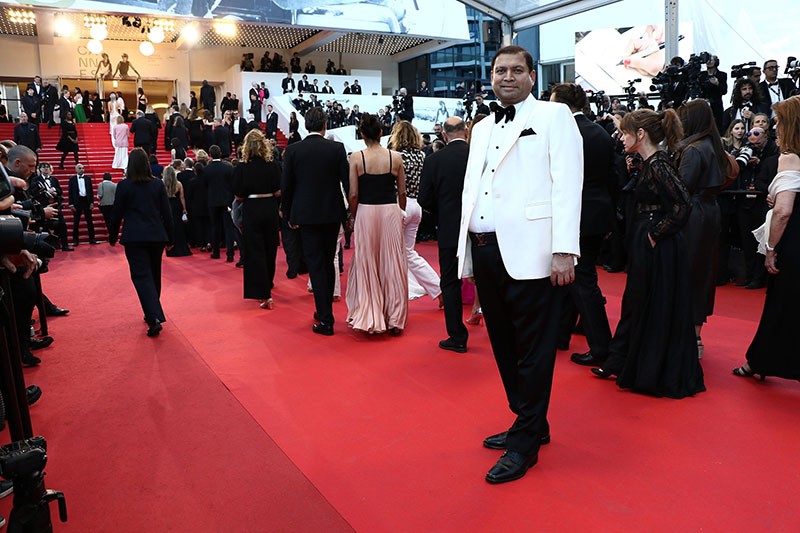 Sundeep Bhutoria on the Cannes red carpet, where India's glamour quotient far outshone its cinema conversation. Photo: Agency
The discomfort arises when the conversation becomes almost entirely disconnected from cinema itself. Because while Indian celebrities generated headlines by the hour, Indian films struggled to occupy the same level of national conversation.
At its core, Cannes remains the world's most influential film festival. A place where cinematic movements are discovered, auteurs are consecrated, political debates unfold and independent film-making finds visibility. Careers are transformed. Distribution deals are struck. New languages of storytelling emerge. For film-makers across the world, Cannes is not merely a photo opportunity. It is an artistic arena.
Yet in India, the ecosystem surrounding it treats films almost as incidental.
A casual follower of Indian entertainment coverage this year could easily have come away believing Cannes was primarily about airport looks, red-carpet gowns and luxury endorsements. Information about Indian films screening at the festival, participation in parallel sections, co-production markets or restoration showcases rarely travelled with the same energy. The imbalance is telling.
This is not to suggest Indian cinema had no presence. Film-makers, producers and actors participated in various capacities — from market screenings to international collaborations. Independent film-makers networked quietly, seeking funding, festival pathways and distribution support. Students and cinephiles attended screenings that began early in the morning and ended deep into the night.
These films made their presence felt:
Shadows of the Moonless Night — FTII student Mehar Malhotra's 24-minute Punjabi short earned a spot in La Cinef, Cannes' competitive section for emerging film-makers. A factory worker's mental deterioration under mounting pressure and isolation.
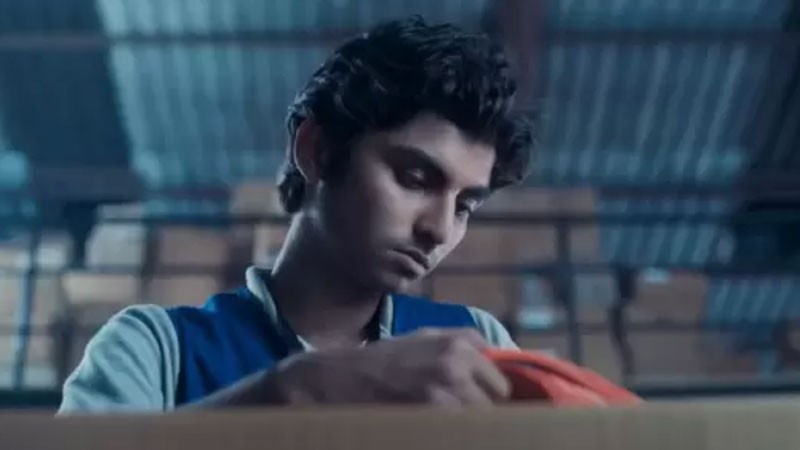 A still from the Shadows of the Moonless Night made by FTII student Mehar Malhotra. Photo: Official FB
Balan: The Boy — Following the acclaim of Manjummel Boys, director Chidambaram presented this Malayalam project in the Marché du Film. Loneliness, endurance, and the tender bond between a mother and her son.
Chardikala — Directed by Amarjit Singh Saron and featuring Ammy Virk and Roopi Gill, this Punjabi drama follows a committed nurse wrongly accused in a major case. Debuting at Cannes ahead of its theatrical release.
Amma Ariyan — John Abraham's landmark Malayalam film, a cult classic of India's parallel cinema movement, restored in 4K and showcased in Cannes Classics. I was personally present at the screening. All compliments to my friend Shivendra Singh Dungarpur, who through the Film Heritage Foundation has been tirelessly working on restoration and preservation. He has beautifully brought this film back to life for global audiences.
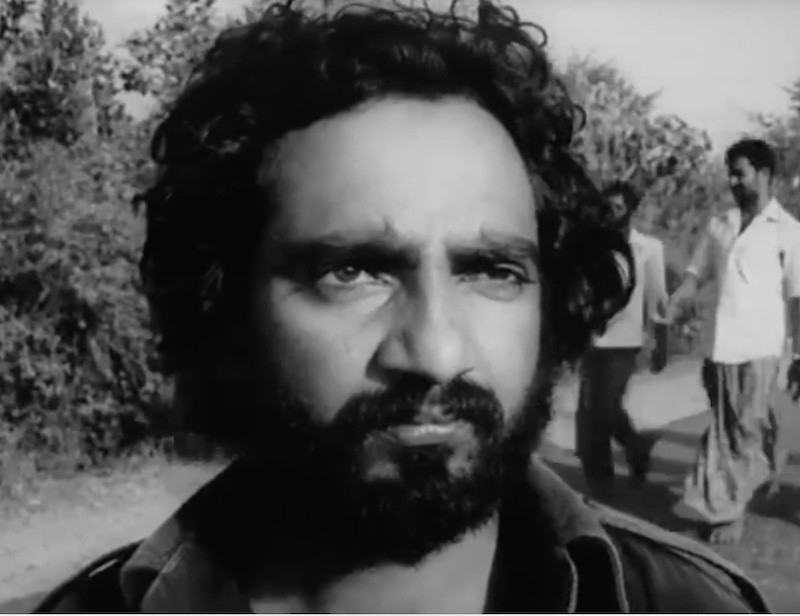 Amma Ariyan is a cult classic of India's parallel cinema movement. Photo: Screenshot
Spirit of the Wildflower — Directed by London-based Shrimoyee Chakraborty, this documentary traces two sisters managing India's first licensed mahua distillery, negotiating questions of identity, aspiration and social pressure.
September 21 — Karen Kshiti Suvarna's debut feature in Hindi and Kannada follows an elderly Alzheimer's patient during the COVID-19 crisis. Caregiving, fading memories, fraying family bonds.
India was present. But much of that presence unfolded away from the glare of celebrity cameras. That contrast perhaps says something larger about current cultural priorities. A few individuals, however, are doing genuinely meaningful work. National Award-winning actress and producer Manasi Parekh made a remarkable effort to promote Gujarati cinema — showcasing nearly 35 Gujarati films and demonstrating real commitment to taking regional Indian cinema to an international platform. In an environment dominated by glamour and branding, that was exactly the kind of engagement Cannes was originally meant to encourage.
The Ecosystem That Forgot Cinema
India today is one of the world's largest producers of films. The diversity of storytelling across languages has never been greater. Malayalam cinema commands international admiration for its writing and realism. Marathi, Assamese, Bengali and Tamil film-makers routinely produce work worthy of global festival circuits. Independent documentaries are finding audiences abroad despite mounting challenges at home. Young film-makers are experimenting with form and politics in exciting ways.
Yet the domestic ecosystem still struggles to celebrate cinema with the enthusiasm it reserves for celebrity visibility.
Part of the problem lies in media coverage. Entertainment journalism in India has become increasingly personality-driven. A red-carpet appearance is easier to package than a nuanced conversation about a film-maker's formal choices. Fashion galleries generate clicks instantly; discussions on editing rhythms or narrative structures do not. In such a climate, Cannes inevitably gets flattened into a lifestyle event.
Social media amplifies it further. A couture reveal travels faster than news of a restored classic in Cannes Classics. A viral reel of a celebrity waving at photographers receives exponentially more attention than a first-time film-maker securing a slot in Directors' Fortnight.
At Hotel Martinez, where I was staying, almost an entire floor had been taken over by L'Oréal, one of the festival's main sponsors. The moment models, actors and influencers were camera-ready, the first stop was the hotel's iconic blue staircase — for the Instagram photoshoot.
Reducing Cannes to glamour alone ultimately does a disservice even to the celebrities attending it. Many Indian actors today speak about wanting global recognition for Indian storytelling. Several are also producers backing ambitious cinema. Their presence can, in theory, build bridges between Indian films and international attention. But that potential gets diluted when the discourse remains confined to fashion commentary.
One recalls how earlier generations of actors arrived at global festivals attached to films that were competing, screening or premiering. Shabana Azmi, Smita Patil, Naseeruddin Shah and Om Puri became familiar faces internationally through cinema first. Even when stars attended as ambassadors, there was usually an accompanying conversation around Indian film-making.
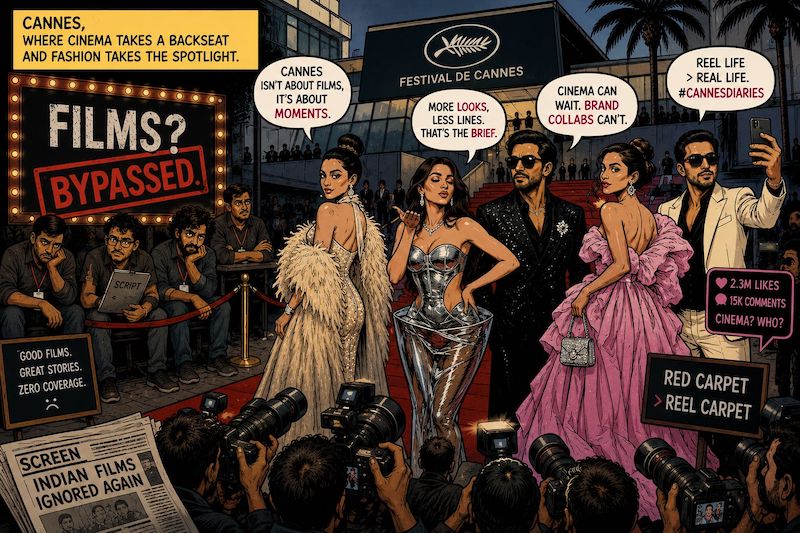
Today, the balance appears tilted.
This is not entirely the fault of celebrities themselves. Cannes has evolved into a heavily branded environment where fashion and luxury play an enormous role. Influencer culture has transformed access and visibility. The lines between film festival, fashion showcase and global networking event are blurrier than ever before.
Still, one cannot escape the feeling that India — more than many other major film-producing nations — remains trapped in the optics of presence rather than the substance of participation.
Countries with far smaller industries arrive at Cannes with a sharply defined cinematic identity. Their national film bodies actively promote auteurs, support subtitling and restoration, facilitate co-productions and ensure films travel beyond domestic markets. The conversation begins with cinema.
India, by contrast, frequently celebrates attendance itself.
There is a deeper irony here. Indian cinema has historically enjoyed significant moments at Cannes. Satyajit Ray, Mrinal Sen, Ritwik Ghatak, and later Mira Nair, Shaji N. Karun and Payal Kapadia helped establish India's artistic credibility on the global stage. The appetite for Indian stories certainly exists.
What appears missing is a sustained cultural ecosystem that values film discourse alongside glamour. Perhaps the real question is not why celebrities attend Cannes, but why cinema struggles to command equal visibility in the Indian imagination during the festival. There is room for both.
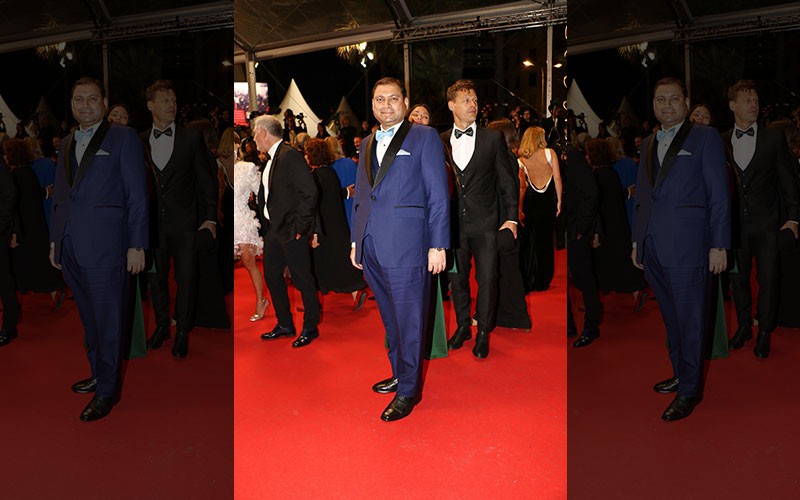 Sundeep Bhutoria at Cannes 2026, where the flashbulbs were plenty but the talk of Indian films was scarce. Photo: Agency
One can appreciate the elegance of a red-carpet appearance while also asking which Indian films screened this year, which film-makers secured international collaborations, which restorations were showcased and which young voices emerged. One can celebrate celebrity visibility without reducing Cannes to a fashion slideshow.
Because ultimately, the enduring legacy of Cannes has never been couture alone. Long after the flashbulbs fade, what remains are the films. That is what gives Cannes its meaning. And that is the conversation India must reclaim — if it wishes to be seen not merely as a nation of celebrities on the Croisette, but as a serious cinematic culture capable of shaping global film history.
(Sundeep Bhutoria is a Kolkata-based writer, cultural activist and philanthropist, and Managing Trustee of the Prabha Khaitan Foundation. A Fellow of the Royal Society of Arts, London, he is a devoted cinephile who has attended the Cannes Film Festival many times over the years, returning each time not for the red carpet, but for the cinema.)
Support Our Journalism
We cannot do without you.. your contribution supports unbiased journalism
IBNS is not driven by any ism- not wokeism, not racism, not skewed secularism, not hyper right-wing or left liberal ideals, nor by any hardline religious beliefs or hyper nationalism. We want to serve you good old objective news, as they are. We do not judge or preach. We let people decide for themselves. We only try to present factual and well-sourced news.
Support objective journalism for a small contribution.